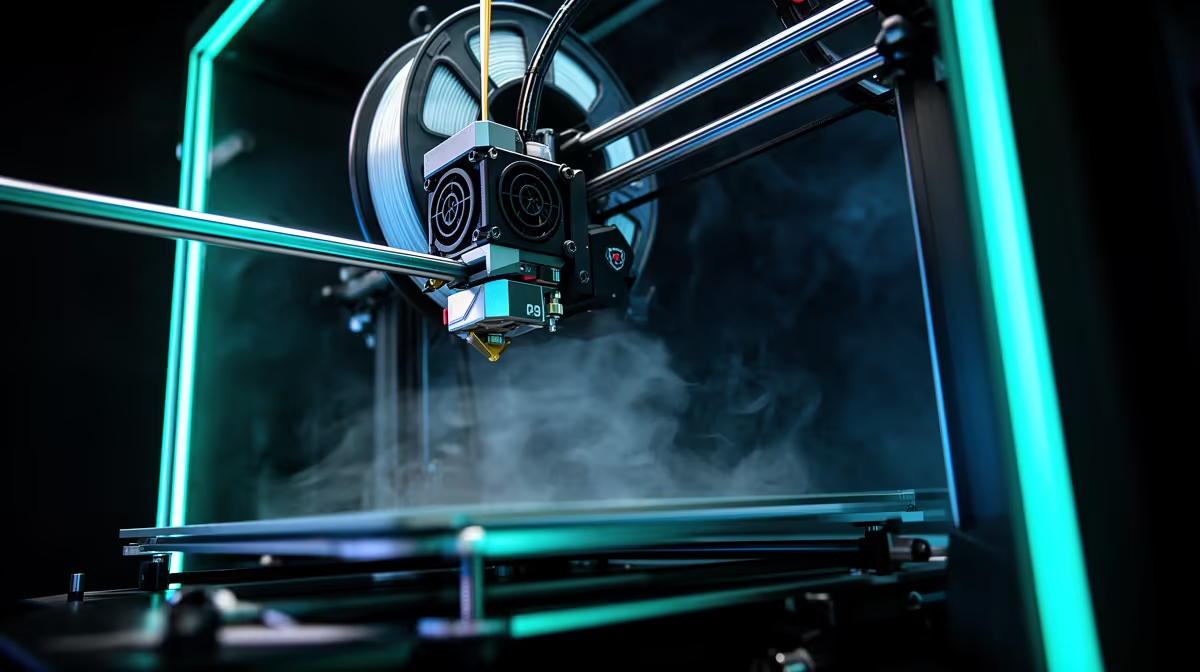
The two filaments that punish a cold, draughty room more than any others are ABS and ASA. Both shrink hard as they cool, and an open printer lets the upper layers contract faster than the base, which lifts corners off the bed and splits layers mid-print. Solve the thermal swing and these materials become reliable. Get it wrong and you get curled feet, cracked walls and wasted spools every single time.
Quick Answer
Print ABS at 240-250C nozzle and 100-110C bed, ASA at 240-260C and 90-105C bed, both inside an enclosure that sits around 40-50C, with the part cooling fan at 0 percent on solid parts and no more than 10-20 percent only for overhangs. Add a 10mm brim to anchor the edges.
Why an enclosure is non-negotiable
ABS and ASA have a high glass transition temperature, which means each layer wants to keep contracting well after it is laid down. In open air the freshly extruded top of the print cools and shrinks while the layers below have already set, and that mismatch builds internal stress. The stress goes one of two ways: it peels the corners up off the build plate, or it tears a horizontal crack through the wall. An enclosure traps the printer's own heat so the whole part cools slowly and evenly.
You do not need a heated chamber with active control. A passive box that holds 40 to 50C of ambient warmth is enough. Before you start a large print, set the bed to 100C and let the enclosure soak for 10 to 15 minutes so the air inside is already warm when the first layer goes down. Hobbyist FDM machines and chamber-ready printers both sit in the wider 3D printer range at Evetech, and many newer models ship with a panel kit or sealed chamber that makes ABS work straight out of the box.
Dial the fan almost all the way down
Part cooling is the enemy here. The fan that helps PLA bridge cleanly will blast cold air across an ABS layer and freeze it before it bonds, which is exactly the thermal shock you are trying to avoid. For solid geometry with no overhangs, run the part cooling fan at 0 percent for the entire print. If the model has bridges or steep overhangs that sag, allow a small amount, 10 to 20 percent, and only after the first five layers have built a stable base. ASA tolerates a touch more airflow than ABS but the principle holds: less is safer.
Stop the corners lifting
Bed adhesion does most of the anti-warp work. Run the bed at 100 to 110C for ABS and 90 to 105C for ASA, and make sure the surface is clean of finger oils. Then add a brim of at least 8 to 10mm with a zero gap so it fuses to the part edge. A fused brim physically pins the corners down and beats any glue or spray for large flat footprints. For tall or thin parts, a draft shield, a single-wall skirt printed at full height around the model, holds a pocket of warm air right against the print.
When to reach for ASA over ABS
ASA prints almost identically to ABS but adds genuine UV and weather resistance, so it keeps its colour and strength outdoors for years. Choose ASA for anything that lives in the sun, garden brackets, security camera mounts, automotive trim, and keep ABS for indoor functional parts where cost matters more than weatherproofing. Keep spare nozzles, build sheets and cleaning supplies on hand, all of which turn up in the accessories best sellers.
Frequently Asked Questions
Do I really need an enclosure for ABS?
For anything larger than a small trinket, yes. Open-air ABS warps and cracks because the layers cool unevenly. An enclosure that holds 40 to 50C ambient keeps the whole part contracting together, which is the single biggest fix for both problems.
What bed temperature works best?
Start ABS at 100 to 110C and ASA at 90 to 105C. A hotter bed keeps the lower layers soft enough to stay bonded while the brim holds the edges down. Drop the bed too low and corners lift within the first few layers.
Why turn the cooling fan off?
The part cooling fan freezes each layer too fast, which is the opposite of what these materials need. Run it at 0 percent on solid parts and only add 10 to 20 percent for overhangs after the base is established.
Is ASA worth the extra over ABS?
If the part goes outside, yes. ASA resists UV and weathering so it holds colour and strength in the sun, while ABS yellows and becomes brittle outdoors. For indoor parts, ABS is the cheaper sensible pick.
How do I stop layer cracking on tall prints?
Layer splits come from heat loss on the upper sections. Keep the enclosure warm, drop the fan to zero, and add a draft shield around tall models so warm air stays trapped against the walls all the way up.
Ready to print engineering-grade parts without the warping headaches? Browse the printers, filament and chamber-ready machines in the 3D printer range at Evetech and set yourself up for crack-free ABS and ASA.