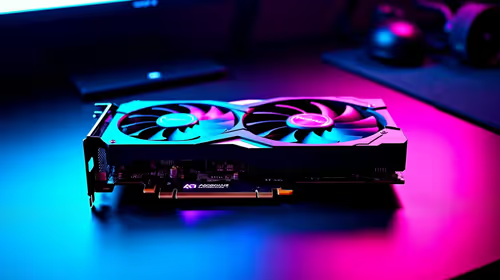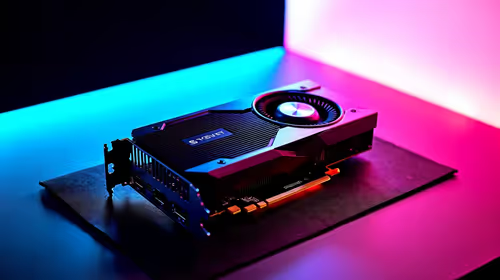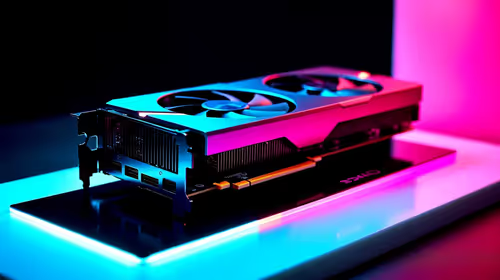
Picture this... you are in the final circle and tension is high. Suddenly your PC sounds like a Boeing taking off from OR Tambo. A loud rig ruins immersion faster than stage six load-shedding. Want to reduce GPU noise using Dual BIOS and fan curve optimisation? You are in the right place. Let us silence that jet engine and get you back in the zone.
Understanding Dual BIOS for Quieter Gaming
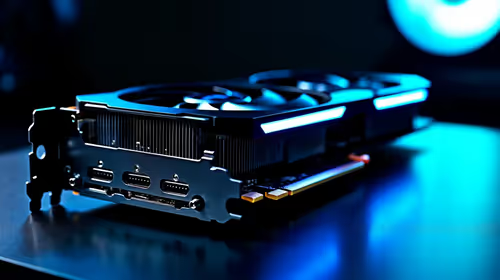
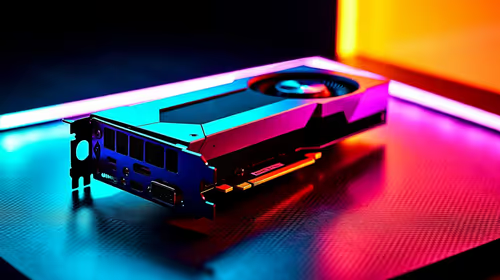
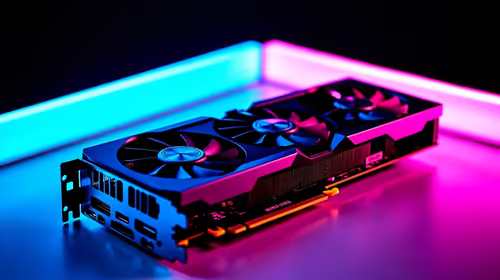
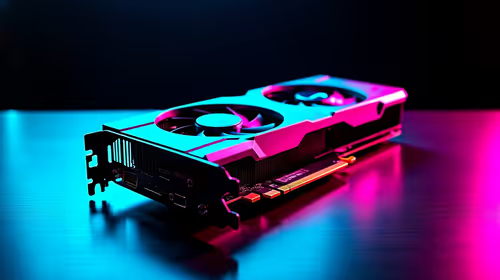
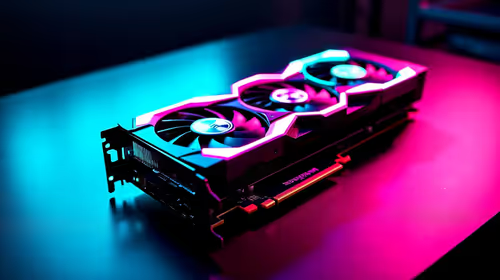
Many gamers ignore a tiny physical switch on their hardware. If you browse our range of modern graphics cards, you will notice premium models feature a Dual BIOS switch. This usually toggles between 'OC' and 'Silent' modes.
Flicking this switch to Silent mode instantly lowers power targets. It also adjusts the default fan speeds. You lose a fraction of performance... perhaps two or three frames per second. But the acoustic difference is massive. This is the easiest way to reduce GPU noise using Dual BIOS and fan curve optimisation.
How to Optimise Your Fan Curve
Sometimes a physical switch is not enough. This is where software like MSI Afterburner steps in. Customising your fan speeds gives you ultimate control over your system acoustics. Tweaking works wonders on classic Nvidia GeForce GTX graphics cards or modern RTX beasts.
By default, fans often spin up aggressively when temperatures rise. You can manually tell the fans to stay quiet until the core hits 70 degrees Celsius. If you grabbed one of our best graphics card deals recently, download your manufacturer software today. Drag the graph points to create a smooth... gradual slope. This prevents those annoying sudden revs during gameplay.
Silence Pro Tip 🔧
Always test your new fan curve under heavy load. Run a demanding benchmark for 15 minutes to ensure your temperatures stay safely below 85 degrees Celsius while keeping the noise down.
Balancing Temperatures and Acoustics
PC components are built to handle heat. Your graphics silicon is perfectly safe running in the mid-80s. Do not panic if your card hits 82 degrees while hunting for pre-built gaming PC deals online. 🚀
Letting your card run slightly warmer allows the fans to spin slower. Slower fans mean less noise. Finding the sweet spot between heat and silence takes a little patience. Try undervolting alongside your curve tweaks to drop temperatures even further.
The Importance of Good Airflow
Every PC case has unique airflow. A poorly ventilated case forces your graphics card to work harder. This means fans must spin faster to expel hot air. Before you adjust any settings, ensure your case fans are clear of dust.
A mesh front panel provides significantly better thermals than solid glass. When cool air flows freely, your components naturally run quieter. Good airflow is the foundation of a silent rig. ⚡
Knowing When to Upgrade
If your card sounds like a vacuum cleaner no matter what... it might be time for an upgrade. Older cards suffer from dried-out thermal paste and worn bearings. Sometimes you simply cannot reduce GPU noise using Dual BIOS and fan curve optimisation anymore.
When that day comes, keeping an eye on our latest hardware specials will save you thousands of Rands. Investing a few ZAR in a modern... efficient cooler design makes all the difference. ✨
Ready for a Silent Gaming Experience? Playing your favourite titles should not sound like a wind tunnel. If your current card is too loud to tame, explore our massive range of graphics cards and upgrade to a premium, whisper-quiet cooler today.