A perfectly good spool of PLA can turn brittle and stringy in a Cape Town winter without anyone touching it, because the filament quietly drinks moisture straight out of the air. The fix is not exotic: a sealed box, a fistful of rechargeable silica gel, and a cheap hygrometer that lets you actually see when filament storage humidity drops below the 20% mark where most materials print clean again.
Quick Answer
Seal each spool in an airtight box with 20g to 30g of colour-changing silica gel per spool and a small hygrometer, and the internal relative humidity settles below 20% within a day or two. That is the level at which PLA, PETG and most other filaments stay print-ready without pre-drying. Silica only holds moisture out, so a spool that is already wet needs active drying first.
Why South African air ruins filament faster than you think
Filament is hygroscopic, meaning it pulls water vapour out of the surrounding air until it reaches equilibrium with it. Coastal cities like Durban and Cape Town sit at ambient relative humidity well north of 60% for much of the year, and even inland Joburg spikes during summer storms. Once a nylon or PETG spool soaks up enough moisture, that water flashes to steam in the hot end and you get popping, stringing, blistered surfaces and weak layer bonding.
The target everyone quotes is below 20% RH inside the storage container. Below that figure the material gives back almost no print quality to moisture, and your spools last for months instead of degrading on the shelf.
Building the sealed storage box step by step
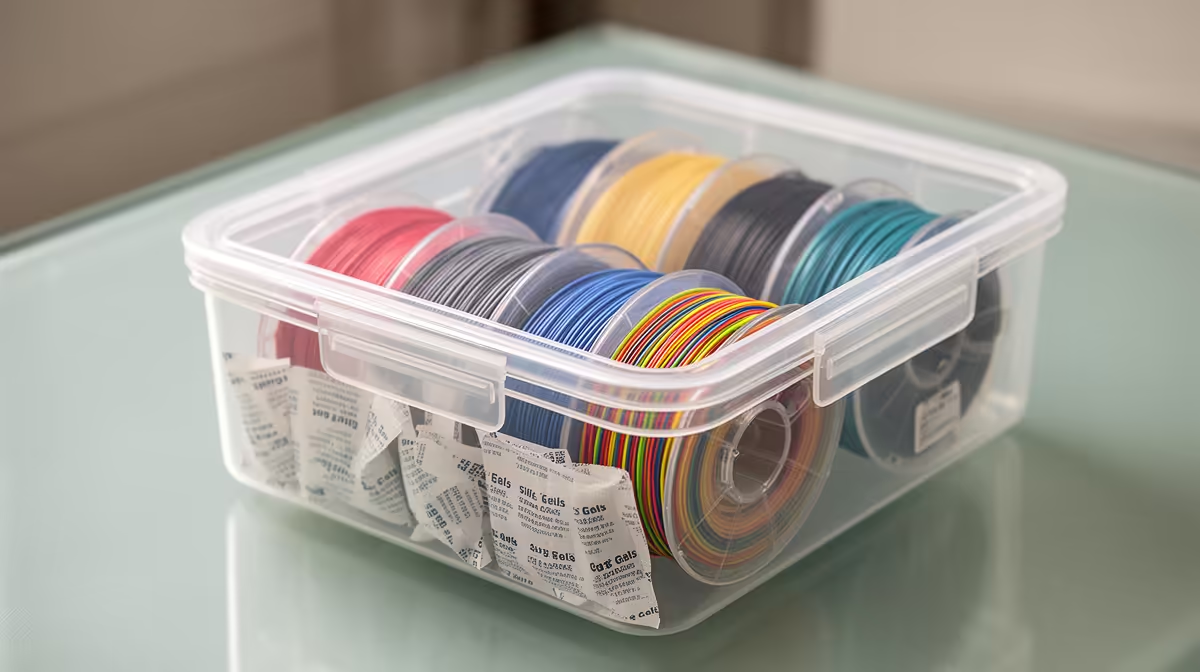
- Pick a genuinely airtight container. A clip-lock plastic tub with a rubber gasket lid is ideal. A 6 litre box holds one or two standard 1kg spools comfortably; a larger 20 litre to 30 litre tub stores four or more. The seal matters more than the brand, so check that the lid clamps down on a continuous gasket rather than just resting on the rim.
- Add a hygrometer you can read without opening the box. A small digital hygrometer dropped inside, visible through the lid, turns guesswork into a number. You want to watch it fall and stay under 20%.
- Load the silica gel. Use roughly 20g to 30g of silica per spool. Colour-changing (indicating) silica is worth the small extra cost because it shifts shade, typically orange to green or blue to pink, when it is saturated and needs recharging. Spread the desiccant around the spools rather than burying it in one corner.
- Seal and wait. Close the lid and leave it for a day. A well-sealed box with fresh desiccant should drop comfortably below 20% RH. If it stalls higher, your seal is leaking or the silica is already spent.
- Feed from the box where you can. The most reliable setup keeps the spool sealed even while printing, with the filament running out through a small grommet to the printer. If you cannot manage that, at least return the spool to the box the moment a print finishes rather than leaving it on the machine overnight.
Recharging silica gel so you buy it once
Silica gel is reusable indefinitely. When the indicating beads change colour, bake standard silica in an oven at 120C to 150C for one to two hours to drive the trapped moisture back off, let it cool in a sealed container, and drop it back in. Rechargeable desiccant packs and loose beads are easy to keep topped up alongside the rest of your printer consumables, and you can browse practical extras in the 3D printer accessories range when you are restocking. For the printer side of the hobby, the current 3D printer lineup at Evetech covers entry machines through to larger-volume units.
When silica is not enough
Passive desiccant cannot pull moisture out of filament that is already waterlogged; it only stops dry filament from getting wet. If a spool is already printing badly, run it through a dedicated filament dryer (or a low oven for PLA) first, then transfer it straight into the sealed box to keep it dry. Think of the silica box as maintenance, not rescue.
Frequently Asked Questions
What humidity level should filament be stored at?
Below 20% RH for the broadest safety margin across PLA, PETG, ABS and the more sensitive materials like nylon and TPU. A sealed box with adequate silica gel reaches and holds this comfortably, which is why a hygrometer inside the container is so useful.
How much silica gel do I need per spool?
Around 20g to 30g of silica per 1kg spool is the common guideline. Use more if your container is large or you open it often, since every opening lets humid air back in and consumes desiccant capacity.
Can I reuse silica gel or do I throw it away?
You reuse it. Recharge standard silica gel by heating it at roughly 120C to 150C for one to two hours, then cool and reseal it. Indicating beads tell you when they are saturated by changing colour.
Will a sealed box fix filament that already prints badly?
Not on its own. Silica gel prevents moisture absorption but cannot remove existing moisture, so already-wet filament needs active drying first. After drying, the sealed box keeps it print-ready.
Is a hygrometer really necessary?
It is the difference between hoping and knowing. A cheap hygrometer shows you when the box drops under 20%, warns you when the seal is failing, and tells you the moment your desiccant has stopped working.
Sorting your storage is the cheapest upgrade your printer will ever get. Stock up on sealed-box essentials and recharge-ready desiccant from the 3D printer accessories range at Evetech and stop throwing money at ruined spools.