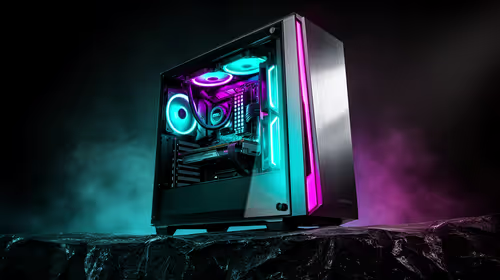
Stage 4 loadshedding hits just as you’re about to clutch a 1v3. The screen goes black. The rage is real. We’ve all been there. But what if your rig could just… keep going? Building a loadshedding resilient gaming PC isn’t a myth; it’s a smart strategy. By choosing power-efficient components, centred around a beast like the AMD Ryzen 7 5700, you can stay in the game when Eskom pulls the plug. ⚡
Why the Ryzen 7 5700 is Your Secret Weapon
When building a PC to survive power cuts, raw performance is only half the story. The other, more critical half is power efficiency. This is where the AMD Ryzen 7 5700 truly shines. It’s an 8-core, 16-thread powerhouse that delivers incredible gaming and multitasking performance, all while maintaining a surprisingly low 65W TDP (Thermal Design Power).
What does that mean for you?
- Lower Power Draw: A lower TDP means the CPU sips electricity instead of gulping it. This is the foundation of a loadshedding resilient gaming PC.
- Longer UPS Runtime: Your Uninterruptible Power Supply (UPS) will last significantly longer, giving you more than enough time to finish your match and save your progress.
- Cooler & Quieter: Efficiency means less wasted energy as heat. Your PC runs cooler, your fans run quieter, and your components enjoy a longer lifespan.
It’s the perfect heart for a build that balances elite performance with the practical needs of a South African gamer.
Assembling Your Loadshedding-Proof Rig 🔧
A great CPU needs a solid team of components supporting it. Building for resilience means making smart choices across the board, not just with the processor.
Choosing the Right Foundation: Your Motherboard
You don’t need the most expensive, power-hungry motherboard to get the best out of the Ryzen 7 5700. A solid B550 motherboard provides all the features you need, like PCIe 4.0 support and robust power delivery, without unnecessary extras that drain power. When you're browsing our motherboard selection, focus on reliability and the essential features for your build.
Pairing the Ryzen 7 5700 with a compatible AMD motherboard is crucial for stability and performance. You can explore our full range to find the perfect fit for your budget and needs by checking out all our AMD motherboards.
UPS Sizing Pro Tip ⚡
To find the right UPS, add up the max wattage of your PC components (CPU + GPU + extras) and your monitor. Multiply that total by 1.5 to get the ideal VA rating. For a typical Ryzen 7 5700 and RTX 4060 build (~400W), a 1000VA UPS is a great starting point, giving you precious minutes to finish your game.
The Unsung Heroes: PSU and Storage
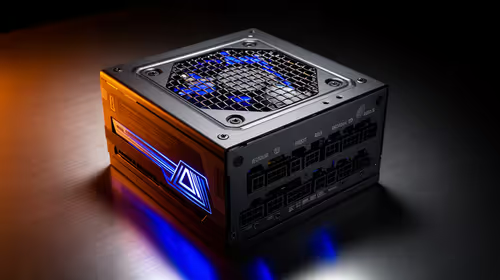
Your Power Supply Unit (PSU) is critical. An 80+ Gold rated PSU is highly recommended. It runs more efficiently, converting more power from the wall into usable energy for your PC, which means less work for your UPS.
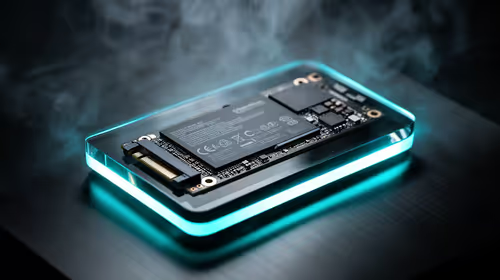
For storage, NVMe SSDs are not only incredibly fast but also more power-efficient than traditional hard drives. Every watt saved adds precious seconds to your UPS runtime, making an SSD a key part of any modern loadshedding gaming PC.
Optimise Your Build and Win the Fight 🚀
Building a loadshedding resilient gaming PC with the Ryzen 7 5700 is about making smart, deliberate choices. By focusing on efficient components, you create a powerful rig that won’t surrender to the darkness. You get top-tier gaming performance and the peace of mind that comes from knowing you can outlast the outage. It’s time to take control of your gaming sessions.
Ready to Build Your Uninterruptible Rig? Loadshedding doesn't have to mean game over. With the right components, you can build a powerful, efficient PC that keeps you in the action. Use our advanced Custom PC Builder to design your perfect loadshedding-proof machine today.