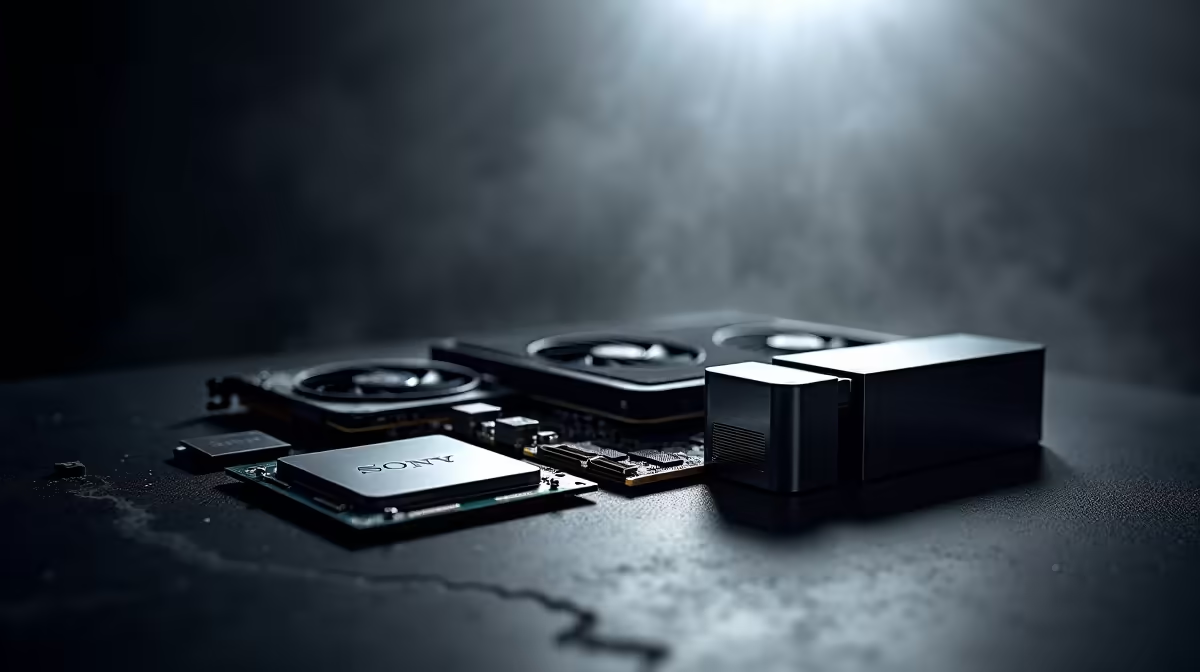
So, you’re ready to build your dream PC. You’ve pictured the glorious RGB, the silky-smooth frame rates, and the envy of your mates. But a cold thought creeps in… what if the parts don’t fit? What if your R30,000 masterpiece refuses to boot? This fear is real, but understanding the fundamentals of PC component compatibility is the key that unlocks your perfect build. It’s the difference between a powerful rig and an expensive paperweight.
The Core Trio: CPU, Motherboard & RAM Compatibility
Getting the relationship between your processor (CPU), motherboard, and memory (RAM) right is non-negotiable. This is the foundation of your entire system, and a mismatch here is a dead end. Think of the motherboard as the central nervous system; everything must connect to it correctly.
The CPU and Motherboard Handshake
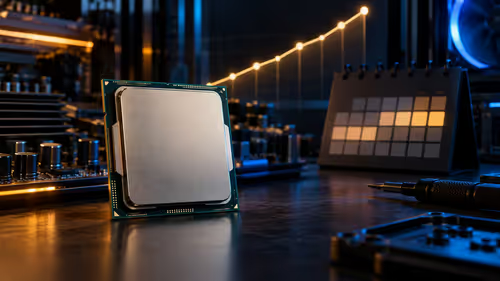
The most critical check is the CPU socket. An Intel CPU won't fit in an AMD motherboard, and even within the same brand, different generations use different sockets. For example, a modern Intel Core i9 uses an LGA 1700 socket, which must match the socket on the motherboard.
The motherboard's chipset is just as important. It’s the traffic controller that dictates which features you can use. A high-end Z790 chipset, for instance, unlocks overclocking capabilities for compatible Intel CPUs, while a B760 chipset offers a more balanced feature set for everyday gaming and productivity. Checking PC component compatibility starts right here.
Don't Forget the RAM
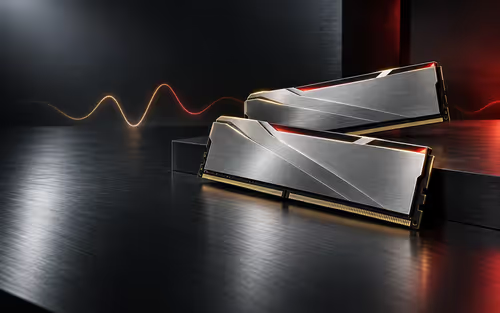
Next up is your RAM. The big question today is DDR4 or DDR5? They are not interchangeable. Your motherboard will explicitly state which type it supports. While DDR5 offers higher speeds for cutting-edge performance, DDR4 provides fantastic value, making it a smart choice for many budget gaming PCs in South Africa. 🚀
Graphics Power: GPU, PSU & Case Compatibility
Your graphics card (GPU) is often the star of the show, but it needs a strong supporting cast. A common mistake is pairing a beastly GPU with a power supply unit (PSU) that can't keep up, or a case that's too small.
First, physical size. High-end GPUs like the NVIDIA GeForce RTX 4080 are massive. You must check the GPU's length against the maximum GPU clearance listed in your chosen case's specifications.
Second, power. Your PSU must have enough wattage to power the entire system, with some headroom to spare. It also needs the correct power connectors. A new RTX 40-series card might require a 16-pin 12VHPWR connector, which older PSUs won't have. This level of PC part compatibility is crucial, whether you're building a solid rig from our range of PCs under R20k or a top-tier machine. For the most demanding setups, like those found in our PCs above R20k category, a high-quality, high-wattage PSU is essential.
Compatibility Checklist Pro Tip 🔧
While online tools like PCPartPicker are a great starting point, always treat the manufacturer's official product page as the final word. Double-check the motherboard's CPU support list and the case's GPU clearance dimensions yourself before you buy. A few minutes of extra research can save you hours of frustration.
The Final Fit: Case, Cooling & Storage
You’re almost there! The final checks ensure everything physically fits together and stays cool under pressure. This is where your component compatibility research truly pays off.
The motherboard's form factor (ATX, Micro-ATX, or Mini-ITX) must match what your case supports. You can usually fit a smaller board in a larger case, but not the other way around.
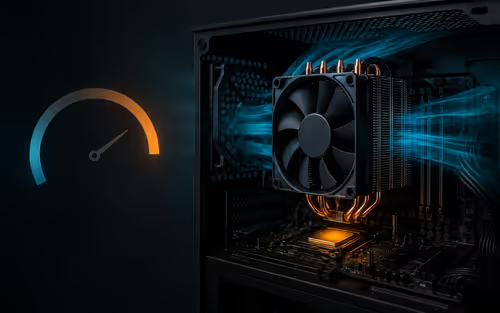
Cooling is another key consideration. If you're using a large air cooler, check its height against the case's maximum CPU cooler height. If you're opting for a liquid AIO cooler, ensure the case has mounting points for the radiator size you've chosen (e.g., 240mm or 360mm). Getting these details right is what separates an amateur build from the professionally assembled systems you'll find in our list of the best gaming PC deals. ✨
The DIY Dream vs. The Guaranteed Reality
Building your own PC is an incredibly rewarding experience. The pride you feel when it boots up for the first time is unmatched. However, the process of checking and double-checking every aspect of PC component compatibility can be daunting, especially for first-timers.
One wrong choice can lead to bottlenecks, instability, or a system that doesn't work at all. If you want the performance without the potential pitfalls, exploring professionally built systems is a smart move. At Evetech, we live and breathe this stuff, ensuring every machine is a perfectly balanced, stress-tested powerhouse right out of the box. Why not skip the headache and jump straight to the fun with our fantastic pre-built PC deals?
Ready to Build... or Just Play?
Ensuring perfect PC component compatibility takes time and research. If you'd rather spend that time gaming, let our experts do the hard work for you. Use our powerful Custom PC Builder to design your dream machine with guaranteed compatibility, or explore our massive range of pre-built rigs.