Staring at a render bar that refuses to move? Is your timeline playback stuttering more than a nervous best man's speech? We've all been there. A slow computer is the ultimate creativity killer. But finding the perfect PC for video editing in South Africa doesn't have to be a headache. Whether you're cutting your first TikTok or grading a 4K feature film, this guide will help you choose the right hardware to bring your vision to life, without the lag.
The Core of a Great PC for Video Editing
Building a powerful video editing PC is all about balance. You can't just throw money at one component and expect magic. Four key parts work together to create a smooth, responsive editing experience: the CPU, the GPU, RAM, and Storage. Let's break down what each one does and what you should look for.
CPU: The Brains of Your Operation 🧠
The Central Processing Unit (CPU) is the engine of your computer. For video editing, it handles tasks like decoding footage, running the software interface, and, most importantly, encoding your final export.
When choosing a CPU, you'll hear about "cores" and "clock speed."
- More Cores: Helps your PC multitask and dramatically speeds up rendering times. A CPU with more cores can work on more pieces of the video simultaneously during an export.
- Higher Clock Speed (GHz): Affects the general snappiness of your software. A faster clock speed can lead to smoother timeline scrubbing and faster application of certain effects.
Both Intel and AMD make fantastic CPUs for content creation. Intel's Core series is known for strong single-core performance, which is great for timeline responsiveness. You can find powerful options across our Intel PC deals. On the other hand, AMD's Ryzen processors have become a favourite for creators due to their excellent multi-core value, making them rendering beasts. Explore a wide variety of builds in our AMD Ryzen PC deals section.
GPU: Accelerating Your Creative Flow 🚀
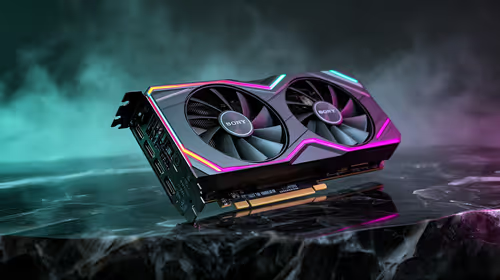
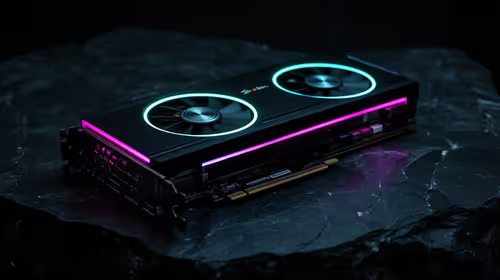
The Graphics Processing Unit (GPU), or graphics card, was once just for gaming, but today it's a vital part of any serious PC for editing videos. It takes the load off your CPU for visual tasks like:
- Real-time playback of high-resolution footage (4K, 6K, 8K).
- Accelerating visual effects, transitions, and colour grading.
- Speeding up exports using dedicated encoders like NVIDIA's NVENC.
The most important spec here is VRAM (video memory). For 1080p editing, 6-8GB is fine. For 4K, aim for 10GB or more. NVIDIA's CUDA technology is widely supported and delivers stellar performance in apps like Premiere Pro and DaVinci Resolve. Many of our top NVIDIA GeForce gaming PCs double as incredible editing machines. Of course, don't count out Team Red; modern AMD cards offer fantastic performance, especially in programs optimised for OpenCL. See how they stack up in our range of AMD Radeon gaming PCs.
Pro Tip: Enable GPU Acceleration ⚡
Dive into your editing software's preferences (like Premiere Pro's 'Mercury Playback Engine' or DaVinci Resolve's 'GPU processing mode'). Make sure it's set to use your graphics card (CUDA for NVIDIA, OpenCL Metal for AMD). This simple switch offloads heavy lifting from your CPU to your GPU, resulting in smoother playback and faster effect rendering. It's a non-negotiable for any modern video editing PC.
RAM and Storage: The Unsung Heroes
Your CPU and GPU have the glamour, but without enough fast RAM and storage, even the best PC for video editing will feel sluggish.
How Much RAM Do You Really Need?
RAM (Random Access Memory) is your computer's short-term memory. Video editing loves RAM. The more you have, the more clips, effects, and applications you can handle at once without your system slowing down.
- 16GB: The absolute minimum for 1080p editing. You might need to close other programs while working.
- 32GB: The sweet spot for most users, including 4K editing. It provides enough headroom for smooth performance.
- 64GB+: Recommended for professionals working with 6K/8K footage, complex After Effects compositions, or heavy multitasking.
Storage: Speed is Everything ✨
Your storage drives determine how quickly your PC can load the operating system, launch software, and, crucially, read the video files you're editing. A slow drive means choppy playback.
- NVMe SSD: The fastest option. Use this for your operating system, applications, and your active project files.
- SATA SSD: Still very fast and more affordable. Great for a secondary drive for more project files or a game library.
- HDD (Hard Drive): The slowest, but offers huge capacity for a low price. Perfect for long-term storage and archiving completed projects.
Assembling Your Dream Editing Machine 🔧
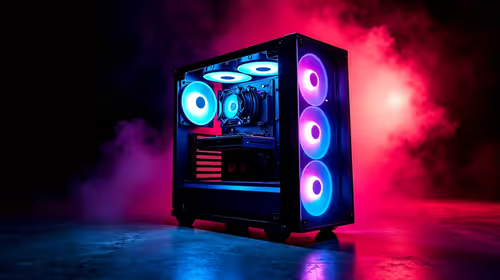
So, do you build it yourself or buy a ready-made system? For most creators, jumping straight into a professionally assembled system is the fastest way to get editing. Our pre-built PC deals are performance-tested and ready to go right out of the box, saving you the hassle of component matching and building.
However, for professionals working with high-bitrate cinema cameras or complex 3D workflows where stability is paramount, a purpose-built system is often the best choice. That's where Workstation PCs come in, featuring certified components designed for 24/7 reliability on mission-critical projects. Ultimately, the best editing computer is one that fits your specific workflow and budget.
Ready to Build Your Creative Powerhouse?
From your first YouTube video to a professional short film, the right PC makes all the difference. Stop waiting for renders and start creating. Explore our massive range of pre-built PC deals and find the perfect machine to conquer your timeline.