Building a new PC rig in Mzansi? You're likely obsessing over the GPU and CPU... but what about the PCIe slots on the motherboard? These crucial connectors are the superhighways for your components. Get this choice wrong, and you could be throttling your brand-new graphics card before you even boot up your first game. This guide ensures your PC build starts on the right foundation, with no performance left behind. 🚀
What Are PCIe Slots on a Motherboard, Anyway?
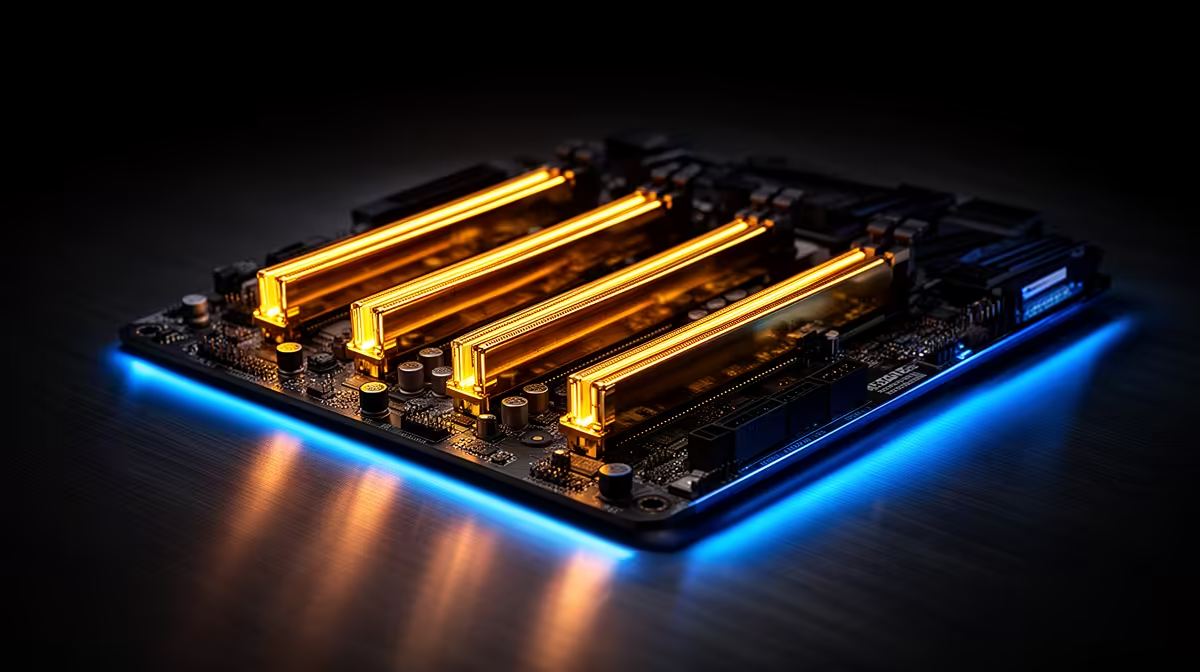
Think of the Peripheral Component Interconnect Express (or PCIe) slots on your motherboard as the N1 highway for your PC's data. Some lanes are wider for heavy traffic (like your graphics card), and some are narrower for lighter loads (like a Wi-Fi card). They come in different physical sizes and electrical configurations, noted by a number: x16, x8, x4, and x1.
- x16 Slot: The big one. This is reserved for your power-hungry graphics card, offering the maximum bandwidth directly to your CPU.
- x4 and x8 Slots: Often used for high-speed NVMe SSD expansion cards or capture cards for streaming.
- x1 Slot: Perfect for smaller expansion cards like sound cards, network adapters, or USB hubs.
Understanding this layout is the first step in planning a balanced build where no component is bottlenecked.
Understanding PCIe Generations: Gen 4 vs Gen 5
Just as important as the size of the slot is its generation. Each new generation of PCIe roughly doubles the bandwidth of the previous one. Right now, PCIe 4.0 is the standard for most gaming rigs, offering incredible speeds for modern GPUs and NVMe SSDs. PCIe 5.0 is the new kid on the block, offering mind-blowing theoretical speeds for next-gen hardware.
The great news? They're backwards-compatible. You can plug a PCIe 4.0 GPU into a 5.0 slot, and it will work perfectly. This makes choosing from the latest motherboards easier, as you can invest in a newer board and upgrade components later.
Check Your Lanes! 🚦
Many motherboards share PCIe lanes between slots. For example, plugging in a second M.2 SSD might reduce your second x16 graphics card slot's speed to x8. Always check your motherboard manual! This little bit of homework ensures every component runs at its full, advertised potential.
Matching Your Components to Your Motherboard's PCIe Slots
Planning your build is all about synergy. The PCIe slots on your motherboard dictate which components you can use and how well they perform together.
The Graphics Card (GPU)
Your GPU is the star of the show and needs the best seat in the house: the top-most x16 slot. This slot typically has the most direct and fastest connection to the CPU, ensuring maximum gaming performance. Whether you're building with one of the newest AMD motherboards for a Ryzen rig or going Team Blue, this principle remains the same. 🔧
NVMe SSDs and Other Cards
Those lightning-fast M.2 NVMe SSDs also use PCIe lanes for their incredible speeds. Most modern motherboards have dedicated M.2 slots, but it's crucial to check which PCIe generation they support to get the speed you paid for. If you're looking at various Intel motherboards, you'll see a range of options for M.2 support, so be sure to match it to your storage needs.
Key Considerations for Your Next South African Build ✨
When you're browsing for a new board, keep these local factors in mind:
- Future-Proofing vs. Value: Is it worth paying a premium in ZAR for a motherboard with PCIe 5.0 right now? If you're building a top-tier rig and plan to upgrade to a next-gen GPU in a year or two, absolutely. For most mid-range builds, a solid PCIe 4.0 board offers fantastic value and performance for today's hardware.
- Form Factor: An ATX motherboard will naturally have more PCIe slots than a compact Mini-ITX board. Plan according to your case size and how many expansion cards you realistically need. Don't pay for slots you'll never use!
Choosing the right motherboard comes down to understanding how these crucial slots serve your chosen components. Get it right, and you're on your way to a powerful, stable, and lightning-fast PC.
Ready to Build Your Beast?
The motherboard is the foundation of your rig. Understanding the PCIe slots on a motherboard is the first step to a balanced, high-performance build. Explore our massive range of motherboards and find the perfect backbone for your next PC.