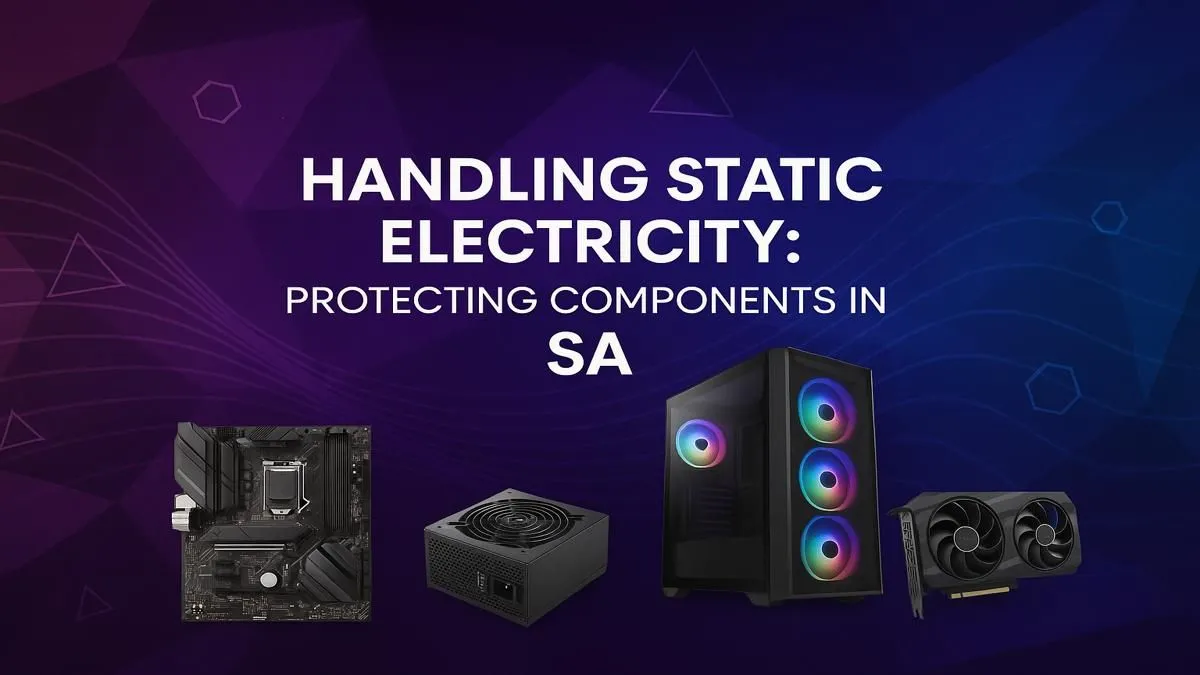
You’ve spent weeks picking parts. Your brand-new CPU, GPU, and motherboard are laid out, gleaming with potential. You reach for the RAM, and then you feel it… a tiny, almost unnoticeable zap. Is it fine? Maybe. Or maybe you've just turned that pricey component into a paperweight. Learning how to prevent static damage to PC components isn't just a "nice-to-have" skill in South Africa; it's essential for any aspiring PC builder.
Understanding Electrostatic Discharge (ESD)
So, what is this invisible threat? Electrostatic discharge (ESD) is the sudden flow of electricity between two objects. You build up a static charge just by walking on a carpet or even wearing certain clothes. While that little shock you get from a doorknob is annoying, the same voltage can be fatal to the delicate integrated circuits in your PC parts. ⚡
Protecting your investment is crucial, especially when you're building a high-performance machine. The sensitive electronics in a top-tier motherboard or graphics card are incredibly vulnerable to ESD, and a single mistake could be costly. Ensuring you build PCs above R20k with the right precautions is non-negotiable.
Your Toolkit for Preventing Static Damage
Fortunately, you don't need a lab coat and a clean room to safely build a PC. A few simple tools and good habits are all it takes to prevent static damage.
The Essentials
- Anti-Static Wrist Strap: This is your number one defence. It clips onto a large, unpainted metal part of your PC case and safely equalises the electrical charge between you and your components. It’s a cheap investment that can save you thousands of Rands.
- Anti-Static Mat: While not strictly necessary for most home builds, a mat provides a safe, grounded surface to work on and place your components.
- Component Bags: Keep your parts in the anti-static bags they came in until the moment you need to install them. These bags are designed to shield them from stray charges.
No Wrist Strap? No Problem! 🔧
If you're in a pinch, you can ground yourself by regularly touching an unpainted metal part of your plugged-in (but switched off) PC case's power supply. This isn't as reliable as a dedicated strap, but it's far better than nothing. Just make it a habit to touch the case before you touch any component.
A Step-by-Step Guide to a Static-Safe Build
Ready to build? Following these steps will dramatically reduce the risk of ESD and help you prevent static damage to your PC components.
- Prepare Your Workspace: Work on a hard surface like a wooden table or tiled floor. Avoid building on carpet at all costs, as it's a major generator of static electricity. Wear rubber-soled shoes and avoid woolly jerseys.
- Ground Yourself: Before you even open a component box, put on your anti-static wrist strap and connect it to your PC case. This ensures you and the PC are at the same electrical potential.
- Handle with Care: Always hold components by their edges. Avoid touching the gold-plated contacts, pins, or the circuitry itself. The oils on your fingers aren't great for them either! This rule is just as important for PCs under R20k as it is for enthusiast rigs.
- Install Directly: Try to move components directly from their anti-static bag to the motherboard or case. The less time they spend out in the open, the better.
Static damage doesn't care if you're building with entry-level parts; even the most carefully selected budget gaming PCs are at risk if you don't take precautions.
The Stress-Free Alternative ✨
Building your own PC is an incredibly rewarding experience. But let's be honest, the fear of frying a component can be stressful. If you'd rather skip the anxiety and get straight to gaming, there's no shame in leaving it to the professionals.
Our team of expert technicians builds PCs day in and day out in a static-controlled environment. We handle the risks so you don't have to. Every cable is managed, every component is tested, and your machine arrives ready to dominate. Exploring the best gaming PC deals offers peace of mind and pro-level performance right out of the box. Why not let us handle the delicate work?
Ready for a Shock-Proof Gaming Rig?
Building is fun, but a professionally assembled PC guarantees performance without the risk. Our experts ensure every component is installed safely in a static-free environment. Explore our incredible pre-built PC deals and get a battle-station that's ready for anything.