Trying to clutch a 1v3 in Valorant, but your PC sounds like a jet taking off from OR Tambo? We’ve all been there. That distracting whir from your fans doesn’t just break your focus; it’s a sign your rig is working overtime. But what if you could get all the power without the noise? Building a quiet gaming PC isn't a myth, and it’s easier than you think. Let's silence that beast. 🤫
Understanding the Source of PC Noise
Before you can build a quiet gaming PC, you need to know what’s making all that noise. It’s not just one thing; it’s a team effort. The main culprits are moving parts, specifically fans.
- CPU Cooler Fan: This is often the loudest component, especially the stock coolers that come with processors. It spins up aggressively to prevent your CPU from overheating during intense gaming sessions.
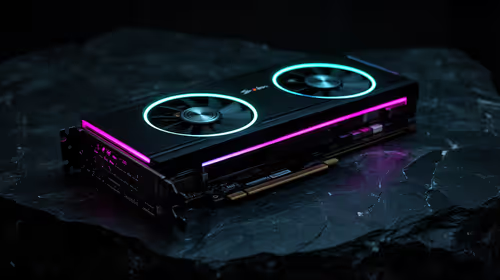
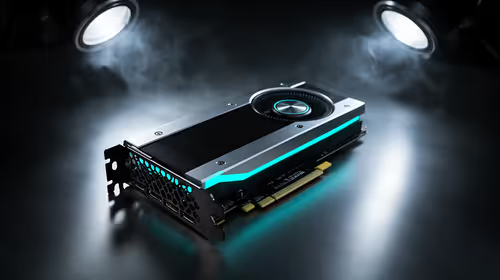
- GPU Fans: Your graphics card is a powerhouse, and its fans work hard to keep it cool under load. High-end cards can have three fans that create a significant amount of noise.
- Case Fans: These are essential for airflow, pushing cool air in and pulling hot air out. But cheap or poorly configured fans add to the overall decibel level.
- Power Supply (PSU) Fan: An often-overlooked source of noise, the PSU fan kicks in to cool its internal components.
The goal isn't to eliminate fans, but to choose smarter components that cool more efficiently at lower, quieter speeds.
Key Components for a Truly Quiet Gaming PC
Crafting a whisper-quiet rig is all about strategic component selection. Focusing on a few key areas will make the biggest difference in your quest to silence your PC.
The CPU Cooler: Your First Line of Defence
The single most effective upgrade for a quieter PC is replacing the stock CPU cooler. Stock coolers are designed to be "good enough" at a low cost, not quiet. You have two main choices for a silent upgrade:
- High-Performance Air Coolers: Large heatsinks with big, slow-spinning fans (like those from Noctua or be quiet!) move a lot of air without making a racket. They are incredibly reliable and effective.
- All-in-One (AIO) Liquid Coolers: These use liquid to transfer heat from the CPU to a radiator, where fans dissipate it. A quality AIO can offer fantastic cooling with very low noise levels, especially with a large radiator (240mm or bigger).
When you're browsing the huge selection of CPU processors online, factoring in the cost of a good aftermarket cooler is a smart move for any quiet build.
Master Your Fan Curves 🔧
Most modern motherboards let you set custom "fan curves" in the BIOS UEFI. Instead of letting fans blast at 100% speed the moment your CPU hits 60°C, you can create a gradual slope. This tells your fans to spin up slowly, keeping the system near-silent during everyday tasks and only becoming audible during heavy, sustained gaming loads. It's a free way to make your PC significantly quieter!
The Case and Case Fans
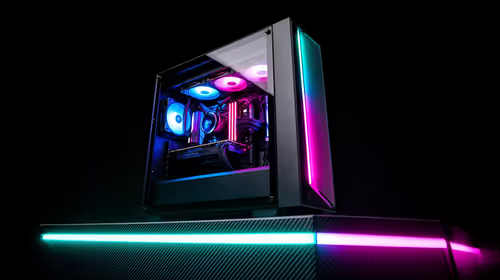
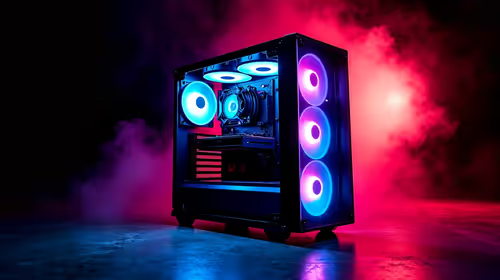
Your PC case is more than just a box; it’s your system’s foundation for airflow and noise control. Look for cases designed with sound-dampening materials on the side panels. Brands like Fractal Design and be quiet! are famous for this.
Good airflow is also critical. A case that breathes well allows your fans to spin slower, creating less noise. Pair it with high-quality PWM (Pulse Width Modulation) fans that allow for precise speed control. Investing in a few premium 120mm or 140mm fans can make a world of difference.
Upgrading an Existing PC for Silence
Don't have the budget for a brand-new build? No problem. A few targeted upgrades can dramatically reduce the noise from your current rig.
Start with the CPU cooler. Whether you're upgrading your Intel CPU's cooling solution or finding a better match for one of the latest AMD processors, this upgrade provides the most significant noise reduction for your money.
Next, consider replacing your case fans. If they're old, rattling, or just cheap, a new set of quiet, fluid-dynamic bearing fans will lower the constant hum of your machine. A quiet gaming PC is a journey of small, smart optimisations that lead to a massive improvement in focus and immersion. ✨
Ready to Build Your Silent Rig?
A quiet PC is the ultimate upgrade for peak gaming focus and immersion. From whisper-quiet coolers to sound-dampened cases, the right parts make all the difference. Explore our massive range of PC components and find the perfect hardware to build your silent beast today.