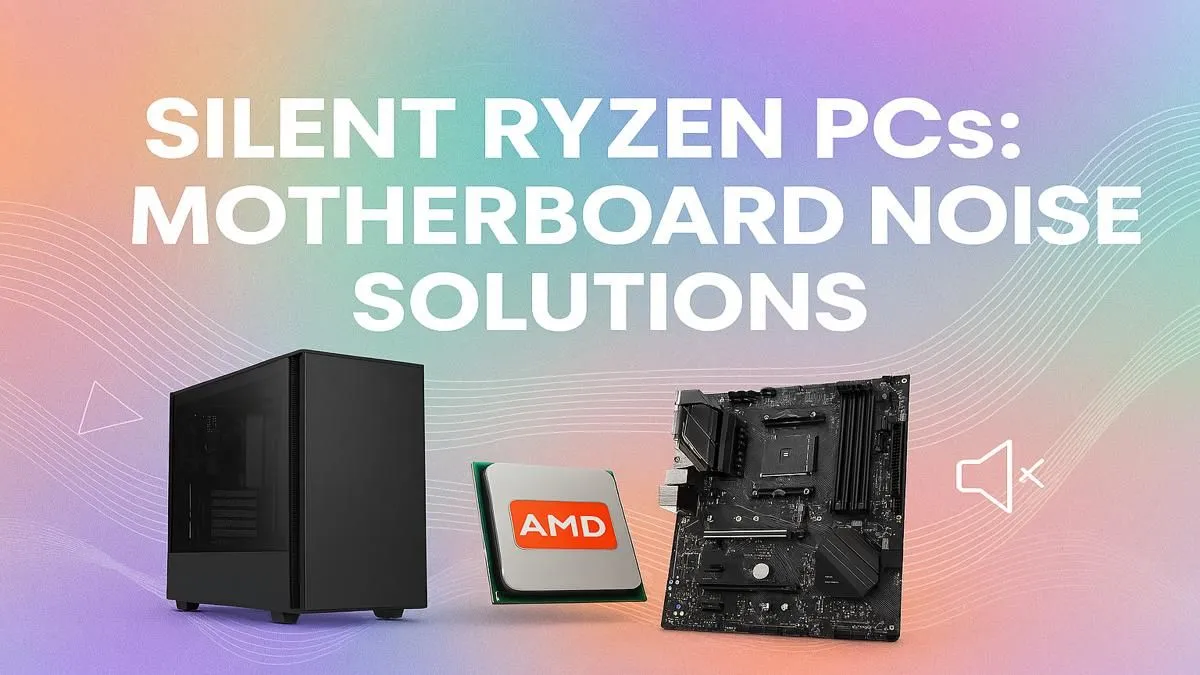
You’ve built your dream Ryzen rig. The RGB is synced, the frame rates are buttery smooth… but what’s that noise? It’s a persistent, nagging hum that cuts through the quiet moments in your favourite game. Before you blame your case fans or GPU, look closer. The source of your frustration might be something you never suspected: your motherboard. Understanding and eliminating Ryzen motherboard noise is the final boss battle for a truly silent PC. Let's get this sorted.
Identifying the Source of Motherboard Noise
That annoying buzz isn't just one thing. Ryzen motherboard noise can come from a few culprits, each with its own signature sound. Pinpointing the source is the first step to achieving that sweet, sweet silence.
The Tiny Chipset Fan ⚙️
On many older high-performance motherboards (especially first-gen X570s), a tiny fan sits on the chipset heatsink. This little screamer spins at high RPMs to cool the component that manages your PC's data traffic. Over time, dust buildup or bearing wear can turn its subtle whir into an irritating, high-pitched whine. It's often the number one cause of unexpected Ryzen motherboard noise.
VRM Fans and Coil Whine
Voltage Regulator Modules (VRMs) feed clean, stable power to your CPU. They work hard and get hot, especially when you're overclocking. While most boards use passive heatsinks, some ultra-high-end models add small fans to the VRM cooling solution.
Then there's coil whine... that electronic buzzing sound. It happens when electricity passes through power-regulating components like chokes and inductors, causing them to vibrate. While not harmful, it can be seriously distracting. A well-designed board with high-quality components can minimise this, but it's sometimes just the luck of the draw.
Your Guide to a Silent PC Build
Achieving whisper-quiet operation isn't about luck; it's about smart component choices and a little bit of tweaking. Here’s how you can build a rig that’s powerful, not loud.
Prioritise Passive Cooling
The easiest way to eliminate a noise source is to choose a component that doesn't have one. Modern motherboard chipsets are far more efficient than their predecessors. This means manufacturers can cool them with a large, finned piece of metal—a passive heatsink—with no moving parts.
When shopping, look for boards that proudly advertise their fanless chipset and robust VRM cooling. Many excellent AMD B550 motherboards for the AM4 platform offer fantastic, silent performance without breaking the bank.
BIOS Fan Control Pro Tip 🔧
Reboot your PC and enter the BIOS UEFI (usually by pressing DEL or F2). Find the hardware monitor or fan control section (often called Q-Fan, Smart Fan, or similar). Instead of 'Standard' or 'Turbo' profiles, select 'Silent' or 'Manual'. You can then create a custom curve that keeps fans at their lowest RPM until the CPU hits a specific temperature, like 60°C. This keeps your PC dead quiet during browsing or light tasks.
Optimise Your Fan Curves
Your motherboard is the central command for every fan in your case. Don't just stick with the default settings! Spending ten minutes in your BIOS to set custom fan curves is the single most effective step you can take to reduce overall system noise. The goal is to keep fans spinning slowly (or even off) during idle and low-load situations, only ramping them up when you’re truly pushing the system.
Consider the Bigger Picture
A silent motherboard is a great start, but it's part of a team. A sound-dampened case, a high-quality power supply with a zero-RPM fan mode, and quiet case fans all contribute to the end result. When you browse the full range of AMD motherboards, think about how your choice will pair with these other components.
Choosing the Right Silent Platform ✨
With AMD's latest platforms, building a quiet powerhouse has never been easier. The focus on power efficiency means less heat, and less heat means less need for aggressive, noisy cooling.
- The Future-Proof Mainstream (B850): As we look toward the next generation of processors, platforms like the upcoming AMD B850 motherboards are set to offer a brilliant balance of modern features like PCIe 5.0 and USB4, all built on a foundation designed for efficiency and silent operation.
- The Enthusiast's Choice (X870): For those who demand the absolute best without compromise, the flagship boards are the way to go. The next-gen AMD X870 motherboards will deliver maximum connectivity and overclocking potential, often paired with oversized, passive heatsinks that handle the heat without making a peep.
Ultimately, silencing your PC is about making deliberate choices. By picking a motherboard with great passive cooling and taking control of your system's fans, you can finally enjoy your games and creative work with nothing but the sounds you want to hear.
Ready to Build Your Silent Rig?
Tackling Ryzen motherboard noise starts with the right foundation. A modern, well-designed board is your best bet for a quiet and powerful PC. Explore our massive range of AMD motherboards and find the perfect silent core for your next build.