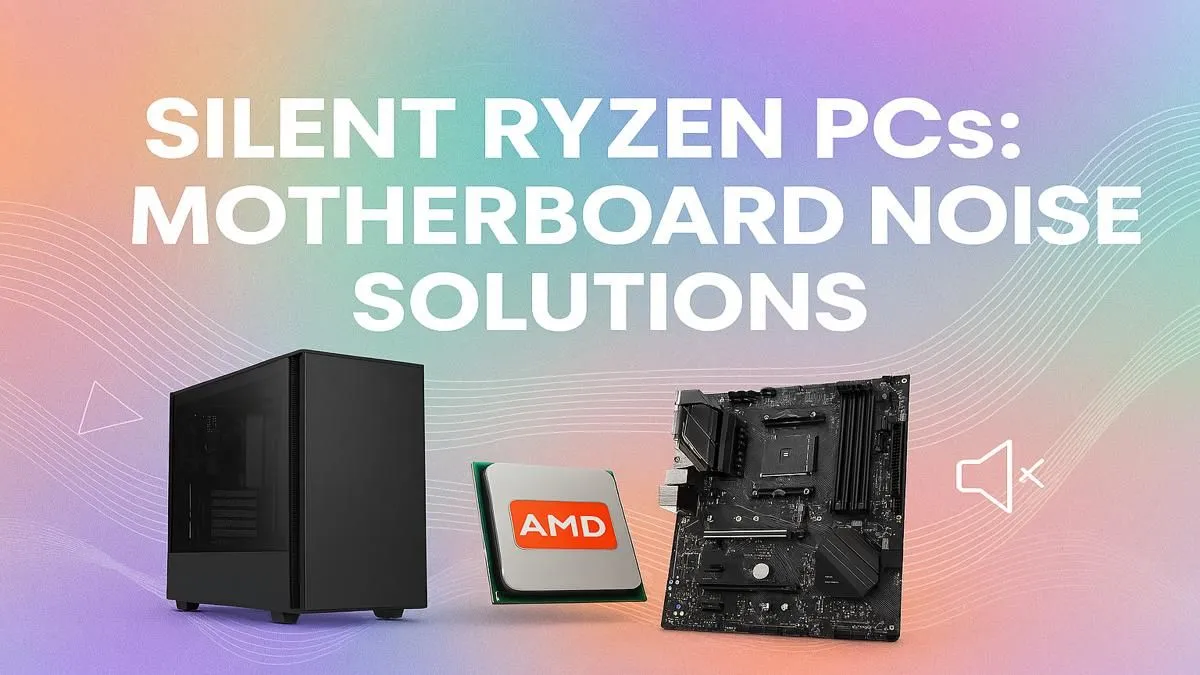
You’ve done it. The final cable is managed, the side panel is on, and your new Ryzen beast is ready to roar. You hit the power button… and hear it. A faint, high-pitched hum or a tiny, buzzing fan that just won’t quit. Suddenly, your dream PC sounds a bit… annoying. Don’t stress, boet. Fixing Ryzen motherboard noise is often simpler than you think. Let's dive into the two most common culprits—VRM whine and noisy chipset fans—and get your rig running whisper-quiet. 🤫
What Causes That Annoying Ryzen Motherboard Noise?
Before you can silence the buzz, you need to identify its source. In most Ryzen builds, one of two components is responsible for unwanted electronic or mechanical noise coming from the motherboard itself.
Demystifying VRM Whine
That high-pitched squeal you hear when your CPU is under heavy load (or sometimes, weirdly, when it's idle) is likely VRM whine. VRMs, or Voltage Regulator Modules, are crucial components that deliver clean, stable power to your processor.
The noise comes from inductors (or "chokes") within the VRM vibrating at a high frequency as electricity passes through them. It's not a sign of failure, but it can be incredibly distracting. The intensity often changes with the frame rate in a game, which is a dead giveaway.
The Chipset Fan Conundrum
If the noise is more like a tiny, high-RPM fan, that’s probably what it is. Early-generation AM4 motherboards, especially many X570 models, used a small fan to actively cool the chipset. While effective, these fans can become audible over time as dust accumulates or the bearings wear. They spin fast and can produce a distinct, irritating buzz that cuts through an otherwise silent build.
Practical Solutions for Fixing Ryzen Motherboard Noise
Now for the good part: making it stop. We'll start with software tweaks before considering hardware changes.
Taming VRM Whine ⚡
- Enable C-States in BIOS/UEFI: Modern CPUs have power-saving states called "C-states." Sometimes, forcing the CPU to use these deeper idle states can change the frequency running through the VRMs and reduce or eliminate the whine. Dive into your BIOS and look for "Global C-state Control" or similar settings and make sure they're enabled.
- Cap Your Frame Rate: Since VRM whine is often tied to fluctuating loads, locking your frame rate can work wonders. Using V-Sync, an in-game FPS limiter, or tools like NVIDIA Control Panel or AMD Radeon Software to set a max frame rate provides a more consistent load for the VRMs, often silencing the squeal.
- Consider the Source: If software fixes don't cut it, the whine may be due to the physical components on the board. Sometimes, the simplest long-term solution is a board with a more robust power delivery system, found across the entire range of modern AMD motherboards.
BIOS Pro Tip 🔧
Some motherboards have a BIOS setting called "CPU Spread Spectrum." Disabling it can sometimes alter the electrical frequencies just enough to reduce or eliminate coil whine. It's a long shot, but it's a quick and easy thing to try before you start pulling components apart!
Silencing a Noisy Chipset Fan
- Adjust the Fan Curve: Most motherboards with a chipset fan allow you to control its speed in the BIOS/UEFI. Look for a "PCH Fan" or "Chipset Fan" profile. Often, they are set to an aggressive default. Switching to a "Silent" profile can make a huge difference without impacting performance for most users.
- A Good Ol' Cleaning: Dust is the enemy of small fans. Power down, unplug, and use a can of compressed air to carefully blow any dust out of the chipset fan and heatsink. A cleaner fan runs cooler and quieter.
- The Passive Cooling Upgrade: This noise issue was largely solved in subsequent motherboard generations. Many builders found permanent relief by moving to platforms where passive cooling became the norm, like on the ever-popular and reliable AMD B550 motherboards.
Looking Ahead: Proactive Noise Prevention
If you're planning a new build or a major upgrade, you can design the noise out from the start. Motherboard manufacturers have focused heavily on improving power delivery and creating silent, passive cooling solutions for their chipsets. ✨
The good news is that this trend is set to continue. Next-generation platforms, from the versatile upcoming AMD B850 motherboards to the high-performance AMD X870 motherboards, are being engineered with even more advanced, quiet cooling and superior power components from the ground up. Choosing a quality board is your best defence against unwanted noise.
Ready for a Silent, Powerful Rig?
Don't let motherboard noise ruin your focus. A quality motherboard is the foundation of a stable and quiet PC. Explore our massive range of AMD motherboards and find the perfect base for your Ryzen powerhouse.