Staring at a loading screen while your squad is already dropping into the action… we’ve all been there. It’s frustrating. In South Africa, where every second of online gaming counts, your storage drive can be the biggest bottleneck holding you back. The great SSD vs HDD for gaming debate isn't just tech talk; it’s about reclaiming your time and getting a real competitive edge. So, which one is right for your rig? Let's settle it.
The Core Difference: Speed vs. Space
Before we dive into frame rates and load times, let's quickly break down the hardware. Think of it like this:
- HDD (Hard Disk Drive): This is the old-school workhorse. It uses a spinning magnetic platter and a mechanical arm to read and write data, a bit like a tiny, super-fast record player. Its biggest strength? Massive storage capacity for a relatively low price in ZAR.
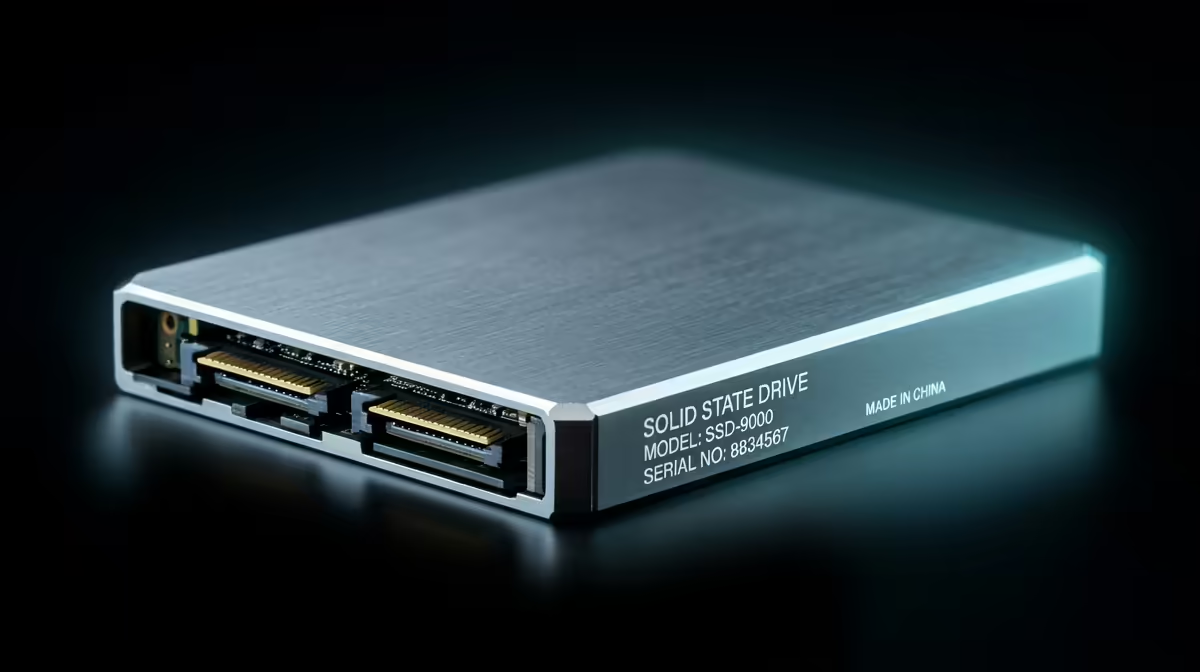
- SSD (Solid-State Drive): This is the modern speedster 🚀. It uses flash memory chips, similar to a USB drive or your smartphone's storage. With no moving parts, it can access data almost instantly.
The fundamental difference is mechanical vs. digital. One relies on physical movement, which has limits, while the other is purely electronic, making it exponentially faster.
The SSD vs HDD for Gaming Showdown
Okay, let's get to the part you really care about: how this hardware impacts your games. The choice between an SSD or HDD for gaming directly affects your entire experience, from the moment you click "play."
Blazing Fast Loading Times
This is the most dramatic improvement you'll notice. An SSD absolutely demolishes an HDD in loading times. Games with huge open worlds like Starfield or Cyberpunk 2077 can load in a fraction of the time. This means less waiting for initial loads, fast travel, and respawns. For competitive titles like Warzone or Apex Legends, it means you're in the pre-game lobby and ready to go while others are still loading textures. A powerful processor is key here too, and many modern AMD Ryzen gaming PCs are built to take full advantage of this speed.
Smoother In-Game Performance
Think an SSD only affects loading? Think again. Many modern games use "asset streaming" to load parts of the world as you move through them. On a slow HDD, this can cause annoying texture pop-in, where objects appear blurry at first and then sharpen up. An SSD provides the data so quickly that the world feels more solid and immersive. This seamless experience is a hallmark of high-end gaming, often found in expertly configured Intel PC deals designed for performance.
Overall System Snappiness ⚡
The benefits of an SSD extend beyond just gaming. Your entire PC will feel more responsive. Windows will boot up in seconds, applications will launch instantly, and even installing or patching games is significantly faster. It’s a massive quality-of-life upgrade that makes your whole rig feel brand new. Pairing a fast SSD with a powerful graphics card from our range of NVIDIA GeForce gaming PCs creates an incredibly responsive and powerful machine.
Pro Tip: The Hybrid Approach 🔧
For the best of both worlds, use a smaller, faster NVMe SSD (250GB - 1TB) for your operating system and your most-played games. Then, add a large, affordable HDD (2TB+) for your massive game library, media files, and backups. This gives you lightning-fast performance where it matters most, without breaking the bank on storage.
Price vs. Performance: The Final Verdict
So, is an HDD for gaming completely obsolete? Not quite. HDDs still offer unbeatable value for mass storage. If you have a huge library of older games or store a lot of videos, an HDD is a perfect secondary drive.
However, for your primary drive—the one that holds your OS and favourite games—the SSD vs HDD for gaming debate is over. An SSD is no longer a luxury; it's an essential component for any serious gamer in 2024. The performance leap is too significant to ignore. Even a budget-friendly SATA SSD will provide a night-and-day improvement over any traditional hard drive. Whether you favour Team Green or Team Red, a fast SSD is a critical component in our AMD Radeon gaming PCs as well.
The speed advantage is so profound that SSDs have become the standard not just in gaming, but across all high-performance computing, including demanding workstation PCs where data access speed is critical.
Ultimately, investing in an SSD is one of the most impactful upgrades you can make for your gaming PC. It’s a difference you’ll feel every single time you power on your machine.
Ready to Ditch the Loading Screens? The SSD vs HDD for gaming debate has a clear winner for performance. An SSD is the single best upgrade for faster load times and a smoother experience. Explore our wide range of SSDs and find the perfect drive to unleash your PC's true potential.