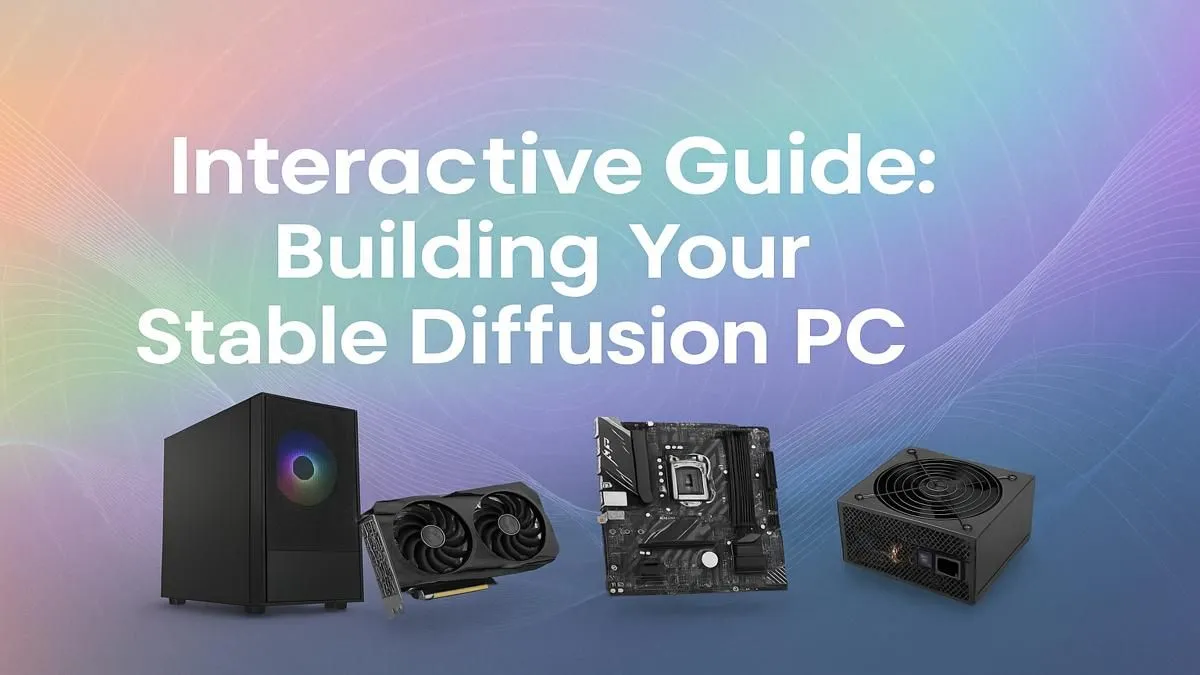
Tired of watching progress bars crawl while your AI masterpiece renders? In South Africa, we know the frustration of slow tech holding back big ideas. A purpose-built Stable Diffusion PC build is your ticket to generating incredible AI art in seconds, not hours. This guide cuts through the jargon to show you exactly which components matter, helping you assemble a powerful machine that brings your wildest digital creations to life without breaking the bank. 🚀
Why a Custom Stable Diffusion PC Build is Essential
Unlike gaming, where the GPU, CPU, and RAM work in a balanced tango, AI image generation is a specialist task. It hammers one component above all others: the graphics card. Specifically, it feasts on VRAM (video memory). Running out of VRAM is the number one cause of failed renders and "out of memory" errors.
A pre-built office PC just won't cut it. To get the speed and stability you need for complex prompts, high-resolution outputs, and training your own models, a custom Stable Diffusion PC build is the only way to go.
The GPU: Your AI Art Engine ⚡
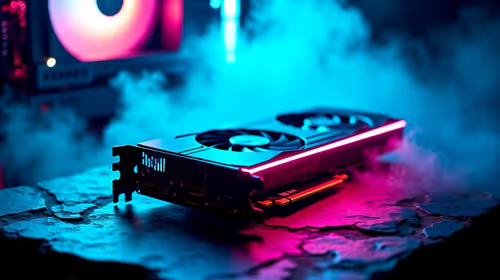
The Graphics Processing Unit (GPU) does all the heavy lifting. When choosing one, your focus shouldn't be on the model name alone, but on two key factors: VRAM and software compatibility.
VRAM is King
Think of VRAM as your digital canvas. The more you have, the larger and more detailed the images you can create without your system choking.
- 8GB VRAM: The absolute minimum for getting started. Good for basic 512x512 image generation but will struggle with higher resolutions or complex models.
- 12GB-16GB VRAM: The sweet spot for most enthusiasts. This allows for higher-resolution images, faster batch processing, and experimenting with training custom models (LoRAs). Many modern NVIDIA GeForce cards hit this perfect balance of price and performance.
- 24GB+ VRAM: The pro-tier. If you're serious about training models or running the most demanding workflows, this is where you need to be.
NVIDIA's CUDA Advantage
Currently, NVIDIA GPUs have a massive advantage thanks to their CUDA architecture, which is the industry standard for AI and machine learning tasks. Most Stable Diffusion software is optimised for CUDA, meaning you'll get better performance and wider compatibility. While it's possible to use AMD Radeon graphics cards, the setup can be more technical and performance may vary. For a plug-and-play experience, NVIDIA is the safer bet.
For those running a small business or doing intensive AI research, investing in professional workstation GPUs with huge VRAM pools can dramatically accelerate your work. You can explore Evetech's full range of graphics cards to find the perfect fit for your budget.
Performance Pro Tip 🔧
If your GPU is struggling, try launching Stable Diffusion with command-line arguments like --medvram or --xformers. These are special flags that optimise memory usage, allowing you to generate images that might otherwise fail on a lower-VRAM card. It's a great way to squeeze extra performance out of your hardware!
Beyond the GPU: Other Key Components
While the GPU is the star, the supporting cast is still important for a smooth and responsive system.
System RAM & Storage
- RAM: Aim for at least 16GB of system RAM, but 32GB is highly recommended. This ensures your operating system and other applications have enough memory to run smoothly while the GPU is under heavy load.
- Storage: A fast NVMe SSD is a must. AI models are often several gigabytes in size, and a speedy drive will load them in a flash, getting you to the creative part faster. A 1TB NVMe drive is a great starting point.
The CPU
Your CPU is less critical for the generation process itself but still manages the overall system. A modern mid-range processor like an Intel Core i5 or AMD Ryzen 5 is more than enough. You don't need to splash out on a top-of-the-line CPU; it's better to allocate that budget towards a GPU with more VRAM. A well-planned build for AI art prioritises the graphics card above all else. ✨
Ready to Build Your AI Dream Machine?
Building the perfect Stable Diffusion PC is about matching power to your ambition. From entry-level generators to pro-level rigs, we've got the components to bring your vision to life. Explore our massive range of PC components and start creating today.