Article (MDX)
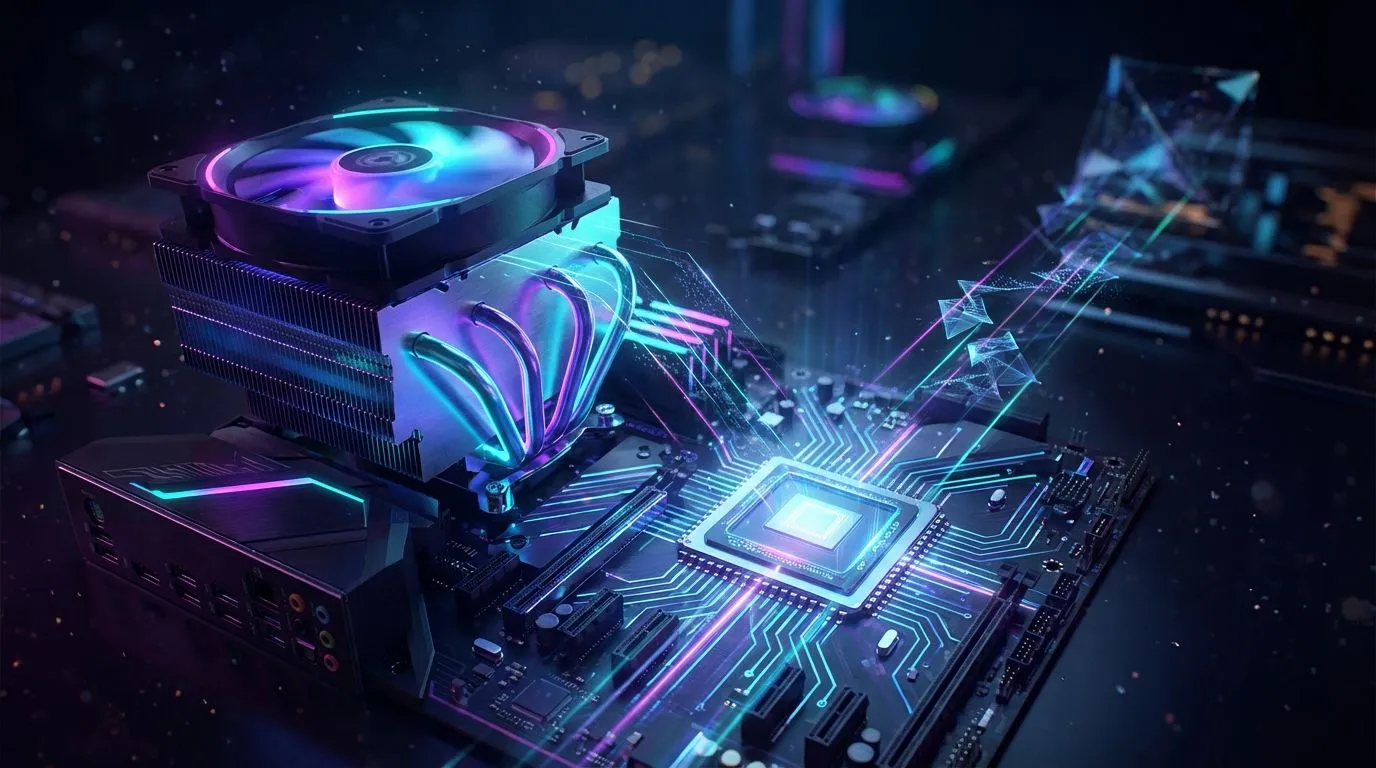
You’ve just built your dream rig. The CPU is seated, the GPU is gleaming, and everything is plugged in. You hit the power button… and your PC erupts in a chaotic rainbow of unsynchronised light. Sound familiar? Don’t stress, we’ve all been there. Getting your components to dance to the same beat is key to a clean setup. This guide will show you exactly how to sync ARGB with motherboard software for that perfect, unified glow. ✨
Understanding Your Cooler's Lighting: ARGB vs. RGB
Before you plug anything in, it's vital to know what you're working with. The biggest source of confusion for new builders is the difference between standard RGB and Addressable RGB (ARGB).
- Standard RGB (12V, 4-pin): This is the older tech. It can display one colour across all the LEDs at a time. Think of it as a single light bulb that can change its hue.
- Addressable RGB (5V, 3-pin): This is the magic you're looking for. Each individual LED can be controlled separately, allowing for complex effects like rainbow waves, strobes, and custom gradients. This is what you need to create those truly stunning lighting profiles.
Mismatched connectors are a fast way to damage your components. A 4-pin RGB header provides 12 volts of power, while a 3-pin ARGB header uses only 5 volts. Plugging an ARGB device into an RGB header can permanently fry the LEDs. Always double-check your motherboard manual and your cooler's specifications. Most modern CPU coolers use ARGB for maximum customisation.
How to Sync ARGB with Motherboard Software: A Step-by-Step Guide
Ready to get everything synced up? Let’s walk through the process. It's simpler than you think and is the final step to making your PC look as good as it performs.
Step 1: Identify the Correct Header on Your Motherboard
Power down your PC and open the case. Grab your motherboard manual (or look it up online) and locate the 5V 3-pin ARGB header. It's usually labelled JRAINBOW, ADD_HEADER, ARGB_HEADER, or something similar. It has three pins with a small gap, making it easy to identify. Some boards have several, giving you more flexibility.
Step 2: Connect Your Cooler's ARGB Cable
Take the 3-pin ARGB cable from your CPU cooler and carefully plug it into the header you just found. The connector is keyed, so it should only fit one way—don't force it. Ensure it's seated firmly. For many popular AIO liquid coolers, the ARGB cable might come from the pump block or a fan hub.
Cable Management Pro Tip 🔧
the cable routing channels and tie-down points in your case to hide the ARGB cable. A clean build isn't just about synchronised lights; it's also about tidy wiring. This improves aesthetics and airflow, helping coolers like a beefy [360mm radiator AIO](https: www.evetech.co.za PC-Components cpu-coolers-84?attributes-coolertype=Liquid+Cooler+%28AIO%29&attributes-coolingsize=360mm+Radiator) perform at its best.
Step 3: Install Your Motherboard's Control Software
Once everything is connected, it’s time for the software part of this cooler lighting guide. Each major motherboard manufacturer has its own utility to control lighting. You'll need to download and install the correct one:
- ASUS: Armoury Crate (Aura Sync)
- MSI: MSI Center (Mystic Light)
- Gigabyte: GCC (RGB Fusion)
- ASRock: Polychrome Sync
These tools will automatically detect any compatible ARGB devices connected to your motherboard headers, including coolers from top brands like Deepcool and others.
Step 4: Configure and Customise Your Lights 🚀
Launch the software and navigate to the lighting control section. You should see your CPU cooler listed as a controllable device. From here, the fun begins! You can now sync your ARGB with the motherboard software, choosing from dozens of preset effects or creating your own custom colour schemes. Match your lighting to your game, your mood, or your peripherals.
Some ecosystems, like those from CORSAIR, often use their own controllers and software (iCUE), but many of their newer products also include adapters for standard motherboard ARGB control, giving you the best of both worlds. Whether you have a compact 240mm radiator AIO or a massive custom loop, getting the lighting right is the final touch that makes a build truly yours.
Ready to Light Up Your Rig? A cool CPU is a happy CPU... and a beautifully lit one is even better. From silent air towers to high-performance liquid coolers, we have the perfect solution to keep your temps low and your style on point. Explore our massive range of CPU coolers and find the perfect heart for your build.