Living in South Africa means your PC fights a constant battle against the heat. Whether it is a humid Durban afternoon or a dry Pretoria scorcher... keeping your hardware cool is vital. One of the most misunderstood parts of building is applying thermal paste on copper heat pipes correctly. Get it wrong... and your CPU throttles. Get it right... and you unlock peak performance for gaming. 🔧
Understanding Direct Touch Heat Pipes
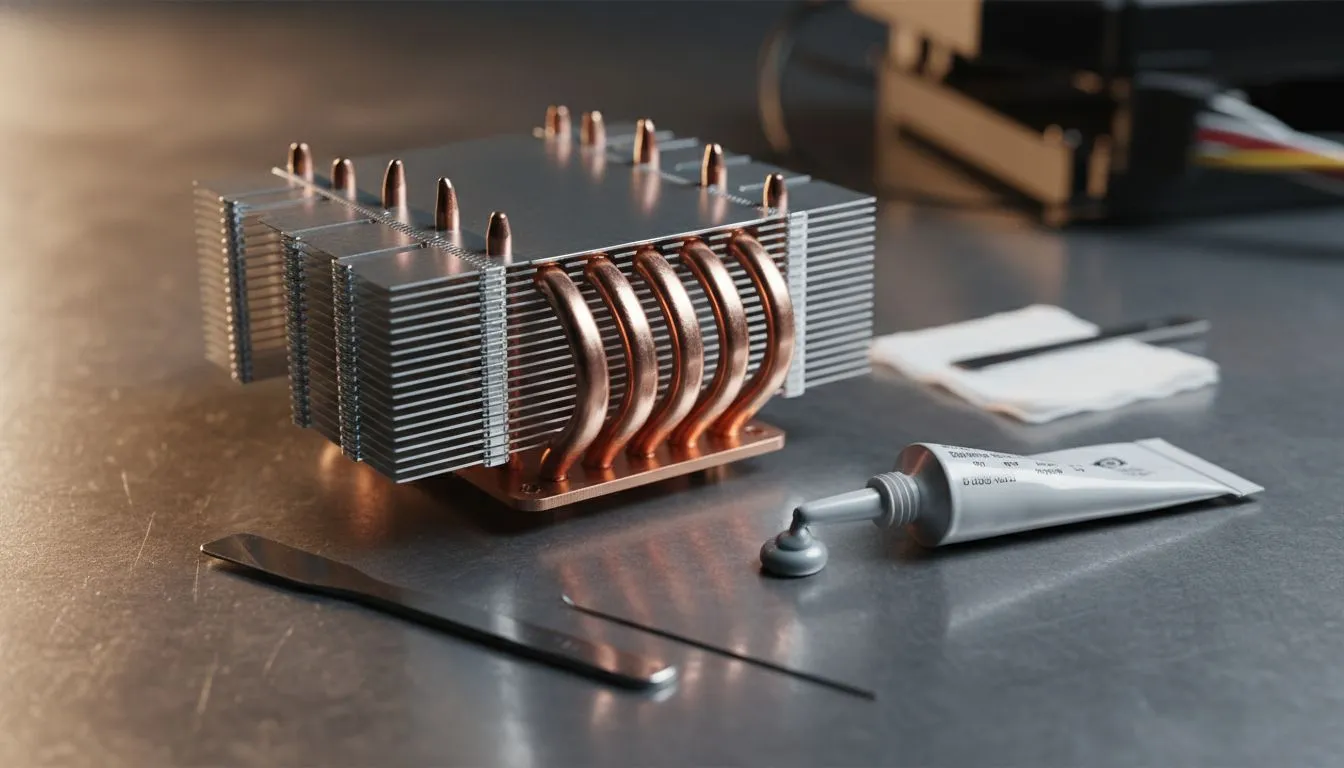
Many modern cooling solutions use "Heat Core Touch" technology. This is where the copper pipes actually make direct contact with your CPU heat spreader. While this is great for thermal transfer... it creates tiny gaps between the copper pipes and the aluminium base. When applying thermal paste on copper heat pipes with this design... you need to ensure those micro-gaps are filled.
If you are looking at our latest range of cpu coolers... you will notice this design is very common. The copper is excellent at pulling heat away... but only if the contact is perfect.
Best Application Methods for Copper Pipes
The "pea-sized" drop is a classic for flat baseplates. However... when dealing with thermal paste on copper heat pipes that have visible gaps... a different approach often works better. Some experts suggest two thin lines of paste along the aluminium ridges between the pipes. This ensures that when you tighten the cooler... the paste spreads into the grooves.
Pro Installation Tip ⚡
Always clean your copper heat pipes with 99% isopropyl alcohol before applying new paste. Even a tiny fingerprint contains oils that can degrade thermal transfer. Use a lint-free cloth to ensure no fibres are left behind in the gaps between the pipes.
A standard high-performance Air Cooler usually comes with pre-applied paste. If you are re-pasting for maintenance... remember that less is often more. You want to fill the microscopic imperfections... not create a thick blanket of goop. 🚀
Optimising Airflow and Pressure
The way you mount your cooler matters as much as the paste. If you are using a tower with 120mm Fans... ensure you apply even pressure. Tighten the screws in a cross pattern. This forces the thermal paste on copper heat pipes to spread evenly across the CPU surface.
Uneven pressure leads to air bubbles. In the South African summer... an air bubble can mean the difference between 70°C and a 95°C thermal limit. ⚡
Why Quality Hardware Matters
Not all heat pipes are created equal. Leading brands like Deepcool air coolers use high-grade sintered copper. This material moves heat much faster than cheaper alternatives. If you are on a budget... reliable EINAREX options still provide excellent "Direct Touch" technology for entry-level builds.
When applying thermal paste on copper heat pipes for these units... always check the base for any protective plastic film. It sounds obvious... but many builders realise too late that their high temps are caused by a piece of plastic stuck under the paste. ✨
Ready to Chill Your Build?
Keeping your CPU cool is the best way to ensure your PC lasts for years. Whether you need a massive tower or a compact solution, we have the stock you need. Explore our massive range of CPU Coolers and keep your frame rates high and your temperatures low.