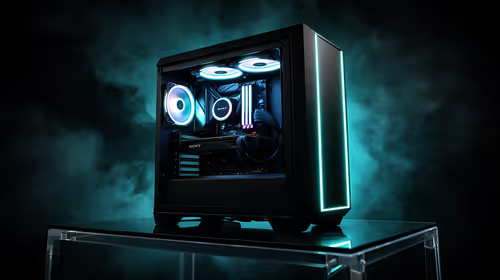
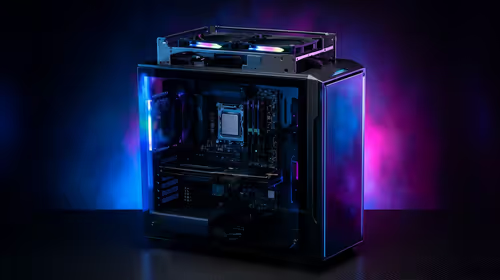
Staring at a render bar that moves slower than rush-hour traffic on the N1? We’ve all been there. A choppy timeline, stuttering 4K playback... it's enough to kill any creative flow. But what if we told you the game has changed? Getting a powerful video editing PC in South Africa is more accessible than ever, thanks to incredible new hardware that demolishes creative bottlenecks. Let’s dive into the tech that makes it happen. 🚀
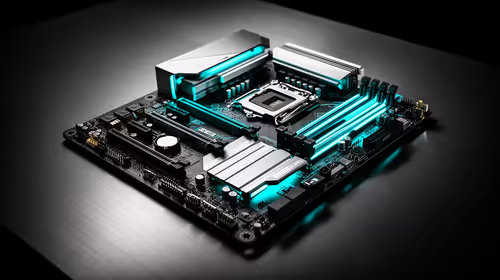
The New Heart of Your Video Editing PC
Forget everything you thought you knew about processing power. The components available today are light-years ahead of what we had just a few years ago, and they're specifically optimised for creative workloads.
CPU: More Cores, Smarter Work
The CPU (Central Processing Unit) is the brain of your operation. It handles tasks like decoding footage, running the software interface, and processing effects. Today, the choice isn't just about clock speed; it's about core architecture.
- Intel's Hybrid Approach: With their Performance-cores (P-cores) for heavy lifting and Efficient-cores (E-cores) for background tasks, the latest Intel CPUs are multitasking beasts. This means you can render in the background while still smoothly organising files. Check out the latest Intel PC deals to see this tech in action.
- AMD's Core Dominance: AMD continues to impress with its high core-count Ryzen processors, which excel at heavily threaded tasks like final exporting. For creators who need raw parallel processing power, exploring the current lineup of AMD Ryzen PC deals is a must.
A modern CPU from either camp will dramatically cut down your export times and make your entire editing experience feel more responsive.
GPU: The Creative Accelerator ⚡
Your graphics card (GPU) is no longer just for gaming. It's a vital co-processor for video editing. Modern GPUs have dedicated hardware that accelerates timeline performance, effects rendering, and encoding.
When choosing a GPU for your video editing PC, look at how it handles video codecs. NVIDIA GeForce gaming PCs with their NVENC encoder are legendary for high-quality, low-performance-impact recording and streaming. Similarly, the media engines found in modern AMD Radeon gaming PCs offer incredible value and performance, especially with support for new codecs like AV1.
Storage Strategy Pro Tip 🔧
a silky-smooth editing experience, use at least two separate NVMe SSDs. Install your OS and editing software on the first drive (C:). Use the second, faster drive exclusively for your project files, media cache, and scratch disks. This prevents bottlenecks and dramatically improves timeline scrubbing and playback performance.
AI Features That Actually Save You Time
This is where the magic really happens. The latest generation of hardware includes powerful AI accelerators (like NVIDIA's Tensor Cores) that software developers are using to create incredible, time-saving tools.
Think about features you use daily:
- Auto Reframe: AI analyses your footage and automatically reframes a 16:9 video for vertical platforms like TikTok or Instagram Reels.
- Scene Edit Detection: Drop a fully edited video onto your timeline, and the software's AI will instantly add cuts at every scene change.
- Magic Mask (DaVinci Resolve): Simply draw a rough outline around a person or object, and AI will create a perfect, moving mask for colour grading or effects... a task that used to take hours.
These aren't gimmicks; they are powerful tools that a modern video editing PC can run effortlessly, giving you more time to focus on the creative side of your projects.
Finding the Right Build for You in South Africa
So, what should you get? The best PC for video editing depends on your specific needs and budget.
- For the Serious Hobbyist: A PC with a modern 6 or 8-core CPU, 32GB of RAM, and a mid-range GPU like an RTX 4060 is a fantastic starting point. It will handle 4K edits without breaking a sweat. You can find amazing value in our pre-built PC deals, which are expertly configured and ready to go.
- For the Professional Creator: If you're editing complex timelines, working with RAW footage, or doing heavy colour grading and motion graphics, you need to step up. Look for a machine with a 12+ core CPU, 64GB+ of RAM, and a high-VRAM GPU. Our dedicated workstation PCs are designed for exactly these kinds of demanding, mission-critical tasks. ✨
Investing in the right hardware isn't an expense; it's an investment in your own productivity and creativity.
Ready to Obliterate Render Times?
Stop waiting and start creating. A powerful, purpose-built PC is the single biggest upgrade you can make to your workflow. Browse our massive range of custom and pre-built PCs and find the perfect machine to bring your vision to life, faster than ever.