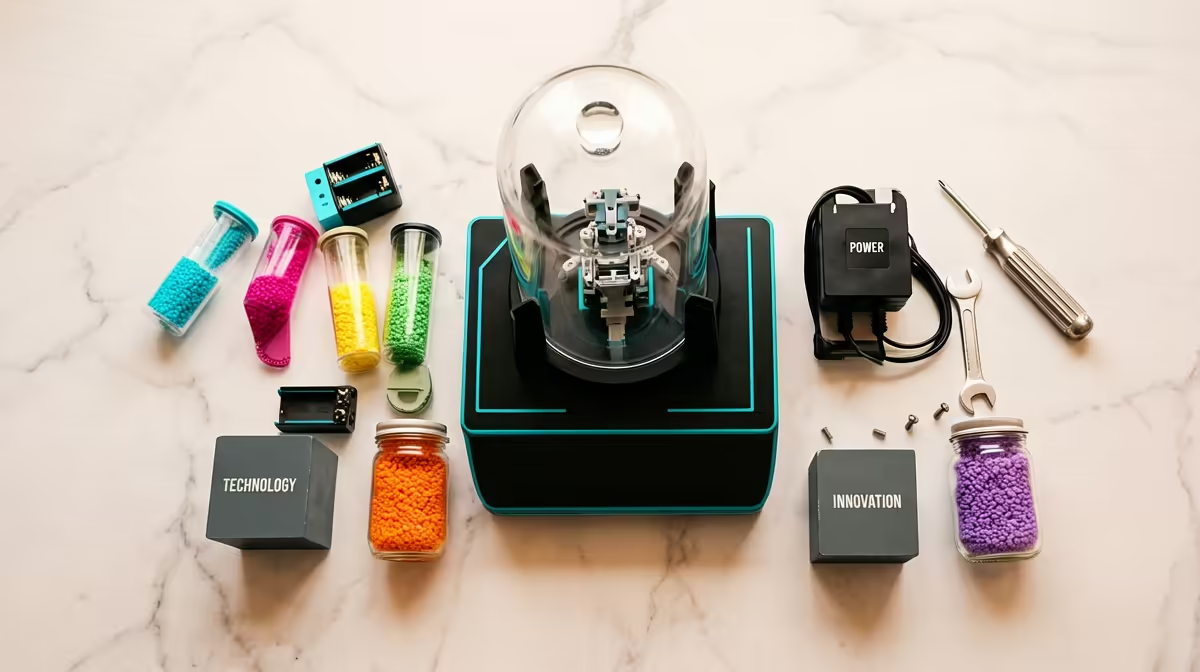
The South African school calendar runs on its own clock, and that changes when you should buy STEM gear. While the northern hemisphere shops for coding and robotics kits in August, our academic year opens in January. That puts the smart buying window squarely in the December to January summer holidays, giving a young learner weeks of free time to build, break and rebuild a kit before the term even starts.
Quick Answer
Buy coding and robotics kits in the December to January window, because the SA school year begins in January, not August. Purchasing during the summer holidays gives learners uninterrupted build time before classes resume. Aim for an age-appropriate kit that grows with the child, so it stays useful well past the first term.
Why the timing actually matters
A robotics kit is not a gift that delivers its value on day one. The payoff comes from the hours a learner spends assembling, coding, troubleshooting and tinkering. The long SA summer break is the only stretch of the year with that kind of open time. A child who starts in mid-December has a full month to get past the frustrating early stage and into the rewarding part before homework and extramurals crowd the calendar again.
There is a practical retail angle too. Buying early means you avoid the late-January scramble when everyone else remembers school is about to start. Sorting it out over the holidays is calmer and gives you time to add any missing pieces, batteries or accessories. The smart home and appliances section carries a range of gadget-style kits and components worth browsing while you plan.
Matching the kit to the age
The single biggest mistake is buying too advanced. A kit that overwhelms a young child gets abandoned in a cupboard. Match the difficulty to where the learner is now, with a little room to grow.
For younger primary learners, look for screen-free or block-based coding kits, the kind where instructions drag together visually rather than as typed code. They teach logic and sequencing without demanding reading-heavy syntax. For older primary and early high school learners, kits that introduce real block coding tied to motors, sensors and lights hit the sweet spot. For teens already comfortable with the basics, a kit that steps into text-based programming and more open-ended building keeps them challenged.
What makes a kit worth the money
Look for three things. First, expandability: a kit you can add to, or that supports building multiple different projects, lasts far longer than a single fixed model. Second, a real learning path, with guided projects that build skills in order rather than a pile of parts and no direction. Third, durability, because these kits get assembled and pulled apart constantly.
Pair the kit with the right extras and the experience improves. Rechargeable batteries save a fortune over the life of a kit, and a tidy storage box keeps small parts from vanishing. The best-selling accessories shelf covers the practical add-ons that keep a build session running smoothly.
Frequently Asked Questions
When is the best time to buy a robotics kit in South Africa?
December to January, during the summer holidays. The SA school year starts in January, so buying over the break gives a learner the free time to get properly into the kit before term begins.
What age is right for a first coding kit?
It depends on the kit. Block-based and screen-free options suit younger primary learners, while text-coding kits fit teens. Choose something matched to the child's current level with a little room to grow, rather than the most advanced option available.
Do robotics kits need a computer or tablet?
Many do, since the coding is often done in an app or on a screen, but some entry-level kits are fully screen-free. Check the requirements before buying so you have a compatible device ready over the holidays.
Will one kit last more than a single school year?
A well-chosen, expandable kit can. Look for ones that support multiple builds or accept add-on modules, so the learner keeps discovering new projects rather than outgrowing it after the first term.
Get ahead of the January rush and give a learner the whole summer to build. Browse coding and robotics options in the smart home and appliances section and choose a kit matched to your learner's level.