Successors usually cost more than the machine they replace. The Bambu X2D did the opposite, arriving in April 2026 at a 649 dollar launch price that slotted in below what the X1 Carbon originally retailed for, while adding dual nozzles and a heated chamber that the X1C never shipped with. For South African buyers, who absorb import freight and VAT on top of that dollar figure, the size of the drop is the whole story.
Quick Answer
The X2D launched at 649 dollars, undercutting the X1 Carbon's original retail price despite adding hardware the older machine lacked. After the usual 30 to 40 percent loading from freight, duties and VAT, that translates to a landed SA cost noticeably lower than what X1C buyers paid at its launch, while delivering more capability per Rand.
What Actually Changed Between The Two
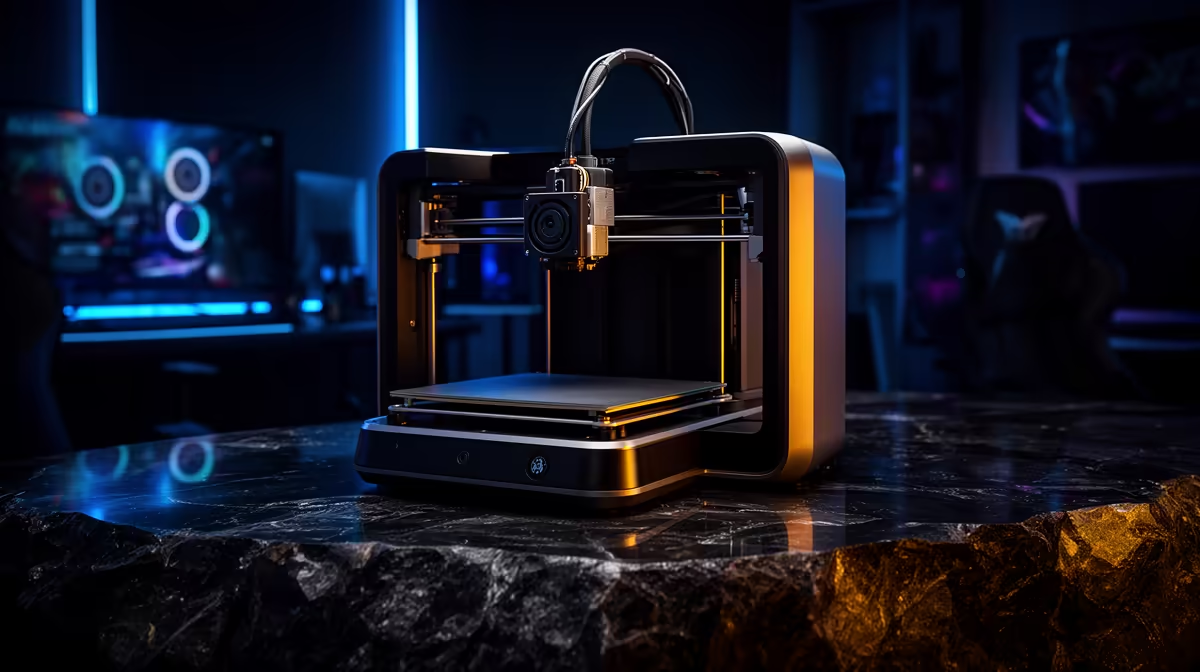
The X1 Carbon set the bar for fast, enclosed, multi-material printing, and it held a premium price because of it. The X2D keeps the carbon-rail core idea but bolts on two real upgrades. The dual-nozzle system removes most of the filament-swap waste that made multicolour printing slow and stringy on the X1C. The heated chamber, meanwhile, opens up engineering materials like ABS and certain nylons that the X1C could only manage with workarounds. So the lower price is not a stripped-down model. It is a more capable machine sold for less.
Why The Drop Lands Harder In Rand
A dollar price cut compounds on the way to South Africa. Every Rand shaved off the base figure also shaves the freight percentage, the duty calculation and the VAT layered on top, so a modest dollar saving becomes a meaningful Rand saving once it lands. That is why a sub-X1C launch price matters more here than it does in the United States. Buyers who held off on an X1 Carbon because the landed cost felt steep now have a machine that does more for a lower starting point, and the running consumables sit alongside the rest of the printer accessories and spares moving fastest at Evetech.
Should X1C Owners Feel Burned?
Not really. The X1 Carbon remains a strong machine, and a single-nozzle workflow without a heated chamber is fine for PLA and PETG, which is what most hobby printing actually uses. The X2D's price drop is best read as a signal that enclosed, fast printing is maturing and getting cheaper, not as a reason to dump a working printer. If you are buying your first serious machine, though, the value calculus has clearly shifted toward the newer model.
Frequently Asked Questions
Is the X2D actually cheaper than the X1 Carbon was?
At its 649 dollar launch, yes, it came in below the X1 Carbon's original retail price, and it did so while adding dual nozzles and a heated chamber.
What does the heated chamber let me print?
A heated chamber keeps warp-prone materials like ABS and some nylons stable through the print, reducing cracking and lifting. The X1C could attempt these only with enclosure mods.
Is the X1 Carbon discontinued now?
Bambu positions the X2D as the new flagship, but X1C units and spares remain in circulation. For PLA and PETG work it is still a perfectly capable printer.
How much will the X2D cost in South Africa?
Expect the dollar price plus the usual 30 to 40 percent loading for freight, duties and VAT. Check the current 3D printer listings for live Rand pricing rather than converting the dollar figure yourself.
A cheaper, more capable flagship resets the value question for anyone choosing their first enclosed printer. See live Rand pricing on the 3D printer range at Evetech here: https://www.evetech.co.za/components/3d-printers-130