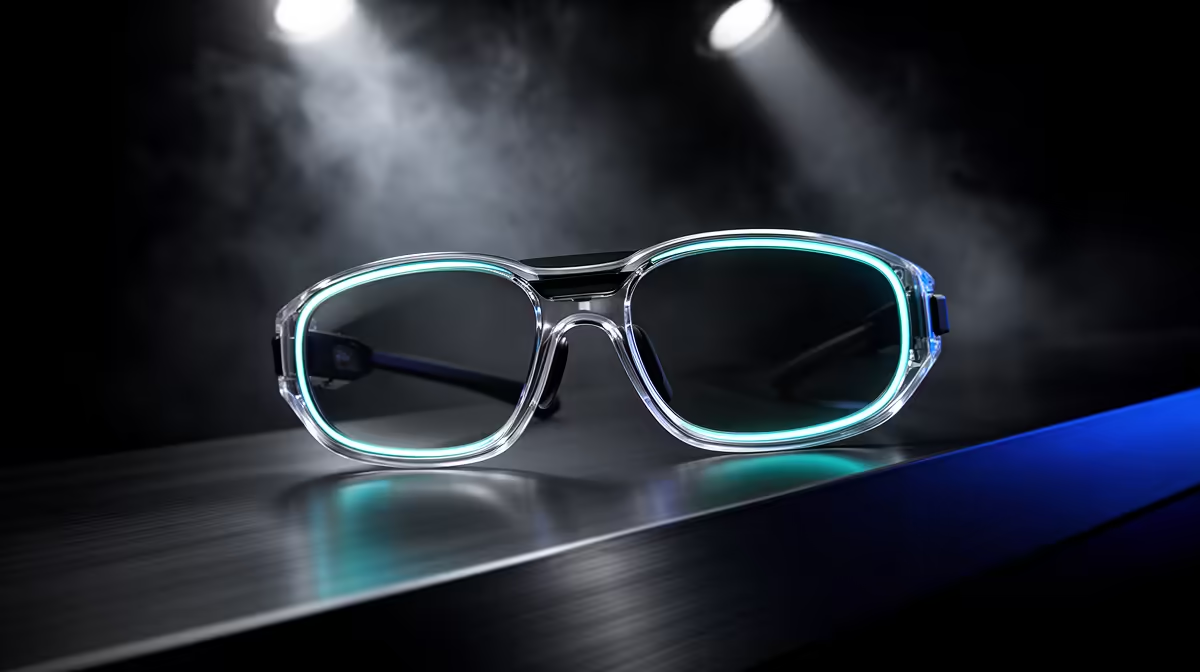
At Google I/O 2026, Google and Samsung put real hardware behind the smart-glasses idea that has stumbled for years. The headline is Gemini Android XR smart glasses: eyewear that puts Google's Gemini assistant in your ear and, in a later version, in your line of sight, with frames designed by Gentle Monster and Warby Parker so people might actually wear them in public.
Quick Answer
Google and Samsung revealed Gemini-powered Android XR glasses at I/O 2026, offering hands-free AI help, live translation and navigation. Audio-only glasses launch first in select markets this fall, with a display version following, and the frames pair with both Android phones and iPhones. Pricing was not confirmed, with analyst estimates pointing to roughly $600 to $900.
Two Tiers Of Eyewear
Google split the lineup into two clear categories. Audio glasses give you spoken Gemini help in your ear with no screen, and they ship first, arriving later this fall. Display glasses add a small in-lens display that shows information right when you need it, and they follow afterwards.
The split matters because it sets expectations. The first pair people can buy is the simpler audio version, so early reviews will judge the assistant and the all-day wearability rather than a flashy heads-up display. The display model is the more ambitious product and the one to watch for next.
What Gemini Actually Does On Your Face
The interaction model is deliberately simple. Say "Hey Google" or tap the side of the frame to bring up Gemini, then ask about whatever is in front of you or have it carry out a task for you. The pitch is help in the moment that does not pull you out of the moment, which is the line Google is drawing against wearables that demanded constant attention.
The showcased capabilities lean on Gemini's strengths: asking questions about your surroundings, live translation of speech, and turn-by-turn navigation delivered hands-free. On the audio model these arrive as spoken responses; the display model can also surface them visually in the lens. You can keep an eye on how this category develops through the AR glasses range at Evetech as devices reach the local market.
Why The Fashion Partners Are The Real Story
Smart glasses keep failing on one thing: nobody wants to wear ugly tech on their face. Google's answer is to hand frame design to Gentle Monster and Warby Parker, two brands people already choose for looks. Samsung brings the hardware and platform muscle alongside Google's Android XR software and Gemini.
That combination targets the actual barrier. If the glasses pass as normal eyewear, the assistant features have a chance to matter. It is also a direct shot at rivals in the AI-wearable space, betting that style plus a genuinely useful assistant succeeds where bare technology has not.
Availability, Pricing And The Catch
Samsung and Google confirmed a fall 2026 launch in select markets, with the audio glasses first. Importantly, the glasses pair with both Android and iPhone, widening the potential audience well beyond Samsung phone owners.
No official price was announced. Analyst estimates put the likely range at around $600 to $900, which converts to a meaningful sum in Rand once it lands, so treat any local figure as an estimate until official pricing appears. One open question flagged at reveal was data handling: the privacy and data policy for always-available, camera-and-microphone eyewear had not been fully detailed, which is worth watching given what these devices can see and hear. The broader accessories best sellers at Evetech are a useful reference point for where wearable tech pricing tends to settle locally.
Frequently Asked Questions
When can I actually buy the Gemini Android XR glasses?
The audio version is set for a fall 2026 launch in select markets, with the display version following later. South African availability and timing usually trail the initial markets, so expect a wait beyond the first release and watch for an official local announcement.
Do these glasses work with an iPhone?
Yes. Google and Samsung confirmed the glasses pair with both Android phones and iPhones, which is a deliberate move to reach more buyers than a Samsung-only or Android-only device would.
What is the difference between the audio and display models?
The audio glasses give spoken Gemini help with no screen and ship first. The display glasses add a small in-lens display that shows information visually, arriving later. The audio model is the simpler, earlier product; the display model is the more advanced one.
How much will they cost?
No official price was confirmed at I/O 2026. Analyst estimates suggest roughly $600 to $900, so any Rand figure now is an estimate. Wait for official local pricing before budgeting for a pair.
Who actually makes them?
It is a partnership. Samsung handles hardware, Google provides the Android XR platform and Gemini AI, and the frames are designed with eyewear brands Gentle Monster and Warby Parker so the glasses look like normal eyewear rather than a gadget.
Gemini-powered glasses signal where wearable tech is heading next. Follow the category and see what is available locally now in the AR glasses range at Evetech while the Android XR lineup makes its way to market.