


Headset Stock Levels in Bloemfontein: January 2026 Report
Headset Stock Levels in Bloemfontein: January. Current stock data & price tracking for SA buyers. See what is available and where prices are heading.
Read moreRX 7800 XT Baldurs Gate 3 Medium Settings at 4K:. Real-world benchmark data, FPS numbers & performance analysis. What SA gamers can actually expect.
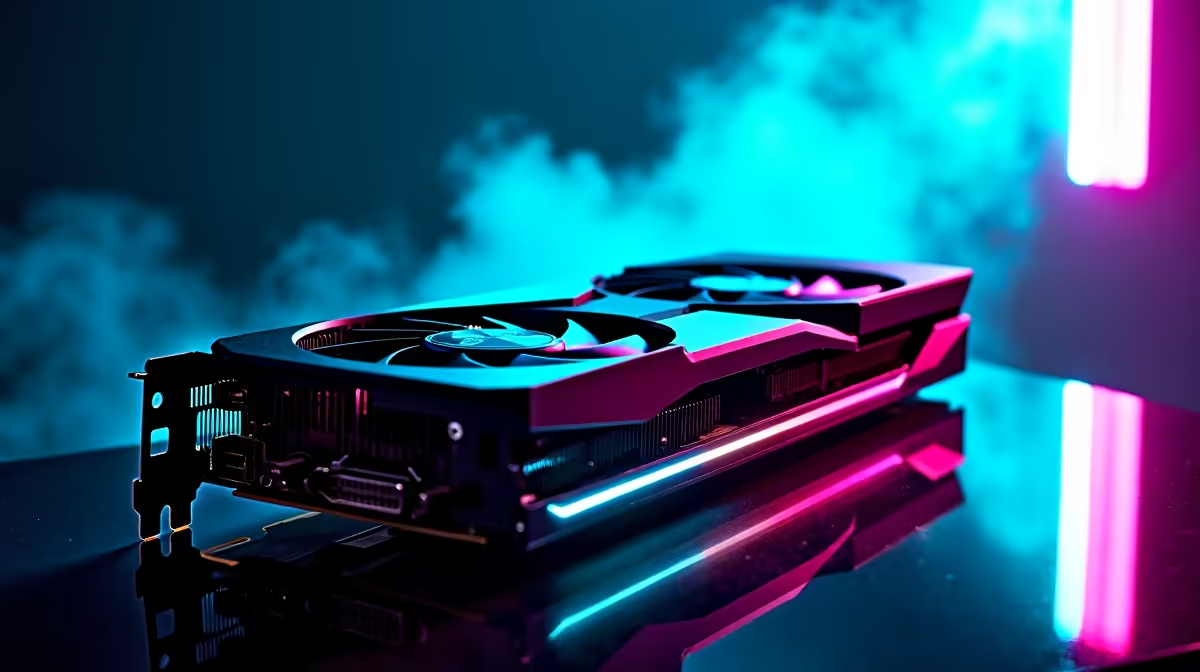
Baldur's Gate 3 at 4K on medium settings is a legitimate test for the RX 7800 XT - Larian's RPG epic is known for its demanding Vulkan renderer, especially in dense areas like the Lower City. The RX 7800 XT handles this workload respectably, and the 16 GB VRAM is a genuine advantage at 4K.
What FPS does the RX 7800 XT achieve in Baldur's Gate 3 at 4K medium settings? The RX 7800 XT delivers an average of 52–64 FPS in Baldur's Gate 3 at 4K medium settings, with 1% lows around 38–45 FPS in the most demanding outdoor environments and the Lower City. Performance is smooth and consistent in most Act 1 and Act 2 environments.
Baldur's Gate 3 uses Vulkan exclusively. Testing uses an RX 7800 XT (16 GB GDDR6) with a Ryzen 7 7700X, 32 GB DDR5-6000, and driver version 25.2.1 with SAM (Smart Access Memory) enabled. Resolution: 3840x2160 (4K native), settings preset: Medium.
Act 1 exterior areas (Druid Grove, Emerald Grove, wilderness) average 61–68 FPS with 1% lows around 46 FPS. The Underdark and interior dungeon areas perform better - averaging 70–80 FPS due to reduced draw distances and simpler geometry. Act 3's Lower City is the heaviest test: averages drop to 48–52 FPS with 1% lows hitting 36–40 FPS during busy marketplace traversal.
VRAM usage at 4K medium reaches approximately 9–10 GB. This is where the RX 7800 XT's 16 GB buffer provides headroom that 8 GB cards lack - at 4K, 8 GB cards experience VRAM overflow in BG3, causing stuttering during scene transitions. The 7800 XT sidesteps this entirely.
| Resolution | Settings | Avg FPS | 1% Low |
|---|---|---|---|
| 1080p | Ultra | 142 | 98 |
| 1440p | High | 88 | 62 |
| 4K | Medium | 58 | 41 |
| 4K | Low | 74 | 55 |
| 4K + FSR Quality | Medium | 72 | 53 |
FSR 2 Quality mode at 4K (rendering at 1440p) boosts averages to around 72 FPS at Medium settings with reasonable image quality. This is the recommended mode for users prioritising smooth performance over native pixel rendering.
For SA gamers with a 4K monitor, the RX 7800 XT is a capable but not unconstrained solution in Baldur's Gate 3. The 16 GB VRAM removes the stuttering risk that plagues 8 GB cards, and native 4K medium delivers a genuinely enjoyable experience outside of Act 3's Lower City.
For locked 60 FPS play, Medium settings with FSR 2 Quality mode enabled is the most reliable path on this card. High settings at native 4K will dip below 60 FPS frequently in demanding areas - acceptable for the pacing of a turn-based RPG but not everyone's preference.
For SA gamers on a 1440p or 1080p display, the RX 7800 XT is an excellent performer in BG3 - running Ultra at 1440p at 88 FPS average is a comfortable result for this card's price tier.
Does BG3 at 4K on RX 7800 XT cause VRAM issues? No. The 16 GB VRAM buffer handles 4K textures in BG3 without overflow. At 4K medium settings VRAM usage sits at 9–10 GB, well within the card's capacity. This is a meaningful advantage over 8 GB cards in this game specifically.
Is Baldur's Gate 3 more CPU or GPU limited at 4K? At 4K BG3 is primarily GPU-limited in most areas, which means the RX 7800 XT is the performance bottleneck rather than the CPU. In the Lower City, CPU script and AI processing adds to the load - a modern 6-core or better CPU is recommended to avoid CPU-side bottlenecks there.
Does FSR hurt visual quality in BG3 at 4K? FSR 2 Quality mode at 4K renders internally at 1440p and produces good results in BG3 - character models and environments remain sharp in motion. FSR performance mode is visible in quality, but FSR Quality and Balanced are solid options for this title.
Evetech stocks All Graphics Cards and Graphics Card Deals — browse current SA pricing and availability online.
Ready to Find Your Perfect Match? Shop at Evetech
RX 7800 XT Baldurs Gate 3 Medium Setting available at Evetech.co.za with local warranty and fast delivery.
RX 7800 XT Baldurs Gate 3 Medium Setting - check Evetech for latest stock and SA pricing.
Depends on your use case. RX 7800 XT Baldurs Gate 3 Medi offers good value at current Rand pricing.
Headset Stock Levels in Bloemfontein: January. Current stock data & price tracking for SA buyers. See what is available and where prices are heading.
Read more
iMac for Medical Practice: Patient Management. SA-focused analysis with local pricing data, real-world insights & actionable buying advice.
Read more
RTX 5060 Fortnite Ultra Settings at 1080p: FPS. Real-world benchmark data, FPS numbers & performance analysis. What SA gamers can actually expect.
Read more
Headset Stock Levels in Cape Town: August Report. Current stock data & price tracking for SA buyers. See what is available and where prices are heading.
Read more
Eskom Load Shedding During Video Call: Solutions. SA-focused analysis with local pricing data, real-world insights & actionable buying advice.
Read more
LoL Performance on Extreme Gaming PC. Real-world benchmark data, FPS numbers & performance analysis. What SA gamers can actually expect.
Read more
MacBook Pro for Machine Learning in 2026: Can Apple Silicon Compete Detailed answer with SA data, expert analysis & practical recommendations for local buyers.
Choose the Right SATA SSD for machine learning. Step-by-step instructions with SA-specific tips, common pitfalls to avoid & expert recommendations.

Overwatch 2 Competitive Settings Servers. Tested & verified settings for best FPS and visual quality on SA hardware budgets.
League of Legends Settings for 144Hz Gaming. Tested & verified settings for best FPS and visual quality on SA hardware budgets.

Every AMD CPU Ranked for Gaming: Tier List. SA-focused analysis with local pricing data, real-world insights & actionable buying advice.

Easter Family Bundles: Monitors. Hand-picked gift ideas at every budget tier. SA pricing & Evetech availability included.

Ryzen 7 9800X3D Running 100 Degrees: Cooler. Diagnosis steps, proven fixes & when to seek professional help. SA-specific support info included.

Most Affordable Laptops : Starting from R8,000. Full parts list, Rand pricing & expected performance. Build confidently with SA-available components.

HBADA Chairs : Range and Pricing. Complete product range with SA pricing, key specs & recommendations for different budgets.
Ryzen 7 9800X3D for Music Production: Performance. Real-world benchmark data, FPS numbers & performance analysis. What SA gamers can actually expect.

Winter Cooling Management: Headsets. SA-focused analysis with local pricing data, real-world insights & actionable buying advice.
AKRacing Gaming Chair Range: Which Model Is Right. Complete product range with SA pricing, key specs & recommendations for different budgets.