

Core Ultra 5 245K Gaming Performance: Full Optimization
Core Ultra 5 245K Gaming Performance: Full. Real-world benchmark data, FPS numbers & performance analysis. What SA gamers can actually expect.
Read moreRyzen 5 5500 Power Draw: PSU Requirements &. Comprehensive coverage with SA insights, Rand pricing & practical recommendations for local buyers.
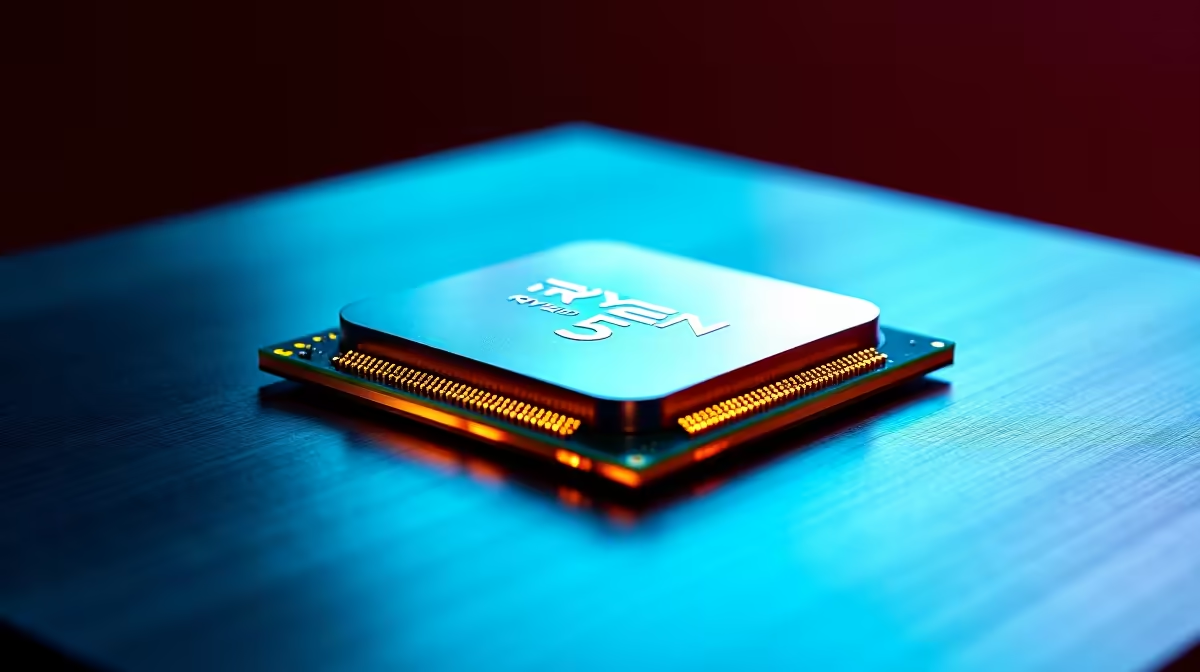
The AMD Ryzen 5 5500 has a TDP of 65W. Its real-world peak power draw under full CPU load reaches approximately 75 to 85W, and a 450W to 550W PSU comfortably supports it in a mid-range gaming system. A 400W PSU can work in a budget build with a lower-tier GPU, but leaves less headroom for system stability under combined load.
The Ryzen 5 5500 is a 6-core, 12-thread processor built on AMD's Zen 3 architecture with a rated TDP of 65W. That 65W figure represents the sustained thermal design power, which is the heat the cooling solution needs to handle under typical workloads. Actual wall power draw is related but not identical: the CPU itself pulls slightly more than 65W at peak boost states, typically measuring between 75W and 88W in real-world all-core loads like rendering, compression, or gaming with a heavily multi-threaded title.
In gaming specifically, most titles do not fully load all six cores simultaneously. Typical gaming power draw for the Ryzen 5 5500 sits between 45W and 65W, with bursts toward the upper end during cutscenes or AI-intensive scenes. This makes the 5500 one of the more power-efficient processors for gaming in its performance class.
For South African builders assembling systems in 2026, the 5500 remains a cost-effective choice for mid-range AMD AM4 builds, particularly when paired with a B450 or B550 motherboard that can be found at competitive prices locally.
The PSU recommendation depends significantly on which GPU you pair with the 5500. AMD specifies a platform power requirement, but the GPU is almost always the dominant consumer in a gaming system.
With a mid-range GPU like the RX 6600, RX 7600, or RTX 4060, a 550W 80+ Bronze or better PSU gives comfortable headroom for the system under peak combined load. These GPUs pull 100W to 160W under gaming load, and the 5500 adds another 50 to 80W. Combined system draw (including motherboard, RAM, storage, and fans) lands between 250W and 320W in most configurations, giving a 550W PSU over 40 percent headroom. This headroom matters for PSU longevity and efficiency, as PSUs run most efficiently at 40 to 60 percent of rated load.
With a more powerful GPU such as the RTX 4070 Ti or RX 7900 GRE, step up to a 650W or 750W unit. These cards pull 200W to 280W under gaming load, and having a quality 650W+ PSU ensures the system never starves for power during GPU boost peaks.
Loadshedding in South Africa creates an additional PSU consideration. Frequent power cycling stresses PSU capacitors and protection circuits more than in countries with stable grids. A higher-quality unit (80+ Gold or above, from a reputable brand) provides better protection against the electrical noise that can accompany power restoration after a load shedding event. This is a meaningful investment for a build that will be powered on and off multiple times per day.
The Ryzen 5 5500 includes an AMD Wraith Stealth cooler in the box. This cooler handles the 65W TDP adequately in ambient temperatures up to around 25 degrees Celsius. In South African summer conditions in a warm room or in a case with poor airflow, the Wraith Stealth may allow CPU temperatures to reach 90 degrees Celsius under sustained load, triggering power limit reductions. An aftermarket cooler rated for 100W or more resolves this and keeps the CPU running at full boost clocks consistently.
On the PSU cable side, ensure your power supply has a dedicated 8-pin or 4+4-pin CPU power connector. The Ryzen 5 5500 on a B450 or B550 board draws its power through this connector. Using a single 4-pin on a board that expects 8-pin will not damage the system but may limit motherboard power delivery during peak loads.
A quality 550W PSU is the minimum recommended. A 650W unit gives better headroom and is preferable for long-term stability, particularly in South Africa where PSU quality matters more due to loadshedding power cycles.
No. The Ryzen 5 5500 draws all its power through the CPU socket and the motherboard's 8-pin CPU power header. No separate PCIe power connector is needed for the CPU itself.
For AM4 builds where motherboard and RAM are already in place, yes. The 5500 offers solid 6-core gaming performance at a competitive price point and is widely available in South Africa. For new builds from scratch, AM5 with Ryzen 7000 series is worth evaluating for future upgrade flexibility.
Ready to Find Your Perfect Match? Find the right CPU for your next South African PC build. Shop CPUs at Evetech
Ryzen 5 5500 Power Draw: PSU Requirement available at Evetech.co.za with local warranty and fast delivery.
Ryzen 5 5500 Power Draw: PSU Requirement - check Evetech for latest stock and SA pricing.
Depends on your use case. Ryzen 5 5500 Power Draw: PSU R offers good value at current Rand pricing.
Core Ultra 5 245K Gaming Performance: Full. Real-world benchmark data, FPS numbers & performance analysis. What SA gamers can actually expect.
Read more
Huawei MatePad Range : Which Model Should You Buy. Complete product range with SA pricing, key specs & recommendations for different budgets.
Read more
Are Wireless Gaming Peripherals as Good as Wired in 2026 Detailed answer with SA data, expert analysis & practical recommendations for local buyers.
Read more
Are Big And Tall Gaming Chairs Good for Long Gaming Sessions Detailed answer with SA data, expert analysis & practical recommendations for local buyers.
Read more
PCIe Bandwidth Saturation: Multiple GPU Issue. Diagnosis steps, proven fixes & when to seek professional help. SA-specific support info included.
Read more
Intel Keyboard: Value. SA-focused analysis with local pricing data, real-world insights & actionable buying advice.
Read more
MacBook Pro for Machine Learning in 2026: Can Apple Silicon Compete Detailed answer with SA data, expert analysis & practical recommendations for local buyers.

Choose the Right SATA SSD for machine learning. Step-by-step instructions with SA-specific tips, common pitfalls to avoid & expert recommendations.

Overwatch 2 Competitive Settings Servers. Tested & verified settings for best FPS and visual quality on SA hardware budgets.

League of Legends Settings for 144Hz Gaming. Tested & verified settings for best FPS and visual quality on SA hardware budgets.

Every AMD CPU Ranked for Gaming: Tier List. SA-focused analysis with local pricing data, real-world insights & actionable buying advice.

Easter Family Bundles: Monitors. Hand-picked gift ideas at every budget tier. SA pricing & Evetech availability included.

Ryzen 7 9800X3D Running 100 Degrees: Cooler. Diagnosis steps, proven fixes & when to seek professional help. SA-specific support info included.

Most Affordable Laptops : Starting from R8,000. Full parts list, Rand pricing & expected performance. Build confidently with SA-available components.
HBADA Chairs : Range and Pricing. Complete product range with SA pricing, key specs & recommendations for different budgets.
Ryzen 7 9800X3D for Music Production: Performance. Real-world benchmark data, FPS numbers & performance analysis. What SA gamers can actually expect.
Winter Cooling Management: Headsets. SA-focused analysis with local pricing data, real-world insights & actionable buying advice.
AKRacing Gaming Chair Range: Which Model Is Right. Complete product range with SA pricing, key specs & recommendations for different budgets.