

Core Ultra 5 245K Gaming Performance: Full Optimization
Core Ultra 5 245K Gaming Performance: Full. Real-world benchmark data, FPS numbers & performance analysis. What SA gamers can actually expect.
Read moreStorage Technology: 2020-2023 Evolution in Gaming. Technology trajectory, what it means for SA buyers & how to future-proof your next purchase.
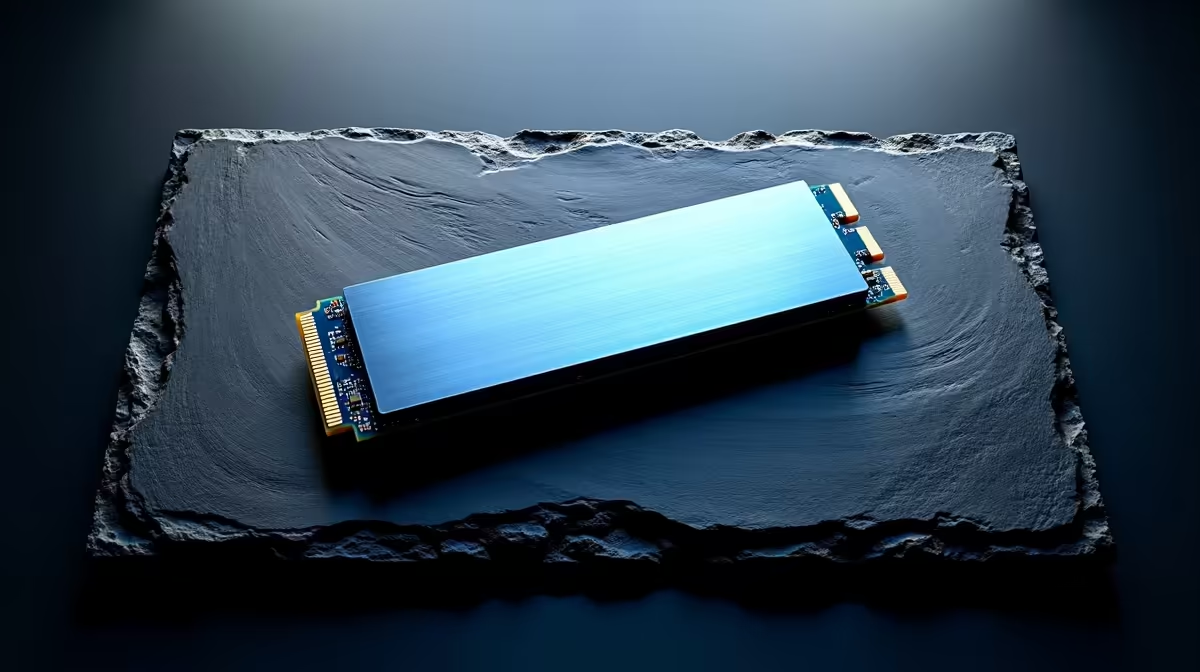
Between 2020 and 2023, gaming storage shifted from hard drives and budget SATA SSDs being the norm to NVMe PCIe 4.0 SSDs becoming the standard. Load times dropped dramatically, PS5 and Xbox Series X made fast SSD mandatory at the console level, and game installation sizes grew to the point where storage planning became a core part of any build.
The 2020 to 2023 period was transformative for storage technology in gaming. What started as a generation where many players still relied on mechanical hard drives ended with NVMe SSDs being treated as a baseline requirement rather than a luxury. This shift happened faster than most expected and changed how gamers in SA and globally think about build planning.
At the start of 2020, the typical gaming PC in South Africa still shipped with or included a 1TB mechanical hard drive as the primary storage device. SATA SSDs had dropped in price significantly but remained a deliberate upgrade rather than a default. Boot drives of 240GB to 500GB SATA SSDs were common, with a secondary HDD holding the game library.
PCIe Gen 3 NVMe drives existed and performed well, but their premium over SATA alternatives was still high enough that most budget-conscious SA builders skipped them. Games were also not yet sized or designed in ways that exposed the performance gap between SATA and NVMe as a gameplay issue.
The launch of PlayStation 5 and Xbox Series X changed storage expectations across the entire gaming industry. Both consoles made high-speed NVMe storage central to their architecture, with developers beginning to design loading systems that assumed fast SSD access. On PC, DirectStorage technology began its rollout, promising GPU-accelerated asset decompression that required NVMe speeds to function as intended.
PCIe Gen 4 NVMe drives arrived with dramatically higher sequential read and write speeds, and prices fell sharply through 2021 and 2022. By late 2022, a 1TB PCIe Gen 4 NVMe drive had dropped to price points accessible in most mid-range SA builds - the SATA SSD's time as the aspirational upgrade was effectively over.
By 2023, NVMe had completed its transition from enthusiast choice to standard component in any serious gaming build. Game installation sizes reached new heights - titles regularly exceeding 100GB made the 240GB or 512GB boot drive strategy unworkable. 1TB NVMe drives became the minimum practical recommendation, with 2TB configurations increasingly justified for players with large game libraries.
In South Africa, the price normalisation of NVMe meant that even entry-level gaming PC builds on tight ZAR budgets could include a 500GB to 1TB NVMe drive without compromising GPU or CPU budget significantly. The era of treating fast storage as optional was over.
Q: When did NVMe SSDs become affordable enough for budget gaming builds in SA? A: Broadly from mid-2022 onwards, when PCIe Gen 4 1TB drives became available in the R1,200 to R1,800 range locally - a price point that made them accessible for mid-range builds.
Q: Did game load times noticeably improve with NVMe over SATA SSD? A: For most games between 2020 and 2023, the real-world difference between SATA and NVMe was smaller than spec sheets suggested. The bigger leap was SATA SSD over HDD. However, as DirectStorage adoption grows, the NVMe advantage will become more tangible.
Q: Is a mechanical hard drive still viable as a game storage drive in 2023? A: As a secondary archive for older or infrequently played titles, yes. As a primary gaming drive, no - the load time experience versus even a budget SATA SSD is too significant to ignore.
Ready to Find Your Perfect Match? Find the best gaming PC deals at Evetech including builds with fast NVMe storage.
Storage Technology: 2020-2023 Evolution available at Evetech.co.za with local warranty and fast delivery.
Storage Technology: 2020-2023 Evolution - check Evetech for latest stock and SA pricing.
Depends on your use case. Storage Technology: 2020-2023 offers good value at current Rand pricing.
Core Ultra 5 245K Gaming Performance: Full. Real-world benchmark data, FPS numbers & performance analysis. What SA gamers can actually expect.
Read more
Huawei MatePad Range : Which Model Should You Buy. Complete product range with SA pricing, key specs & recommendations for different budgets.
Read more
Are Wireless Gaming Peripherals as Good as Wired in 2026 Detailed answer with SA data, expert analysis & practical recommendations for local buyers.
Read more
Are Big And Tall Gaming Chairs Good for Long Gaming Sessions Detailed answer with SA data, expert analysis & practical recommendations for local buyers.
Read more
PCIe Bandwidth Saturation: Multiple GPU Issue. Diagnosis steps, proven fixes & when to seek professional help. SA-specific support info included.
Read more
Intel Keyboard: Value. SA-focused analysis with local pricing data, real-world insights & actionable buying advice.
Read more
MacBook Pro for Machine Learning in 2026: Can Apple Silicon Compete Detailed answer with SA data, expert analysis & practical recommendations for local buyers.

Choose the Right SATA SSD for machine learning. Step-by-step instructions with SA-specific tips, common pitfalls to avoid & expert recommendations.

Overwatch 2 Competitive Settings Servers. Tested & verified settings for best FPS and visual quality on SA hardware budgets.
League of Legends Settings for 144Hz Gaming. Tested & verified settings for best FPS and visual quality on SA hardware budgets.
Every AMD CPU Ranked for Gaming: Tier List. SA-focused analysis with local pricing data, real-world insights & actionable buying advice.
Easter Family Bundles: Monitors. Hand-picked gift ideas at every budget tier. SA pricing & Evetech availability included.

Ryzen 7 9800X3D Running 100 Degrees: Cooler. Diagnosis steps, proven fixes & when to seek professional help. SA-specific support info included.

Most Affordable Laptops : Starting from R8,000. Full parts list, Rand pricing & expected performance. Build confidently with SA-available components.

HBADA Chairs : Range and Pricing. Complete product range with SA pricing, key specs & recommendations for different budgets.
Ryzen 7 9800X3D for Music Production: Performance. Real-world benchmark data, FPS numbers & performance analysis. What SA gamers can actually expect.

Winter Cooling Management: Headsets. SA-focused analysis with local pricing data, real-world insights & actionable buying advice.
AKRacing Gaming Chair Range: Which Model Is Right. Complete product range with SA pricing, key specs & recommendations for different budgets.