Plenty of PCs that still run perfectly well will not get a single security update past their support window, and that is what is pushing the great PC refresh of 2026. Windows 10 reached end of support on 14 October 2025, and the machine that runs your home office or your kid's homework may be locked out of Windows 11 because it lacks a TPM 2.0 chip or a supported processor. That is the wave SA home and office users are now caught in.
Quick Answer
The 2026 refresh wave is driven by Windows 11's hardware requirements, chiefly TPM 2.0 and a supported CPU, which millions of older machines simply do not have. Around 35 percent of desktops worldwide were still on Windows 10 in early 2026, and with mainstream support ended, many of those PCs need replacing rather than upgrading.
Why this is a replacement wave, not an upgrade wave
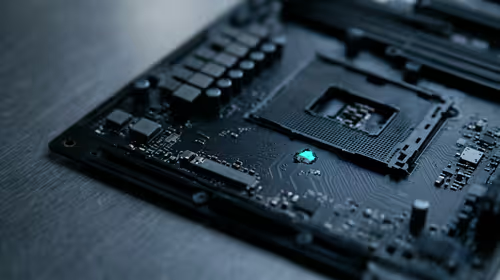
Most past Windows transitions were a free in-place upgrade. This one is different because the blocker is silicon, not software. Windows 11 requires TPM 2.0, Secure Boot and a processor on Microsoft's supported list, and a typical 2017-era machine often misses at least one of those. You cannot add a supported CPU to most older boards without effectively building a new PC, so for a large slice of users the realistic path is a new machine rather than a tweak.
There is a bridge for those who need time. A consumer Extended Security Updates option keeps patches flowing on enrolled devices through 13 October 2026, which suits someone with one stubborn machine or a legacy app. It buys breathing room, not a long-term fix, and the cleaner answer for most is to move to hardware that meets the requirements outright.
What SA users should check first
Before assuming you need to replace anything, confirm where your machine actually stands. Open the PC Health Check tool or look in Settings for the TPM status. If the PC reports TPM 2.0 enabled, a supported CPU and Secure Boot available, you can upgrade in place at no cost and you are done. If it flags TPM or the processor, that is the signal you are part of the refresh wave and a new machine is the sensible move.
For many home and small-office setups, a compact mini PC is the right replacement. It meets the Windows 11 requirements out of the box, sips power, takes almost no desk space, and handles browsing, office work, video calls and homework comfortably. The mini PC range is a practical starting point for anyone replacing an ageing tower that was only ever used for everyday tasks.
Replace smart, not expensive
The wave does not mean you need a high-end machine. Match the replacement to the actual workload. Everyday browsing and documents are happy on a modest mini PC or entry desktop; only gaming, creative work or heavy multitasking justify spending up. Buying far more PC than the task needs is the easiest way to overspend during a forced refresh. To see what SA buyers are actually choosing in this wave, the PC best sellers give a clear read on the popular price and performance points right now.
Frequently Asked Questions
Why can't my old PC just upgrade to Windows 11?
Windows 11 requires TPM 2.0, Secure Boot and a CPU on Microsoft's supported list. Many 2017-era and older machines lack one or more of these, and the processor in particular usually cannot be swapped without effectively building a new PC, so replacement becomes the realistic path.
Is Windows 10 actually unsafe to keep using now?
Mainstream support ended on 14 October 2025, so it no longer receives standard security updates. Enrolled devices can get Extended Security Updates through 13 October 2026, but that is a temporary bridge rather than a long-term safe option.
Do I need an expensive new PC to be Windows 11 ready?
No. For browsing, office work and video calls, a modest mini PC or entry-level desktop meets the requirements and runs Windows 11 comfortably. Spend up only if you game, do creative work, or run heavy multitasking.
How do I check if my PC qualifies for Windows 11?
Run Microsoft's PC Health Check tool or look at the TPM and Secure Boot status in Settings. If it confirms TPM 2.0 and a supported CPU, you can upgrade for free; if it flags either, plan a replacement.
If your PC missed the Windows 11 cut, replacing it does not have to mean overspending. Browse the compact, power-efficient options in the Evetech mini PC range and pick a machine sized to what you actually do.