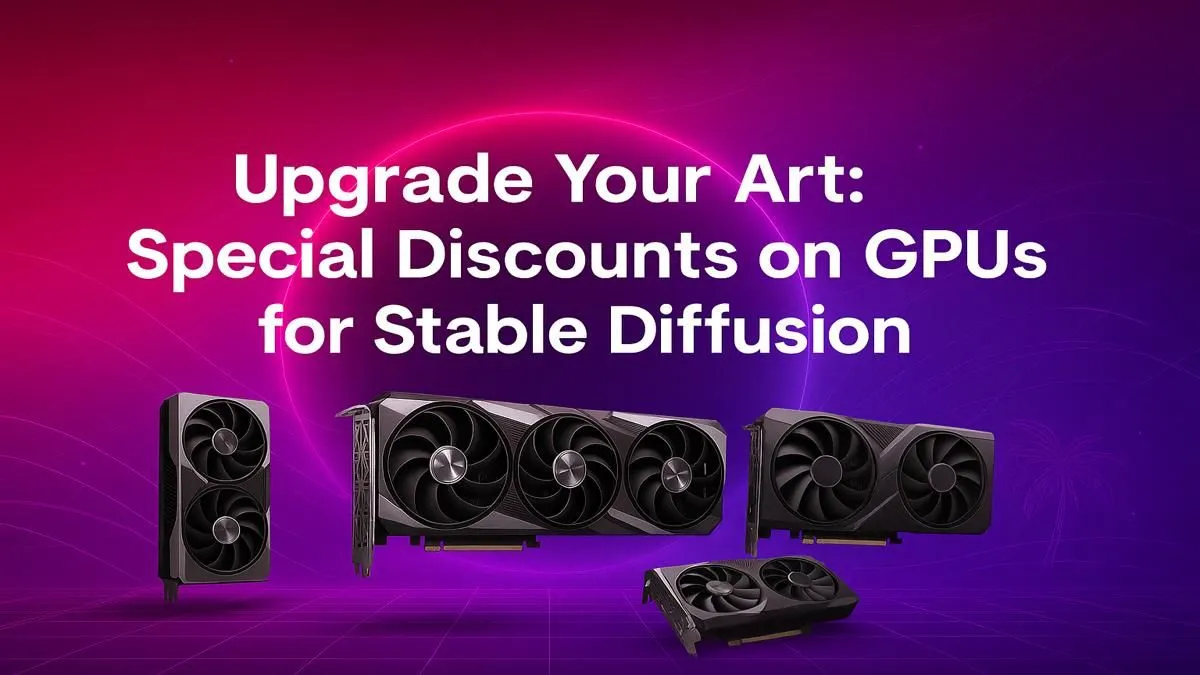
Seen those mind-bending AI art images flooding your feed? That could be you. With a tool called Stable Diffusion, your PC can become a digital art studio. But there’s a catch… it all comes down to your hardware. The right GPU for Stable Diffusion isn't just a component; it's your paintbrush, your canvas, and your muse all in one. Ready to unlock your inner artist? Let's find the perfect graphics card for your rig.
Why VRAM is King for AI Art Generation
When you're gaming, your GPU renders frames. When you're creating AI art, it's crunching massive datasets and complex algorithms. This process is incredibly hungry for video memory, or VRAM. Think of VRAM as your GPU's short-term memory or workspace. The more you have, the larger and more detailed the images you can create at higher speeds.
A card with too little VRAM will struggle, leading to slow generation times or out-of-memory errors... which is just plain frustrating. For anyone serious about using Stable Diffusion, choosing a GPU with ample VRAM is the most critical decision you'll make.
NVIDIA: The Current AI Champion 🏆
Let's be clear: when it comes to AI workloads, NVIDIA currently holds the crown. Their CUDA cores are highly optimised for the parallel processing that tools like Stable Diffusion rely on. This often translates to faster image generation and wider community support for troubleshooting.
A fantastic starting point is the GeForce RTX 3060 with 12GB of VRAM. It hits the sweet spot of price and performance, offering enough memory for high-resolution creations. For those with a bigger budget, the RTX 40-series cards, like the 4070 or 4080, are absolute beasts. You can browse Evetech's full range of NVIDIA GeForce graphics cards to find a deal that fits your setup.
Quick Performance Boost ⚡
If you're using the popular AUTOMATIC1111 web interface for Stable Diffusion, you can often improve performance on cards with less VRAM. Try launching it with command-line arguments like --medvram or installing the xFormers library. This optimises memory usage, letting you create bigger images without errors.
AMD: The High-Value Contender
While NVIDIA has a head start, you shouldn't count AMD out. Team Red offers incredible performance-per-Rand, and their cards are becoming more viable for AI art every day. With technologies like ROCm, many popular Stable Diffusion interfaces now support AMD Radeon graphics cards, though the initial setup can sometimes require a few extra steps.
If you're a tinkerer who loves value, a high-VRAM AMD card like the Radeon RX 7800 XT or RX 7900 XT can be an excellent choice, delivering top-tier gaming performance and powerful AI capabilities.
Finding the Right GPU for Your Stable Diffusion Goals
So, which graphics card should you get? It depends on your ambition and budget.
- Casual Creator (8GB VRAM): Good for getting started and learning the ropes. You'll be able to generate standard 512x512 images without much fuss.
- Serious Hobbyist (12GB-16GB VRAM): This is the sweet spot. You can work with higher resolutions, train your own models, and experiment with advanced features far more comfortably.
- Professional & Power User (16GB+ VRAM): For those who need maximum speed for commercial work or pushing the absolute limits of AI generation, nothing beats a top-tier card. In some cases, exploring workstation graphics cards with massive VRAM pools might even be a consideration for dedicated AI rigs. ✨
Ultimately, the best GPU for Stable Diffusion is one that empowers your creativity without breaking the bank.
Find Your Perfect AI Art GPU Today Stop dreaming and start creating. Explore South Africa's widest selection of graphics cards and find the perfect engine for your AI art journey.