Quick Answer
South African network equipment prices in Q2 2026 are being shaped by a weaker rand, increased demand for loadshedding-resilient networking solutions, and ongoing component cost normalisation post-pandemic. Routers, switches, and Wi-Fi 7 access points are seeing modest price pressure upward, while entry-level networking gear remains competitive.
Networking hardware in South Africa is navigating a complicated price environment in Q2 2026. The rand's volatility against the dollar continues to create unpredictability in import-heavy categories, and local demand patterns are shifting thanks to increased home office adoption and the continued reality of load-shedding driving interest in battery-backed and PoE-powered network setups. Here's what the market looks like heading into mid-2026.
Router and Access Point Pricing in Q2 2026
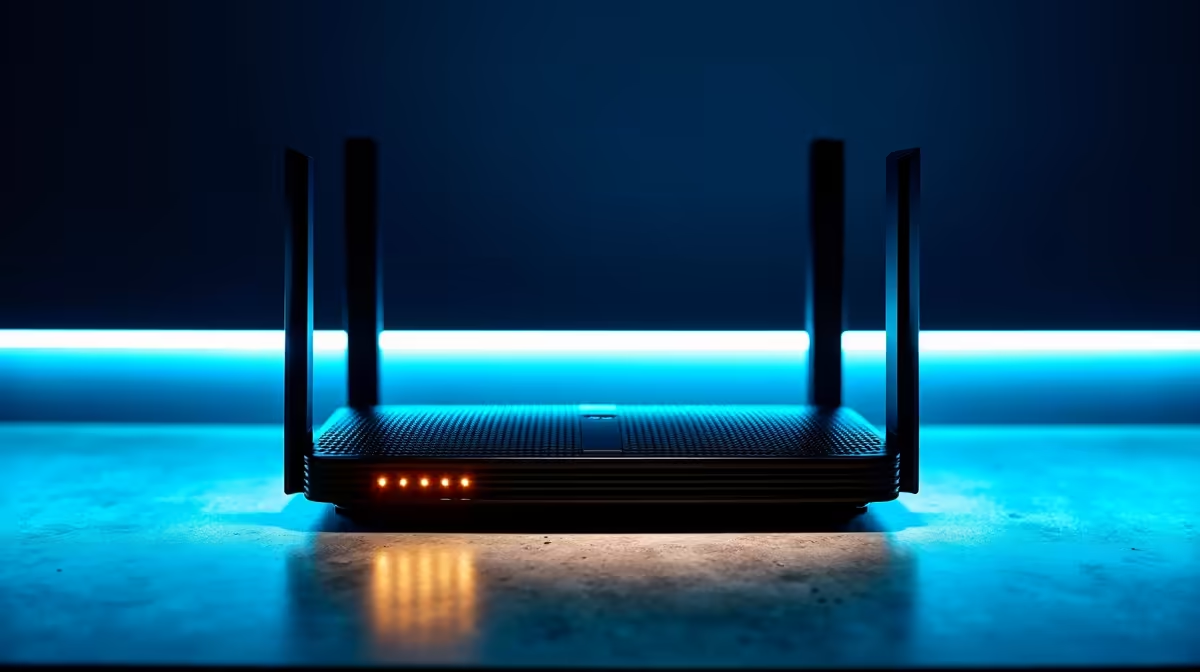
Wi-Fi 6 gear has settled into stable pricing territory in the SA market. Entry-level dual-band Wi-Fi 6 routers from mainstream brands are available in the R800 to R1,500 range, which represents reasonable value for home users. Wi-Fi 6E access points sit in the R2,500 to R5,000 range for prosumer models, a category that's seen increased uptake among small businesses and WFH professionals who need reliable multi-device performance. Wi-Fi 7 is entering the SA market in Q2 2026 but remains expensive, with tri-band Wi-Fi 7 routers from premium brands running R6,000 to R12,000. Adoption is low outside early enthusiasts - the real-world benefit over Wi-Fi 6E for most home networks doesn't justify the premium at this stage. Expect Wi-Fi 7 pricing to compress meaningfully in Q3 and Q4 as inventory builds.
Switches, NAS, and Business Networking
Managed 8-port gigabit switches are holding in the R800 to R1,800 range depending on brand and PoE support. PoE switches have seen stronger demand in SA due to their use in powering IP cameras and wireless access points from a single cable run - a setup that integrates well with UPS-backed installations. 2.5GbE unmanaged switches are increasingly affordable, now available from R1,200 upward for 5-port units, making them a practical upgrade for home labs and small offices moving data between NAS devices and workstations. NAS units have been moderately affected by HDD price fluctuations but the hardware cost for 2-bay and 4-bay units has remained relatively stable in ZAR terms.
What SA Buyers Should Watch in Q2 2026
The rand/dollar rate is the primary risk factor for networking hardware pricing through Q2. Any significant rand weakening will push import-dependent categories upward, particularly premium Wi-Fi 7 and enterprise networking gear. Buyers with planned network upgrades should consider moving sooner rather than waiting if current pricing aligns with budget - deferral risk is real in this currency environment. The loadshedding-resilience factor continues to drive interest in PoE setups and battery-backed networking solutions, a category that has no equivalent price pressure from international buying guides designed for markets without South Africa's power reliability context.
Frequently Asked Questions
Q: Is it worth upgrading to Wi-Fi 7 networking gear in SA in Q2 2026? A: For most home and small business users, no. Wi-Fi 6 or 6E handles current device loads effectively, and the price premium for Wi-Fi 7 in the SA market is substantial. Upgrade if you have specific use cases - extremely high device density or multi-gigabit internet connections - but otherwise wait for prices to fall in late 2026.
Q: Are networking prices in SA higher than international prices? A: Yes, typically 15 to 30% higher when converting at current exchange rates, due to import duties, logistics costs, and distributor margins. The gap is smaller for mainstream brands with established local distribution than for niche or enterprise brands.
Q: What network gear investment makes most sense for a loadshedding-resilient home setup? A: A PoE switch powered from your UPS, a PoE-capable Wi-Fi 6 access point, and a separate 4G/LTE router as backup deliver solid resilience without excessive cost. Expect to spend R3,000 to R6,000 for a properly resilient setup in 2026.
Ready to Find Your Perfect Match? Check out Evetech's latest PC and tech deals - upgrade your hardware while prices are in your favour.