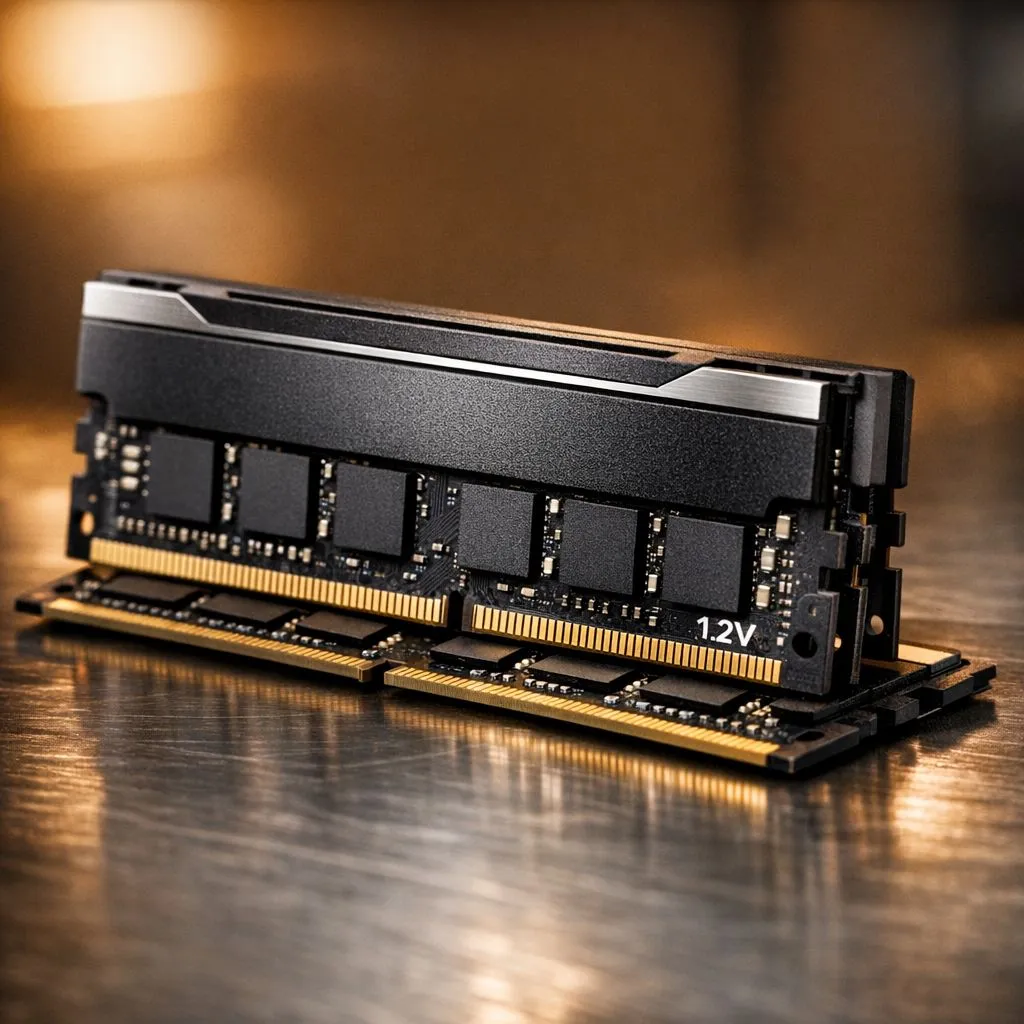
Building a new PC in South Africa? You’re laser-focused on the GPU and CPU, but then you spot it on the RAM specs: 1.2V. What does that tiny number mean? It’s not just tech jargon… it’s a critical factor influencing your rig’s performance, temperature, and long-term health. Understanding the impact of 1.2V RAM is key to building a cooler, more stable machine that won’t let you down mid-raid. Let's dive in. 🔧
The Big Deal with Low Voltage RAM
Before DDR4 became the go-to, many PC builders were using older DDR3 modules that typically ran at 1.5V or even 1.65V. The shift to a 1.2V standard wasn't just an arbitrary change; it was a deliberate engineering move to make PCs more efficient.
Think of voltage as the electrical pressure pushing data through the memory chips. Less pressure means less energy is needed. For a single component, the difference seems small. But across billions of memory cells operating millions of times per second, this reduction has a massive effect on power consumption and, more importantly for gamers, heat output.
How 1.2V RAM Affects System Heat
Every component in your PC case generates heat, and your RAM is no exception. The core benefit of the 1.2V RAM standard is its direct impact on thermals.
The Simple Physics ⚡
- Lower Voltage = Less Power Draw: By operating at 1.2V instead of 1.5V, standard DDR4 RAM uses significantly less electricity.
- Less Power = Less Heat: The energy that isn't used for processing data is released as heat. By cutting the power draw, you directly reduce the thermal load inside your case.
This might not seem like much, but in a tightly packed gaming rig—especially during long sessions of Helldivers 2 on a hot day in Jozi—every degree counts. Cooler components lead to a more stable system and can even extend the lifespan of your hardware. This efficiency is a primary reason why most modern standard DDR4 RAM kits are built around this voltage.
Check Your Voltage 💡
Curious what voltage your RAM is actually running at? Reboot your PC and enter the BIOS UEFI. It's usually listed on the main screen or under an 'overclocking' or 'memory' tab. In Windows, you can also use a free tool like CPU-Z and check the 'Memory' and 'SPD' tabs to see the current voltage and factory profiles.
The Link Between 1.2V RAM and System Stability
When we talk about stability, we mean your PC’s ability to run without crashing, freezing, or giving you the dreaded Blue Screen of Death. The 1.2V RAM specification is the JEDEC-certified standard for DDR4, meaning it's the baseline voltage guaranteed to work with compatible motherboards and CPUs without any tweaking. It’s the definition of "plug and play."
What About Overclocking (XMP/EXPO)?
This is where things get interesting. High-speed RAM kits often use profiles like XMP (Extreme Memory Profile) or EXPO to run faster than the standard JEDEC speeds. To achieve these higher frequencies, the profiles often increase the voltage to 1.35V or more.
This creates a trade-off:
- Higher Voltage: Unlocks faster speeds for better performance in games and applications.
- Potential Cost: Increased heat output and a slight, but real, risk of instability if your CPU’s memory controller or motherboard can't handle it.
For most gamers, a quality 1.2V kit is perfectly stable and efficient. For enthusiasts chasing every last frame, the controlled voltage bump from an XMP profile is a worthy trade-off. This balancing act continues with next-generation DDR5 kits, which start at an even lower 1.1V.
Looking Ahead: DDR5 and Beyond
The trend towards lower voltage continues. The latest DDR5 standard operates at a baseline of just 1.1V, further improving energy efficiency. High-performance kits from brands like top-tier Kingston DDR5 and performance-focused ADATA RAM still use overclocking profiles to push speeds, but their efficient foundation means they generate less heat for the performance they deliver.
Ultimately, whether it's 1.2V RAM for a reliable DDR4 build or a 1.1V kit for a new DDR5 rig, understanding voltage helps you make smarter choices for a cooler, more stable, and more powerful PC. 🚀
Ready to Power Up Your Rig? Understanding RAM voltage is a key step to building a balanced and reliable PC. Whether you need stable DDR4 or the latest DDR5, finding the right memory makes all the difference. Explore our massive range of PC memory and find the perfect kit to conquer your world.