

GTA 6 Max Settings on RTX 5070: Complete Guide
GTA 6 Max Settings on RTX 5070. Tested & verified settings for best FPS and visual quality on SA hardware budgets.
Read more• 120mm AIO coolers: quick performance check; • Compare top compact AIOs; • Buying advice and best picks ✅ Find out when a 120mm AIO still makes sense for gaming, compact builds, noise and cost.
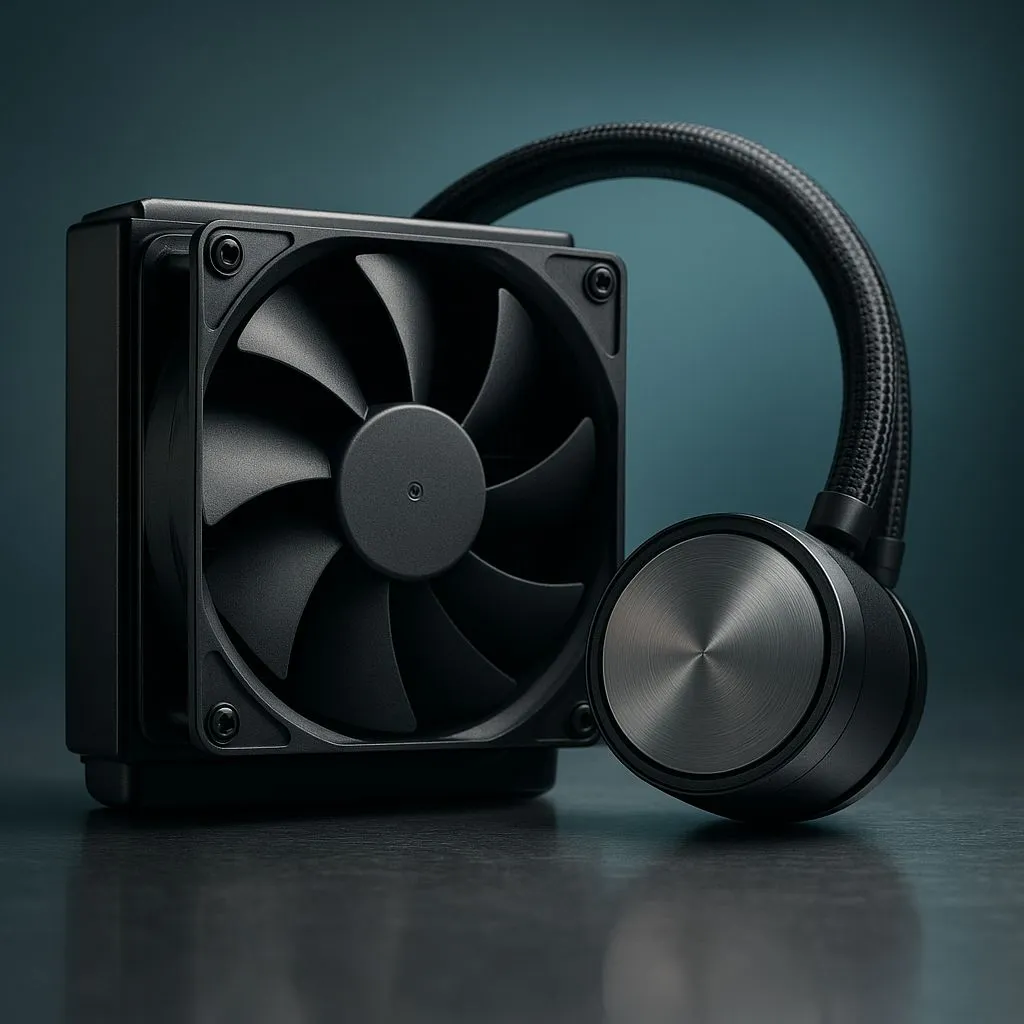
You’ve picked your CPU, your GPU is sorted… now for cooling. The sleek promise of liquid cooling calls to you, but your budget or case size points towards a compact solution. This brings up a critical question for South African builders: in a world of power-hungry processors, do 120mm AIO coolers still make sense in 2025?
While bigger is often better in the world of PC cooling, these single-fan liquid coolers still carve out an important niche. Let's break down where they shine and where they fall short.
The biggest argument for a 120mm AIO cooler is its unique blend of aesthetics and compatibility. For builders working with Small Form Factor (SFF) cases or compact Mini-ITX builds, space is the ultimate luxury. A massive tower air cooler simply won't fit, making a single-fan AIO an elegant and effective solution.
They also offer undeniable visual appeal. The clean look of a CPU water block, often decked out with RGB, provides a modern, uncluttered look inside your case that many builders prefer. This design also gives you excellent clearance for tall RAM modules and easy access to motherboard components, a real perk during installation and upgrades. For many mid-range builds, a good quality 120mm AIO offers a perfect entry point into the world of liquid cooling without breaking the bank.
The cooling landscape has changed. As CPUs from Intel and AMD have become more powerful, their thermal output has increased dramatically. This is where the physical limitations of a 120mm AIO cooler become apparent. The small radiator has a limited surface area for heat dissipation, meaning it can get overwhelmed when trying to cool a high-end, overclocked chip under full load.
In many scenarios, a premium air cooler can deliver similar or even better thermal performance for the same price, or sometimes even less. The price-to-performance ratio is a critical factor, and for pure cooling power on a budget, high-end air cooling often wins the day. If you're running a Core i7/i9 or a Ryzen 7/9 and plan on pushing it hard, you're better off looking at a cooler with more muscle.
Before buying any cooler, measure the maximum CPU cooler height your case supports. For AIOs, confirm you have a compatible 120mm fan mount (usually the rear exhaust). This one check can save you a massive headache and a return. You can find detailed specs on every product page at Evetech.
So, if a 120mm AIO isn't the right fit, what should you be looking at? The market is filled with fantastic alternatives tailored for performance.
For serious gaming, content creation, or overclocking, a larger AIO is the logical next step. A 240mm or even a beefy cooler with a 360mm radiator provides significantly more surface area. This allows for lower fan speeds, resulting in quieter operation and much lower temperatures under sustained load. It's the go-to choice for taming today's top-tier processors and ensuring you get maximum performance without thermal throttling.
The great news is that you're spoilt for choice. Top-tier brands like CORSAIR have perfected their pump and radiator technology across their entire lineups, offering reliable performance from their entry-level models to their flagship coolers. Exploring the entire category of Liquid Cooler (AIO) options will reveal solutions for every budget and performance need.
So, do 120mm AIO coolers make sense in 2025? The answer is a definite yes, but for the right build.
Buy a 120mm AIO if:
Look elsewhere if:
Ultimately, the humble 120mm liquid cooler remains a valuable and relevant part of the PC building ecosystem. It’s a specialised tool, and when used in the right scenario, it’s the perfect solution.
Ready to Find Your Perfect Match? The air vs. liquid cooling debate is complex, but finding the right fit for your rig doesn't have to be. Whether a nimble 120mm AIO is your perfect match or you need something more powerful, we've got you covered. Explore our massive range of CPU coolers and keep your temps in check.
Yes for mid-range CPUs and tight cases: a 120mm AIO can offer better temps and lower noise than stock coolers but lags behind larger AIOs under heavy sustained loads.
120mm AIOs beat low-end stock coolers and sometimes tower air coolers in clearance-limited builds, but high-end air coolers often match thermal performance.
Best for mainstream CPUs (i5/i7 mobile or desktop non-overclocked). Avoid for high-core-count or heavily overclocked CPUs where larger radiators excel.
Smaller footprint, cleaner cable routing, and easier installs for SFF builds — ideal when radiator space is limited or compact design matters.
Look for high static pressure fans, reliable pump design, and slim radiator profiles. Our long-tail research highlights the best 120mm AIO coolers for small builds.
Sometimes: they can be cost-effective if you need a compact cooler, but comparable-priced air coolers often offer better thermal value.
120mm AIOs can be noisier at high loads because smaller fans spin faster; higher-quality fans and fan curves reduce audible noise.
GTA 6 Max Settings on RTX 5070. Tested & verified settings for best FPS and visual quality on SA hardware budgets.
Read more
Cyberpunk 2077 Max Settings on RTX 5080. Tested & verified settings for best FPS and visual quality on SA hardware budgets.
Read more
Starfield Max Settings on RTX 5070 Ti. Tested & verified settings for best FPS and visual quality on SA hardware budgets.
Read more
Can RTX 4080 Super Run AI Workloads for SA Developers Detailed answer with SA data, expert analysis & practical recommendations for local buyers.
Can RTX 4090 Run AI Workloads for SA Developers Detailed answer with SA data, expert analysis & practical recommendations for local buyers.
Top Settings for Intel Arc B580 at Ultrawide 1440p picks evaluated on performance, value & SA availability with current Rand pricing from Evetech.
RX 7600 Overclocking Guide: Safe OC Settings for. Real-world benchmark data, FPS numbers & performance analysis. What SA gamers can actually expect.
RTX 4060 CS2 Low Settings at 1080p: FPS Results. Real-world benchmark data, FPS numbers & performance analysis. What SA gamers can actually expect.
Visual Artifacts: Possible GPU Issue Issue #1. Diagnosis steps, proven fixes & when to seek professional help. SA-specific support info included.
Can the RTX 4090 Handle 1440p 144Hz Gaming. Performance testing verdict with real data & practical recommendations for SA buyers.
Top ASUS GPU Under R15000 picks evaluated on performance, value & SA availability with current Rand pricing from Evetech.
GTA 6 Max Settings on RTX 5070. Tested & verified settings for best FPS and visual quality on SA hardware budgets.
Cyberpunk 2077 Max Settings on RTX 5080. Tested & verified settings for best FPS and visual quality on SA hardware budgets.
Starfield Max Settings on RTX 5070 Ti. Tested & verified settings for best FPS and visual quality on SA hardware budgets.
Top RTX 5090 Under R5000 picks evaluated on performance, value & SA availability with current Rand pricing from Evetech.