

RTX 4060 Ti Throttling Under Load: SA Temperature Guide
RTX 4060 Ti Throttling Under Load: Temperature. Everything you need to know with SA pricing, step-by-step instructions & expert recommendations.
Read more128GB LPDDR5x unified memory could power serious AI workflows 🧠⚡ Explore when a mini PC can replace a traditional AI workstation, where it falls short, and who should consider the switch.
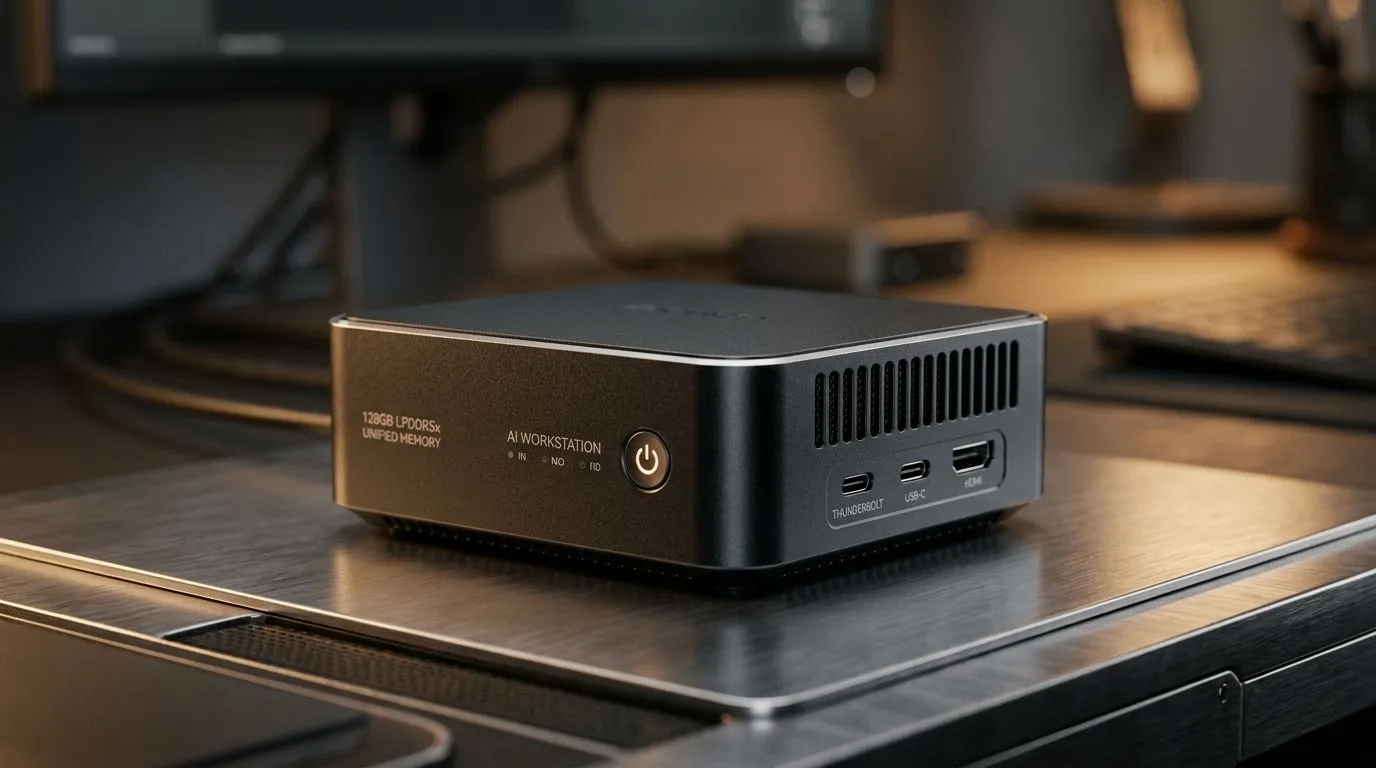
South Africans are buying compact PCs for a reason… less space, easier setups, and a growing market of mini PCs that punch above their weight. But when you start talking AI workloads, the questions get real. Can a tiny box with 128GB LPDDR5x unified memory stand in for a full AI workstation you’d normally build around discrete GPUs and lots of cooling? Let’s break it down properly, without the hype. 🚀✨
Unified memory typically means the CPU and GPU (or AI accelerator) share one memory pool. That’s great for flexibility. It can reduce friction when your workload moves between CPU-side prep and accelerator-side inference or training steps.
However, a classic AI workstation still wins in two areas: raw throughput and sustained performance. Even if the mini PC ships with 128GB LPDDR5x, your training speed is still driven by compute capability and how well the system maintains clocks under load. In other words… lots of memory helps, but it doesn’t automatically equal “workstation-level” performance.
If you’re mainly running smaller models, doing local inference, or preparing datasets, the right mini PC can feel surprisingly “big”. If you’re training or fine-tuning large models frequently, the workstation approach is usually the safer route.
Before you choose, map your tasks to a few buckets:
This is why a Can a 128GB LPDDR5x Unified Memory Mini PC Replace an AI Workstation? decision is really about “how often” and “how heavy” your runs are.
On Windows, use the PowerToys FancyZones utility to create custom snap layouts for your apps. When you run an LLM UI, a log viewer, and a dataset folder side-by-side, it cuts context switching. Set zones for code, prompts, and outputs so you work faster during iteration.
If you’re exploring compact AI-friendly systems, the best move is to shortlist mini PCs first, then verify specs like memory capacity, supported performance modes, and cooling. Start your search here:
Once you’ve picked 2–3 candidates, compare them like an engineer: memory capacity, sustained performance (thermals), and what accelerators they actually support for AI.
You’ll feel closer to “workstation replacement” if:
You’re less likely to replace a workstation if:
So… can a 128GB LPDDR5x unified memory mini PC replace an AI workstation? It can replace it for many practical home and office AI tasks. It usually won’t fully replace it for serious, long-running training. Still, for SA buyers trying to get serious performance in a small footprint, it’s a compelling direction. 🚀
Ready to Find Your Perfect Match? The Mac vs Windows debate is complex, but for maximum power, choice, and value in South Africa, Windows is hard to beat. Explore our massive range of laptop specials and find the perfect machine to conquer your world.
Yes, it can handle many local AI models for inference, especially if the software stack supports unified memory and efficient model loading.
Unified memory helps when models exceed GPU VRAM, but dedicated VRAM usually delivers faster performance for heavy AI training and large batch jobs.
For inference, prototyping, and lightweight development, often yes. For serious training and multi-GPU work, a traditional workstation still wins.
It suits LLM inference, image generation, coding assistants, and edge AI workflows where memory capacity matters more than raw GPU power.
LPDDR5x improves efficiency and bandwidth, which can help compact AI systems, but overall GPU, cooling, and software support still matter more.
Mini PC for AI training is limited by thermals, power headroom, and lack of discrete GPU expandability compared with a full workstation.
It is a strong fit for developers, creators, and edge AI users who want a compact system for local AI work without a full tower.
RTX 4060 Ti Throttling Under Load: Temperature. Everything you need to know with SA pricing, step-by-step instructions & expert recommendations.
Read more
Apex Legends Max Settings on RTX 4080. Tested & verified settings for best FPS and visual quality on SA hardware budgets.
Read more
GPU Buying Guide. Everything you need to know with SA pricing, step-by-step instructions & expert recommendations.
Read more
GPU Terms Guide. Everything you need to know with SA pricing, step-by-step instructions & expert recommendations.
Read more
AMD Adrenalin Download & Setup Guide: GPU. Clear setup instructions with SA-specific considerations, troubleshooting tips & recommended components.
Read more
Back-to-School GPU Buying Guide. Everything you need to know with SA pricing, step-by-step instructions & expert recommendations.
Read more
Can RTX 4080 Super Run AI Workloads for SA Developers Detailed answer with SA data, expert analysis & practical recommendations for local buyers.
Can RTX 4090 Run AI Workloads for SA Developers Detailed answer with SA data, expert analysis & practical recommendations for local buyers.
Top Settings for Intel Arc B580 at Ultrawide 1440p picks evaluated on performance, value & SA availability with current Rand pricing from Evetech.
RX 7600 Overclocking Guide: Safe OC Settings for. Real-world benchmark data, FPS numbers & performance analysis. What SA gamers can actually expect.
RTX 4060 CS2 Low Settings at 1080p: FPS Results. Real-world benchmark data, FPS numbers & performance analysis. What SA gamers can actually expect.
Visual Artifacts: Possible GPU Issue Issue #1. Diagnosis steps, proven fixes & when to seek professional help. SA-specific support info included.
Can the RTX 4090 Handle 1440p 144Hz Gaming. Performance testing verdict with real data & practical recommendations for SA buyers.
Top ASUS GPU Under R15000 picks evaluated on performance, value & SA availability with current Rand pricing from Evetech.
RTX 4060 Ti Throttling Under Load: Temperature. Everything you need to know with SA pricing, step-by-step instructions & expert recommendations.
Apex Legends Max Settings on RTX 4080. Tested & verified settings for best FPS and visual quality on SA hardware budgets.
GPU Buying Guide. Everything you need to know with SA pricing, step-by-step instructions & expert recommendations.
GPU Terms Guide. Everything you need to know with SA pricing, step-by-step instructions & expert recommendations.