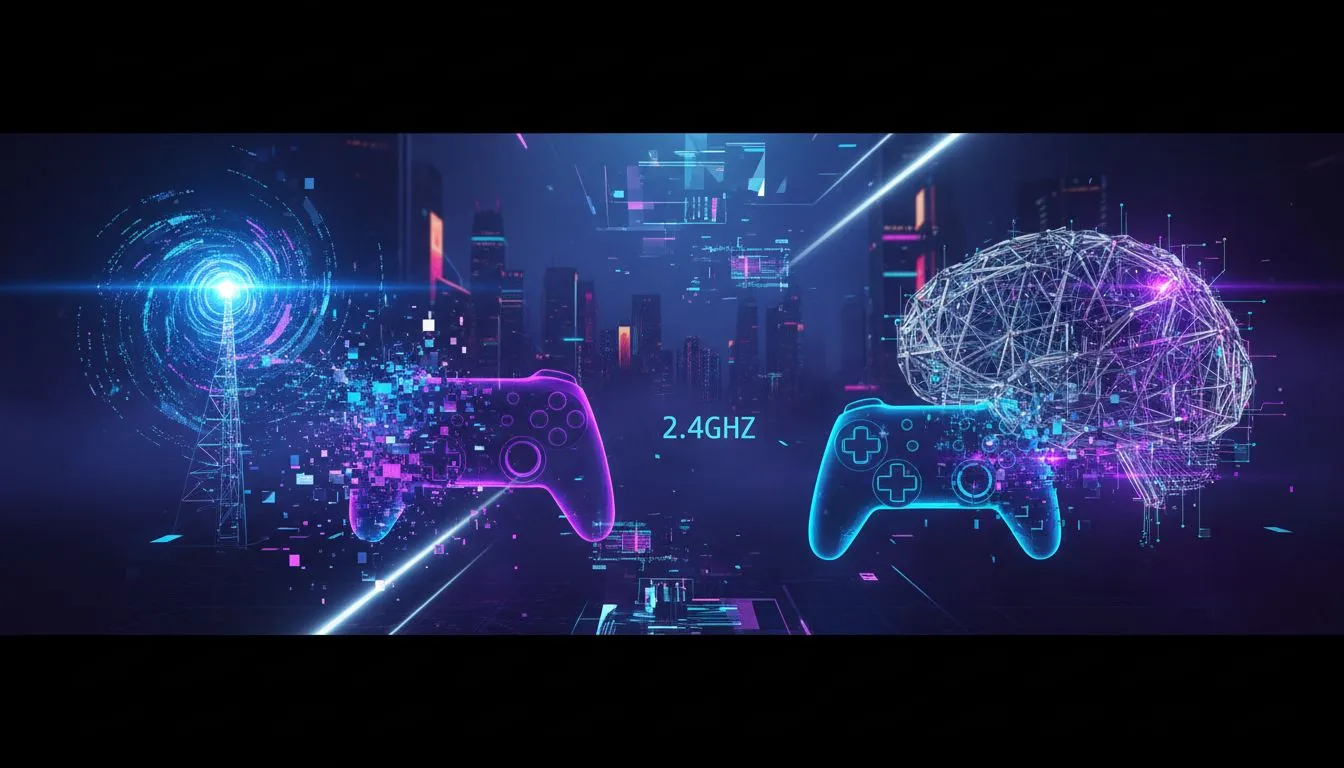
You’re lining up the perfect shot. The final round. Suddenly, you hear the enemy’s footsteps a split-second too late… game over. Sound familiar? That frustrating audio lag could be your wireless connection. For South African gamers, the 2.4GHz vs Bluetooth gaming debate isn't just about cutting cords; it's about winning clutches. So, which wireless signal gives you the competitive edge when it matters most? Let's break it down.
Understanding the Wireless Battlefield: 2.4GHz vs Bluetooth
At first glance, both technologies seem similar. They both transmit audio through the air. But how they do it is worlds apart, and for gaming, the difference is critical.
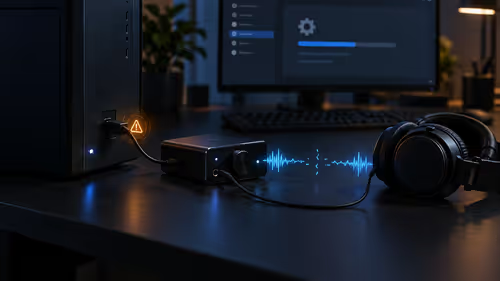
2.4GHz wireless uses a dedicated, high-speed radio frequency to connect one device (your headset) to one source (your PC or console) via a USB dongle. Think of it as a private, direct lane on a highway, built for pure speed and stability.
Bluetooth, on the other hand, is a universal standard designed for versatility. It connects a huge range of devices—phones, speakers, smartwatches—and is built into almost everything. It’s the public road system: convenient and accessible, but prone to traffic jams (interference).
Latency: The Unseen Enemy in Gaming ⚡
In competitive gaming, latency is everything. It’s the delay between something happening on-screen and you hearing it. When discussing Bluetooth vs 2.4GHz for gaming, latency is the knockout punch.
A dedicated 2.4GHz connection boasts incredibly low latency, often under 20 milliseconds (ms). This is virtually imperceptible, giving you real-time audio cues. You hear the footstep the instant it happens. High-performance models, like the Razer Barracuda X, are engineered specifically to minimise this delay.
Standard Bluetooth latency can be a deal-breaker, often soaring above 100ms. While newer codecs like aptX Low Latency exist, they aren't universally supported and can still be less reliable than a dedicated 2.4GHz link. That quarter-second delay is more than enough to cost you the match.
Dongle Placement Pro Tip 🔧
For the best 2.4GHz performance, plug your USB dongle into a front-panel USB port on your PC. This avoids potential signal interference from other cables and components at the back of your machine, ensuring the clearest possible connection to your headset.
Audio Quality, Battery, and Convenience
While latency is king, other factors in the 2.4GHz vs Bluetooth gaming showdown matter, too.
Audio Fidelity and Bandwidth
2.4GHz connections generally offer higher bandwidth, allowing for uncompressed, lossless audio. This means you hear the game's sound exactly as the designers intended—rich, detailed, and immersive. Bluetooth almost always uses compression to save bandwidth, which can sometimes result in a slight loss of audio detail. For audiophiles and immersion seekers, 2.4GHz often has the edge. Many top-tier Razer headsets leverage this for superior soundscapes.
Convenience and Compatibility 🤔
Here’s where Bluetooth shines. Its universal nature means you can pair one headset with your PC, your phone, and your tablet without needing a dongle. It's the ultimate grab-and-go solution. A 2.4GHz headset is tied to its dongle, making it a dedicated piece of kit primarily for your main gaming rig or console.
The Verdict: Which Connection Wins for You?
So, which connection is the champion? It depends entirely on your primary use case.
- For the serious PC or console gamer: 2.4GHz is the undisputed winner. Its ultra-low latency, stable connection, and high-fidelity audio provide the performance you need to compete and win. The plug-and-play simplicity is perfect for a dedicated gaming setup.
- For the mobile or casual gamer: Bluetooth is an excellent choice. The convenience of a single headset for music, calls, and casual games on your phone is unmatched. The slight audio lag is less noticeable in non-competitive titles.
Ultimately, some of the best modern devices offer both, giving you the best of all worlds. You can find the right balance for your budget and playstyle by exploring our full range of headphone headsets, where performance meets value.
Ready to Eliminate Audio Lag? 🏆
The 2.4GHz vs Bluetooth gaming choice is clear for those who play to win. For unbeatable speed and reliability in South Africa, a dedicated 2.4GHz connection is the pro's choice. Explore our massive range of gaming headsets and hear the difference for yourself.