Ever felt your PC turning into a mini-heater during a tense Warzone match? Your frames drop, the fans scream... it's a vibe killer. Often, the culprit is a mismatch between your CPU's heat output and your cooler's ability to handle it. Understanding a simple rating called TDP, and what a figure like 220W cooling power actually means, is the key to unlocking consistent, throttle-free performance for your rig. Let's dive in. ❄️
Demystifying TDP: More Than Just a Number
So, what is this "TDP" you see on CPU and cooler spec sheets? TDP stands for Thermal Design Power, and it's measured in watts (W). It's a common misconception that this is how much electricity the chip uses. Instead, think of it as the maximum amount of heat a CPU is expected to generate under a typical, non-overclocked heavy workload.
The catch? Modern CPUs from Intel and AMD are clever. They often boost their clock speeds far beyond their base TDP rating for short bursts to give you more performance, generating way more heat in the process. This is why simply matching your cooler's TDP to your CPU's TDP isn't always enough, making choosing the right CPU cooler a crucial decision for any serious build.
Why a Cooler's TDP Rating Matters for Your Rig
When your CPU generates more heat than your cooler can dissipate, it hits a thermal limit and protects itself by "throttling"—aggressively slowing down its performance.
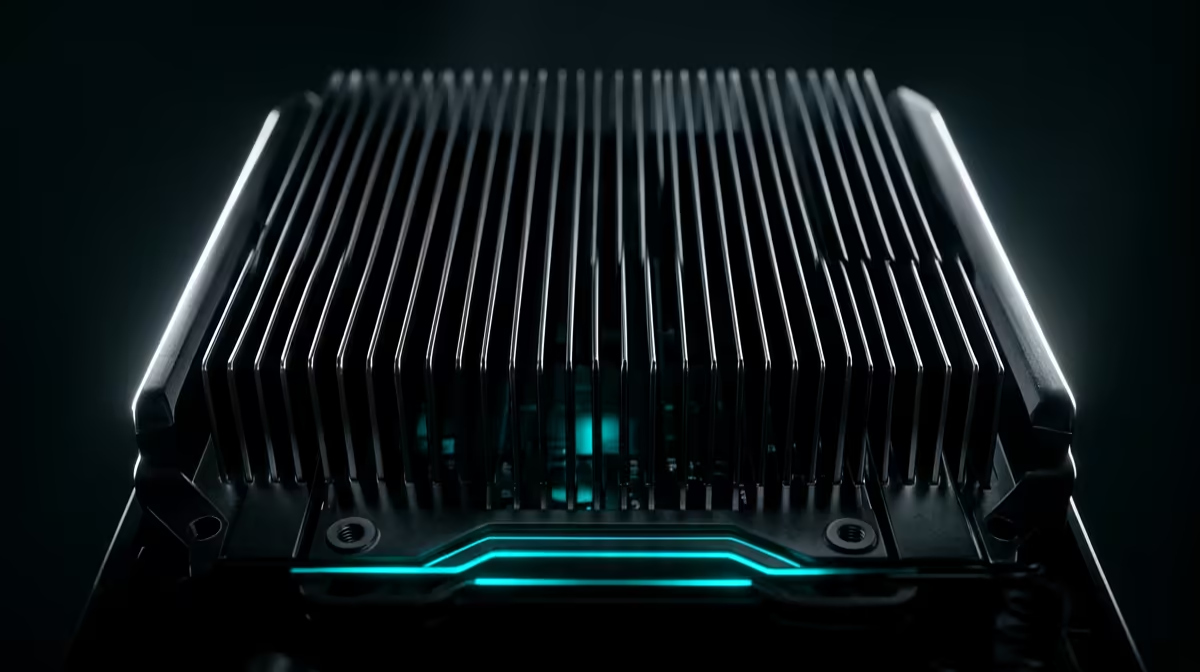
Picture this: you're in the final circle in Apex Legends, your Ryzen 7 is boosting like a beast... then suddenly, your frames stutter and your game becomes a slideshow. That's likely your CPU hitting 95°C and throttling back. This is where a cooler with ample thermal headroom, like one boasting 220W cooling power, becomes essential. It ensures your processor can maintain its high boost clocks for longer, giving you smoother gameplay and faster rendering times. For high-performance builds, exploring premium options from brands like Corsair can make a world of difference.
Matching Cooling Power to Your Processor's Needs 🌡️
A good rule of thumb is to choose a cooler with a TDP rating that significantly exceeds your CPU's base TDP.
- For a mid-range CPU (e.g., Ryzen 5, Core i5): A cooler rated 30-50W above your CPU's TDP is a safe bet.
- For a high-end CPU (e.g., Ryzen 9, Core i9) or if you plan to overclock: You need serious headroom. This is where coolers with 220W cooling power or more come into play. They are designed to handle the intense, sustained heat loads from these powerful chips.
You'll find fantastic solutions from a variety of manufacturers, including great value choices from GAMDIAS, which offer both traditional air coolers and liquid options. Many gamers and creators are now opting for their range of All-In-One liquid coolers for their superior performance and sleek aesthetics.
Thermal Paste 101 🔧
When installing a new cooler, don't gooi too much thermal paste! A small, pea-sized dot in the centre of the CPU is all you need. The pressure from the cooler will spread it evenly. Too much paste can actually hinder heat transfer and make your temps worse. Clean off the old stuff properly with isopropyl alcohol first!
It's Not Just About the Cooler: The Bigger Picture
Even the most powerful cooler can't perform optimally in a hot box. Your PC case's airflow is just as important. A cooler with a high TDP rating works by moving heat away from the CPU and into the air; if that hot air is trapped in the case, your temperatures will inevitably climb.
Ensure you have a good intake and exhaust fan setup to keep fresh, cool air flowing over your components. This is especially important in the South African climate. A high-performance cooler, like one of the many popular 240mm AIO liquid coolers, relies on good case airflow to keep both your CPU and your entire system running cool and quiet. 🚀
Ready to Tame Your Temps?
Choosing the right cooler can feel complex, but getting it right unlocks your PC's true performance. Explore our massive range of CPU coolers and find the perfect solution to keep your rig frosty.