You’re staring at a list of PC components, your dream build almost complete. But then you hit the RAM section. The term "3200MHz RAM" is everywhere, touted as the go-to choice. Is it the undisputed sweet spot for gaming in South Africa, or just clever marketing? Let's cut through the noise and figure out what those numbers really mean for your rig's performance and responsiveness. It’s simpler than you think.
Breaking Down 3200MHz RAM: The Speed Factor
First, let's talk speed. The "MHz" stands for Megahertz, which is a measure of frequency. In RAM, it tells you how many million cycles per second your memory can perform. Think of it like a conveyor belt: a higher MHz means the belt moves faster, transferring more data between your RAM and CPU in the same amount of time.
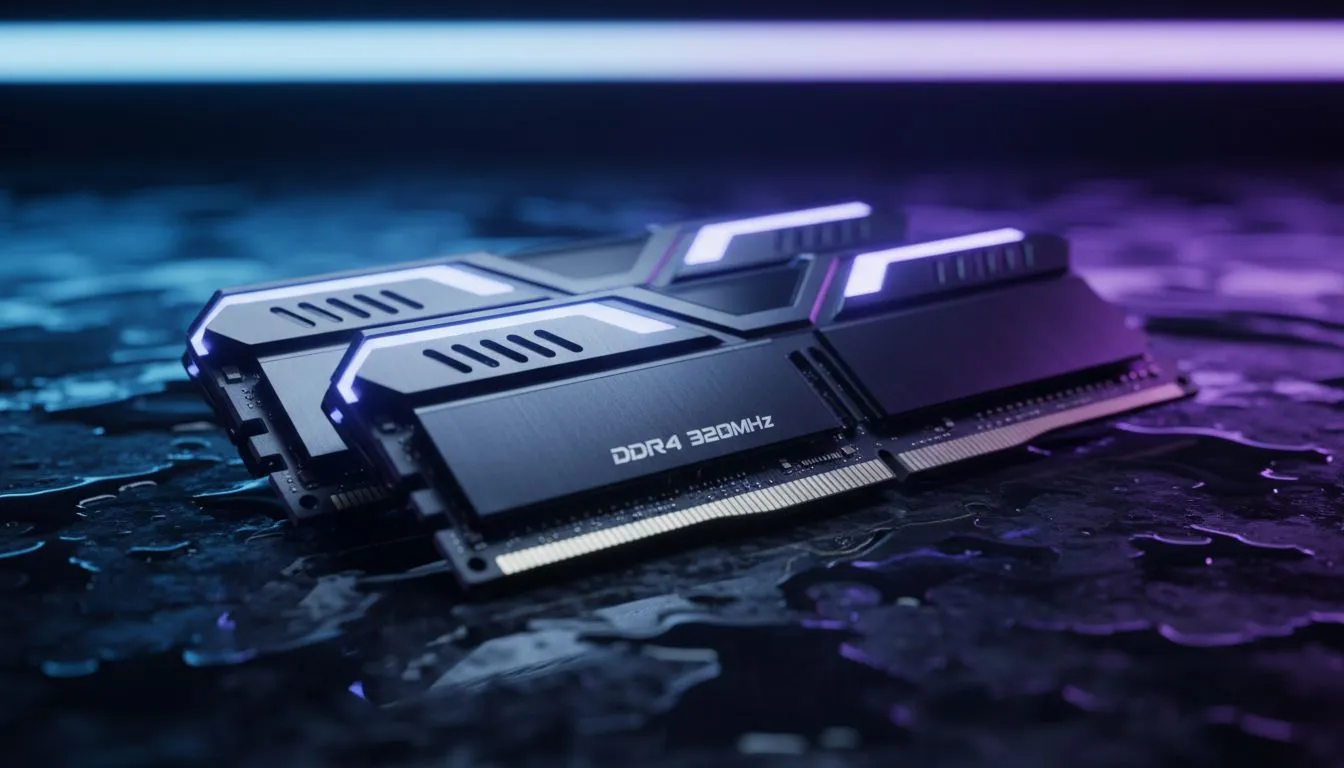
For years, 3200MHz RAM has been the gold standard, hitting the perfect balance of price and performance. It’s fast enough to feed modern processors the data they need for smooth, high-framerate gaming without breaking the bank. This makes it the long-reigning sweet spot for DDR4 memory, delivering tangible benefits over slower modules.
But What About Latency? The 'CL' Number Explained
Speed isn't the whole story. You'll also see a "CL" number, like CL16. This is CAS Latency (Column Address Strobe Latency), and it measures delay. If speed (MHz) is how fast the conveyor belt moves, latency (CL) is how long it takes for the system to find a specific piece of data on that belt and pick it up. ⚡
A lower CL number is better because it means less waiting time. The perfect RAM kit has a combination of high frequency (MHz) and low latency (CL). A 3200MHz RAM kit with CL16 is generally considered a better performer than a 3600MHz kit with CL22, especially in tasks that are sensitive to responsiveness.
Check Your QVL! 🔧
Before buying any RAM, always check your motherboard's Qualified Vendor List (QVL) on the manufacturer's website. This list confirms which specific RAM kits have been tested and are guaranteed to work at their advertised speeds with your board. It’s the easiest way to avoid compatibility headaches down the line!
The Big Question: Is 3200MHz RAM Still King? 👑
So, with new technologies emerging, does a 3200MHz RAM kit still hold up? The answer is… it depends on your build.
For any PC running on the DDR4 platform, it absolutely remains a top-tier choice. It provides more than enough bandwidth for the latest AAA titles and productivity tasks. The performance jump from older standards is massive; it's a massive leap from older DDR3 modules that many of us started with.
However, the industry is moving towards next-generation DDR5 RAM, which starts at much higher frequencies like 4800MHz. For brand-new, future-focused builds, DDR5 is the logical path forward.
Choosing Your RAM: Real-World Scenarios
Deciding on the right memory comes down to your specific needs and budget.
The Budget-Conscious Builder
If you're building a cost-effective yet powerful gaming rig today, a 16GB or 32GB kit of 3200MHz DDR4 RAM is one of the smartest purchases you can make. It offers incredible value and won't bottleneck your GPU or CPU in most gaming scenarios.
The Future-Proofing Enthusiast ✨
Building a high-end machine with the latest Intel or AMD processor? You should be looking at DDR5. The higher bandwidth will become more important as games and applications evolve. You can find excellent, reliable options from brands like ADATA or push the limits with top-tier kits from Kingston to get the absolute most out of your new platform.
Ultimately, understanding what 3200MHz RAM means empowers you to make a smarter choice. It's not just a number—it's a benchmark for solid, reliable performance that has served the gaming community well.
Ready to Boost Your Rig's Performance?
Understanding RAM speed and latency is the first step. Whether you're optimising a trusty DDR4 build or jumping to the latest DDR5, the right memory makes all the difference. Explore our huge range of RAM deals and find the perfect kit for your needs.