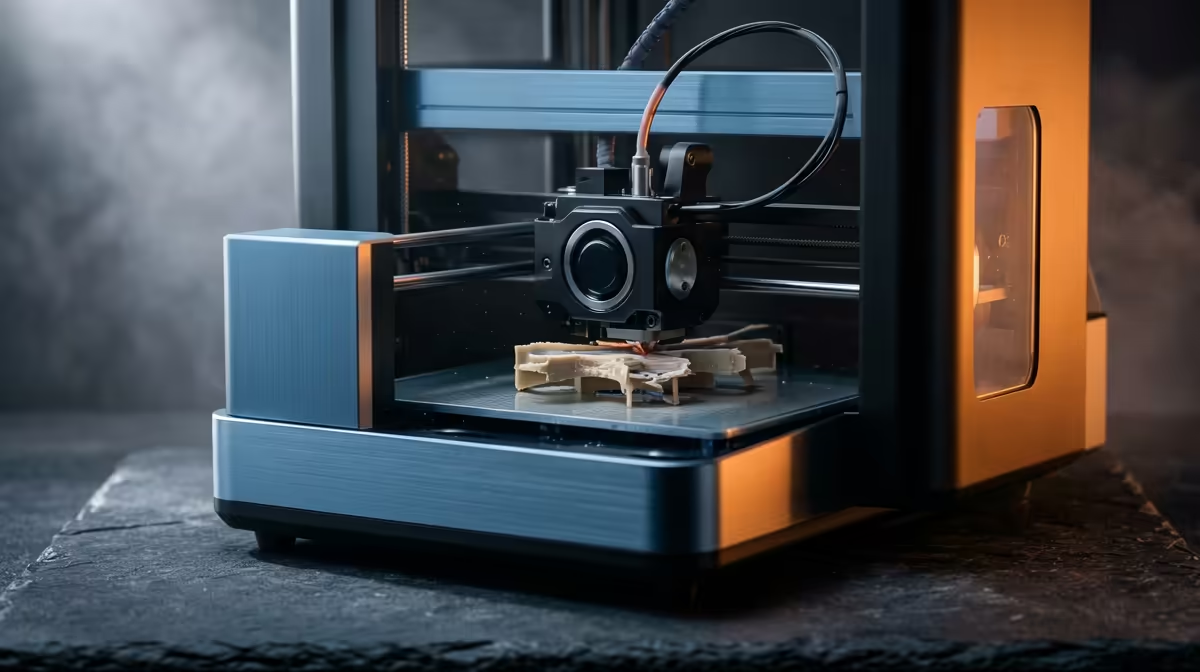
A spool of filament, a heated nozzle and a bit of patience are now enough to turn a digital model into a physical object on your desk in Cape Town or Pretoria. 3D printing in South Africa has crossed from niche hobby into genuinely affordable territory, with entry FDM machines landing around R4,000 to R5,500, comfortably under the price of a basic laptop. The hard part is no longer the cost. It is knowing which printer type, which material and which running costs actually suit what you want to make.
Quick Answer
A capable beginner FDM printer costs roughly R4,000 to R5,500 locally, and a 1kg roll of PLA filament runs about R250 to R400. Resin printers start a little higher once you add wash and cure gear, but they win on fine detail. For a first machine, FDM with PLA is the sensible, low-fuss starting point.
The Two Printing Methods, and Which One You Actually Want
Consumer 3D printing splits into two camps. FDM, short for Fused Deposition Modelling, works by pushing a plastic filament through a hot nozzle and building the object up in stacked layers. Resin printing, properly called MSLA, uses a UV screen to harden liquid resin one thin layer at a time.
FDM is the workhorse. It handles brackets, enclosures, cosplay props, replacement clips for that drawer that broke years ago, and large functional parts. It is forgiving, the materials are cheap, and cleanup is minimal. Resin produces astonishing detail, which is why miniature painters and jewellers love it, but it involves messy liquid, isopropyl alcohol for washing, and a curing step. Most people should start with FDM and add resin later only if their projects demand the resolution. Comparing the local 3D printers carried by Evetech is the quickest way to see where each price bracket actually lands before you commit.
Materials: PLA, PETG, ABS and What They Cost
PLA is the default beginner filament and for good reason. It prints at low temperatures, barely warps, smells faintly sweet rather than chemical, and costs around R250 to R400 per kilogram. It is plant-derived and ideal for decorative pieces, prototypes and anything that will not sit in a hot car.
PETG steps up durability and heat tolerance, useful for outdoor parts or things that flex. It is slightly fussier to dial in but still beginner-friendly, usually R300 to R450 a roll. ABS is tougher and more heat-resistant again, but it warps easily and releases fumes, so it really wants an enclosed printer and good ventilation. For a Highveld garage or a coastal flat with the windows open, PLA and PETG cover the vast majority of real projects.
Running Costs Nobody Mentions
The printer price is only the entry ticket. Plan for a few practical extras that keep prints succeeding rather than failing halfway through.
Filament and consumables
Beyond the roll itself, budget for a spare nozzle or two, a build-surface sheet, and a small bottle of glue stick or adhesive for bed sticking. None of it is expensive, but it adds up to a useful starter kit. A browse through the accessories best sellers gives a feel for the supporting gear people actually buy alongside a machine.
Power and time
A typical desktop FDM printer draws modest power, similar to a games console under load, so a multi-hour print costs very little in electricity. Time is the real currency: a detailed model can run eight to twenty hours. Slicing software lets you estimate this before you start, so you are never guessing.
The Brands SA Buyers Actually See
Two names dominate the entry shelf. Bambu Lab pushed the whole market forward with machines that calibrate themselves before every print: the A1 Mini gives you a 180 by 180 by 180mm bed, while the full-size A1 stretches that to 256 by 256 by 256mm for larger single-piece prints. Both run flow and resonance calibration automatically, so the ghosting and first-layer drama that defined older printers is largely engineered out. Creality's Ender line is the other workhorse, prized for a vast community of guides, mods and spare parts that means almost any problem you hit has already been solved in a forum thread.
If repairability and long-term spares are your priority, Prusa sits a tier up. The Czech-built MK4S and the enclosed Core One ship with open firmware and printable replacement parts, though there is no local distributor, so you import them and budget for shipping and duties. For a first machine most South Africans are better served by a locally stocked Bambu or Creality, then graduating to a Prusa or a resin printer once they know exactly what they want to make.
Slicing: The Step Between Model and Print
A 3D model file does not go straight to the printer. Slicing software cuts the model into horizontal layers and writes the instructions the machine follows: nozzle temperature, layer height, infill density, support placement and travel paths. Bambu Studio, PrusaSlicer, Orca and Cura are the common choices, and all are free.
The two settings that shape most beginner prints are layer height and infill. A 0.2mm layer height is the sensible default, balancing speed against surface smoothness. Infill, the internal lattice that fills hollow parts, rarely needs to go above 15 to 20 percent for decorative work; pushing it higher just burns filament and time without adding useful strength. Supports are the third lever: overhangs steeper than about 45 degrees usually need them, and a good slicer previews exactly where they land before you waste a roll finding out.
What to Buy First
For a true beginner, pick an FDM printer with automatic bed levelling and a heated bed, load a roll of PLA, and print the test cube and a few practice models before attempting anything ambitious. Automatic levelling removes the single most frustrating part of early printing. Once you are confident, branching into PETG or a resin machine becomes an easy, informed step rather than a gamble.
Frequently Asked Questions
Is 3D printing expensive to get into in South Africa?
No. A functional FDM printer starts around R4,000 to R5,500, with PLA filament at roughly R250 to R400 per kilogram. The ongoing cost per print is low, since electricity use is modest and a single roll produces many small objects.
Should a beginner choose FDM or resin?
FDM, almost always. It is cheaper, cleaner, more forgiving of mistakes, and suited to a wider range of practical objects. Resin is worth adding later if you specifically need fine detail for miniatures or jewellery.
What can I actually make with a beginner printer?
Functional parts like brackets, hooks and replacement clips, plus decorative items, cosplay pieces, organisers and prototypes. PLA handles most household and hobby projects comfortably without any special setup.
How long does a typical print take?
It varies enormously with size and detail, from under an hour for a small part to twenty hours or more for a large, intricate model. Your slicing software estimates the time before printing, so you can plan around it.
Do I need ventilation for 3D printing?
For PLA, normal room airflow is fine. ABS releases stronger fumes and really needs an enclosed printer and good ventilation, which is one more reason beginners are better off starting with PLA or PETG.
Ready to start making instead of buying? Explore the current lineup of 3D printers at Evetech and pair your first machine with a roll of PLA to get printing this weekend.