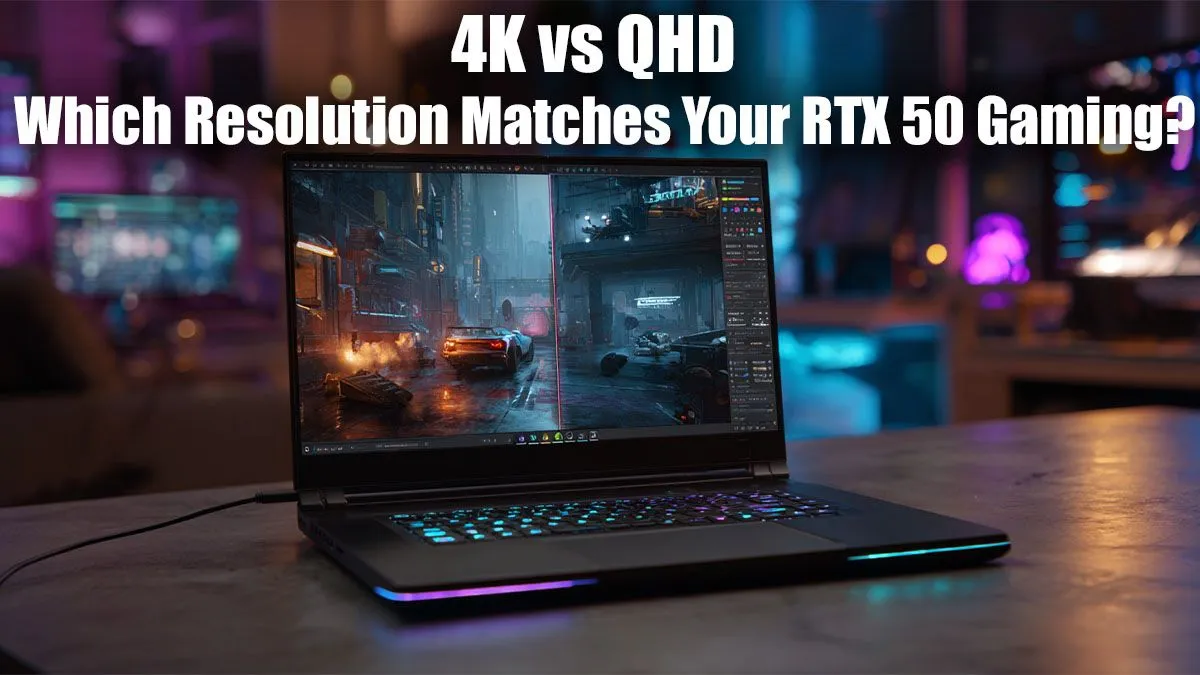
So, you’re eyeing that shiny new RTX 50 series GPU, ready to unleash mind-blowing graphics on the latest AAA titles. But before you dive headfirst into the digital battlefield, there's a crucial decision to make: what resolution will truly complement that powerhouse? In South Africa, where every rand and every frame counts, picking the right display is paramount. This isn't just about bigger numbers; it’s about optimising your experience, balancing stunning visuals with buttery-smooth performance. Let's break down the ultimate resolution showdown for your RTX 50 gaming setup.
Understanding the Core: What Are 4K and QHD?
Before we pit them against each other, let's clarify what these resolutions mean for your screen.
- QHD (Quad High Definition) / 1440p: This resolution clocks in at 2560 x 1440 pixels. It offers a significant step up from standard Full HD (1080p), providing noticeably sharper images and more screen real estate without being as demanding on your GPU as 4K. Many competitive gamers swear by it for its balance of clarity and high refresh rates.
- 4K (Ultra High Definition) / 2160p: This is the big one, boasting 3840 x 2160 pixels – four times the pixel count of 1080p. The detail is incredible, offering an immersive, hyper-realistic visual experience that’s hard to beat. However, driving all those pixels requires serious graphical horsepower, especially at high frame rates.
The RTX 50 Series Advantage: Powering Your Pixels 🚀
The upcoming RTX 50 series GPUs are set to redefine what's possible in PC gaming. With expected advancements in raw processing power, ray tracing capabilities, and AI-driven upscaling technologies like DLSS, these cards are engineered to push boundaries. This means that achieving high frame rates at higher resolutions, once a pipe dream for many, is now firmly on the table. Whether you're looking for an upgrade to your current setup or eyeing a brand-new machine, Evetech offers fantastic options, including a range of best gaming laptop deals that could house such next-gen power.
The Allure of 4K Gaming: Unparalleled Visuals ✨
For many, the dream of 4K gaming is the ultimate goal. The sheer fidelity and immersion are unmatched. Imagine exploring the vibrant landscapes of a new open-world title, every leaf and ripple rendered with breathtaking clarity.
Pros of 4K:
- Stunning Detail: Four times the pixels of 1080p means incredible sharpness and clarity.
- Immersion: Games feel more real, drawing you deeper into their worlds.
- Future-Proofing: You're investing in a display that will shine for years to come.
Cons of 4K:
- Demanding on Hardware: Even with an RTX 50 series card, achieving ultra-high frame rates in demanding titles will require top-tier specs.
- Higher Cost: 4K monitors generally cost more, and you might need a larger screen size to truly appreciate the detail.
- Lower FPS: Expect lower average frame rates compared to QHD on the same hardware.
Optimising for 4K
Even with an RTX 50, consider using NVIDIA's DLSS (Deep Learning Super Sampling) or AMD's FSR (FidelityFX Super Resolution) in quality mode. These upscaling technologies can deliver near-native image quality with a significant boost to your frame rate, making 4K gaming much more accessible.
The QHD Sweet Spot: Balance and Performance ⚡
QHD, or 1440p, has rapidly become the darling of the PC gaming community, and for good reason. It strikes a near-perfect balance between visual fidelity and performance.
Pros of QHD:
- Excellent Visuals: A noticeable upgrade from 1080p, offering crisp images without the extreme hardware demands of 4K.
- Higher Frame Rates: Your RTX 50 series GPU will sing at QHD, easily pushing high refresh rates for incredibly smooth gameplay.
- More Affordable: QHD monitors are generally more budget-friendly than their 4K counterparts.
- Versatility: Great for both competitive gaming (where high FPS is key) and immersive single-player experiences.
Cons of QHD:
- Not as Sharp as 4K: While great, it won't offer the same pixel density as 4K.
Many gamers find that a high-refresh-rate QHD monitor (144Hz, 165Hz, or even 240Hz) provides a more impactful upgrade to their overall gaming experience than a 60Hz 4K display. If you're looking to build a balanced system, check out Evetech's range of AMD laptops on special or Intel laptops on special which can be paired with an external QHD monitor for an exceptional experience.
Making Your Resolution Choice for RTX 50 Gaming
So, how do you decide between 4K vs QHD for your RTX 50 gaming setup? It boils down to your priorities and budget:
- Go 4K if: You crave the absolute best visual fidelity, primarily play slower-paced, graphically intensive single-player games, and have a top-tier RTX 50 series GPU and the budget for a premium monitor. You're willing to sacrifice some frame rate for unparalleled immersion.
- Go QHD if: You want a superb visual experience combined with high frame rates for competitive titles, value smooth gameplay above all else, and want a more cost-effective setup that still looks incredible. This is often the recommended path for most serious South African gamers looking for the best all-round performance.
Ultimately, both resolutions offer fantastic experiences with the power of an RTX 50 series card. The "right" choice is the one that aligns best with your personal gaming style and what you value most in your visual journey.
Upgrade Your View Today!
Ready to pair your dream RTX 50 setup with the perfect display? Explore Evetech's extensive range of monitors and powerful gaming rigs. Shop now at Evetech for performance that leaves lag in the dust.