A fibre installation means a trench, a technician and often a wait of days or weeks. A 5G fixed wireless router means a box arrives, you slot in a SIM, and you are online before lunch. For a large slice of South African suburbs that gap is the whole decision, because fewer than 30 percent of homes had fibre passing their street as of mid-2025. Where the fibre map runs out, 5G FWA is frequently the only same-day option there is.
Quick Answer
Fibre wins on consistency: latency around 5 to 15ms and stable speeds that do not flex with tower load. 5G fixed wireless wins on access and convenience, delivering 100 to 500-plus Mbps with self-install in minutes and no trenching, latency typically in the 20 to 30ms range. If fibre is at your address, it is usually the better long-term value. If it is not, 5G FWA is the strongest connection you can get today.
How they actually differ
Fibre runs light down a physical cable straight to your home, so its performance is largely yours alone and barely moves with the time of day. South African fibre commonly delivers 5 to 15ms latency to local data centres and holds its speed steadily, which is why it remains the benchmark for stability.
5G fixed wireless sends your connection over the mobile network from a nearby tower. That brings genuinely fast speeds, often 100 to 500-plus Mbps, but the connection is shared with everyone else on that tower, so peak-hour congestion can soften both speed and latency in a way a dedicated fibre line does not experience. Latency on 5G typically sits around 20 to 30ms, perfectly fine for most uses but a touch behind fibre's floor.
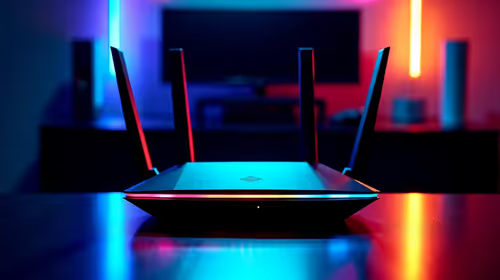
Whichever you choose, the router is the heart of the home network. The networking range at Evetech has the Wi-Fi hardware that puts a fast connection into every room where you need it.
The install gap that changes everything
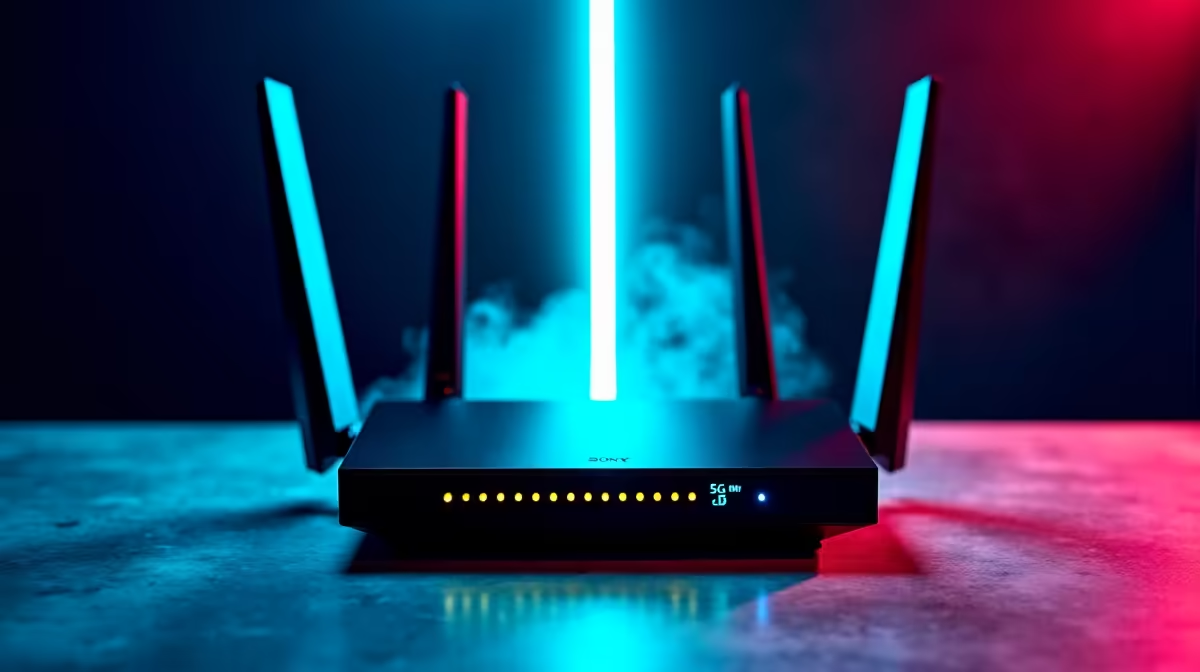
This is where 5G FWA earns its place. There is effectively no installation. The equipment is shipped to your door, you insert the SIM, power it on and you are connected, with no contractor, no trench and no appointment window to wait through. Providers like Rain, Vodacom and MTN run month-to-month, no-contract packages, with uncapped 5G home plans starting from roughly R679 a month and others falling in the R599 to R1,299 band depending on speed and provider.
Fibre is the opposite. A residential fibre setup typically carries an installation cost between R500 and R1,500, and that assumes the infrastructure already passes your street. If it does not, you are waiting on a rollout that may be months away or may never reach a quieter suburb at all. The flexibility of 5G, no contract and instant setup, is a real advantage for renters and anyone who cannot wait.
Latency, gaming and video calls
For competitive gaming and high-stakes video calls, fibre's lower and steadier latency is the safer pick. The 5 to 15ms range it offers, held consistently, is what serious gamers want, and it does not wobble when the neighbourhood comes online in the evening.
5G is still very usable for both. At 20 to 30ms most players will be perfectly happy and most calls will be crisp. The caveat is consistency: because the tower is shared, a busy period can introduce jitter that a fibre line would not. If your household leans heavily on latency-sensitive work or play, weigh that variability seriously.
Which one for your home
Choose fibre if it is available at your address, you want the most consistent latency and steadiest speeds, and you are settled enough to justify the install. It remains the better value per Mbps and the more predictable experience where it reaches.
Choose 5G fixed wireless if fibre does not pass your street, you want to be online today, you rent or move often, or you value a no-contract plan you can cancel at will. With the industry expecting 5G to carry the majority of residential fixed-wireless connections by the end of the decade, it is no longer a stopgap but a credible primary connection for millions of South African homes.
Either way, plan for the extras that keep a fast line performing. The accessories best sellers at Evetech stock the cabling, adapters and mounts that round out a tidy home setup.
Cost, contracts and the data question
Price and flexibility often tip the decision as much as raw performance. Uncapped 5G home plans start from around R679 a month, with the broader market sitting in the roughly R599 to R1,299 band depending on speed and provider, and most run month-to-month with no contract. That suits renters, anyone who moves often, or households that want the freedom to cancel without penalty. Fibre packages are competitive too, but the install cost of roughly R500 to R1,500 and the longer commitment make fibre the choice for a settled home rather than a flexible one.
Data caps deserve a closer look. Many 5G home plans are uncapped or near-uncapped, but read the fine print, since some carry fair-use thresholds that throttle speed after a heavy month. Fibre uncapped plans tend to be genuinely uncapped. For a household that streams in 4K, downloads large game updates and works from home, confirming the true data terms before committing avoids an unpleasant surprise at month-end.
Reliability and the placement factor
A subtle point with 5G is that signal quality depends heavily on where you put the router. Because it pulls from a tower, position matters: a router near a window facing the tower can perform dramatically better than one tucked into a back room. Fibre has no such concern, since the line terminates in a fixed point and the only variable is your internal Wi-Fi.
That makes the in-home network setup just as important as the connection type. A strong 5G or fibre line still disappoints if a weak router cannot push it through brick walls to the far bedrooms. Investing in a capable router, and a mesh system in a larger home, is what turns either connection into reliable coverage everywhere you actually use it.
Frequently Asked Questions
Is 5G fixed wireless fast enough to replace fibre?
For most households, yes. 5G FWA delivers 100 to 500-plus Mbps, which comfortably handles streaming, work and gaming. Fibre is steadier under load, but 5G is a credible primary connection where fibre is unavailable.
Why is fibre latency lower than 5G?
Fibre is a dedicated physical line to your home, so its latency is consistent at around 5 to 15ms. 5G shares a tower with other users, putting it nearer 20 to 30ms and more prone to congestion at peak times.
How long does 5G installation take?
Minutes. The router is shipped to you, you insert the SIM and power it on. There is no technician visit and no trenching, unlike a fibre install that needs infrastructure and an appointment.
Do I have to sign a contract for 5G home internet?
Generally no. Providers like Rain, Vodacom and MTN offer month-to-month 5G plans with no contract, so you can start or cancel freely, which suits renters and anyone unsure how long they will stay.
What if neither fibre nor 5G reaches my area?
Coverage varies street by street. Check each provider's coverage map for your exact address, since 5G can reach places fibre has not, and occasionally the reverse. Where neither lands, 4G LTE remains a fallback.
Whichever line you land on, it is only as good as the router behind it. Browse the networking range at Evetech to pair your fibre or 5G connection with hardware that spreads it cleanly across the whole home.