

Humidity Damage to PC Components: Recovery Guide
Humidity Damage to PC Components: Recovery Guide. Everything you need to know with SA pricing, step-by-step instructions & expert recommendations.
Read moreDiscover when to choose active vs passive cooling systems for optimal tech performance 🌡️. Learn the benefits and best use cases for each option. 🚀
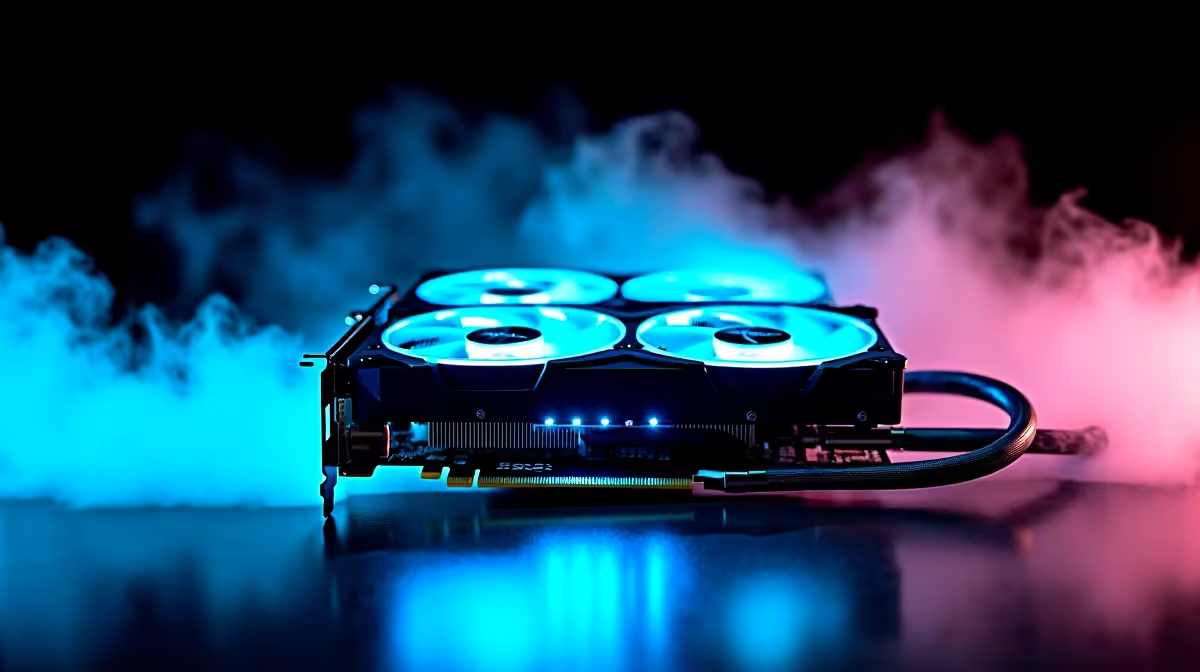
Ever felt your PC case getting a bit too toasty during a Highveld summer gaming marathon? Or maybe the constant whir of fans is killing your immersion during a tense moment in Helldivers 2. The culprit is your cooling system. Choosing between active vs passive cooling systems isn't just a tech-nerd debate; it's a core decision that shapes your PC's performance, noise level, and even its lifespan. Let's break it down, Mzansi-style. 🚀
When you think of PC cooling, you're probably picturing an active cooling system. These are the workhorses, using moving parts like fans and water pumps to actively draw heat away from your precious components. Think CPU air coolers with big fans or All-In-One (AIO) liquid coolers.
The main advantage? Raw power. Active cooling is essential for taming high-performance CPUs and GPUs, especially if you're into overclocking or pushing graphical settings to the max. The constant airflow means your components stay cooler under heavy load, preventing thermal throttling and ensuring you get every frame you paid for.
The downside is noise and maintenance. Fans create noise and suck in dust, meaning more regular cleaning. And for optimal performance, airflow is everything. A messy case full of tangled wires can choke your fans, so organising your setup with quality HP cable solutions is a non-negotiable first step.
On the other side of the spectrum, we have passive cooling systems. These are the strong, silent types of the tech world. 🤫 Using meticulously engineered heatsinks and heat pipes, they dissipate heat through natural convection... no fans, no pumps, no moving parts. This means absolute silence and incredible reliability.
Passive cooling is perfect for specific builds. Imagine a sleek, silent Home Theatre PC (HTPC) for your lounge or an ultra-reliable office machine. Because there are no fans, they don't accumulate dust, making them virtually maintenance-free. However, their cooling capacity is limited. You won't be strapping a passive cooler to a flagship Core i9 and expecting great results. They are best suited for components with a low Thermal Design Power (TDP). A clean build is still vital to allow air to convect naturally, and tidy wiring from brands like GIZZU can make a surprising difference.
Before you buy any cooler, check your CPU's TDP rating on the manufacturer's site. This number (in watts) tells you how much heat it generates. A low TDP (under 65W) is a good candidate for passive cooling, while a high TDP (125W+) almost always requires a robust active cooling solution.
So, how do you decide? The choice between an active vs passive cooling system comes down to your primary use case. It's a classic head-versus-heart decision.
Ultimately, a well-built PC is a balanced PC. Whether you go for roaring fans or silent fins, a tidy interior with well-managed cables ensures your chosen system works at its best. Investing in a few Promate accessories can be the finishing touch that optimises airflow and makes your rig look as good as it performs.
Optimise Your Rig from the Inside Out A powerful PC is more than just its core components; it's about how everything works together. Ensure your build is clean, efficient, and ready for anything with our wide range of PC components and cable solutions.
Active cooling uses fans or liquid systems to dissipate heat, ideal for high-performance setups.
Passive cooling relies on heat sinks and ambient airflow, often quieter and low-maintenance.
Active cooling handles intense gaming sessions better due to higher heat management capacity.
Passive cooling suits low-power systems and environments where silence or simplicity matters.
Yes, active cooling consumes additional power but efficiently manages heat in high-demand scenarios.
Consider your device’s power output, noise tolerance, and environment when selecting cooling systems.
Yes, combining both methods often provides optimal balance between efficiency and noise control.
Humidity Damage to PC Components: Recovery Guide. Everything you need to know with SA pricing, step-by-step instructions & expert recommendations.
Read more
Gamer Spending Trends April : Complete Setups. Clear setup instructions with SA-specific considerations, troubleshooting tips & recommended components.
Read more
Setting Up DDR5 32GB Kit. Tested & verified settings for best FPS and visual quality on SA hardware budgets.
Read more
Tech Setup Guide for SPU Res Students. Clear setup instructions with SA-specific considerations, troubleshooting tips & recommended components.
Read more
Monster Hunter Wilds Ultrawide Support: 21:9 and. Clear setup instructions with SA-specific considerations, troubleshooting tips & recommended components.
Read more
Apple iPad Durability Guide: Cases, Screen. Practical breakdown of costs, regulations & whether it makes financial sense for SA buyers.
Read more
AMD RX 9050 XT: Rumoured Specs, Price & Release. SA-focused analysis with local pricing data, real-world insights & actionable buying advice.
Can RTX 4080 Super Run AI Workloads for SA Developers Detailed answer with SA data, expert analysis & practical recommendations for local buyers.
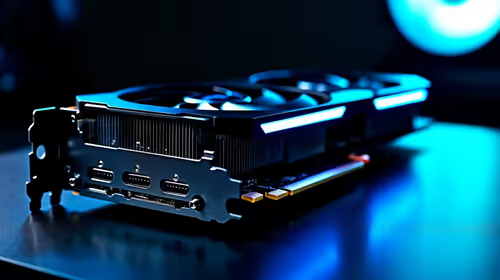
Can RTX 4090 Run AI Workloads for SA Developers Detailed answer with SA data, expert analysis & practical recommendations for local buyers.
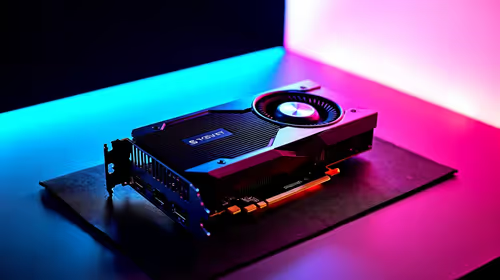
Top Settings for Intel Arc B580 at Ultrawide 1440p picks evaluated on performance, value & SA availability with current Rand pricing from Evetech.

RTX 4060 CS2 Low Settings at 1080p: FPS Results. Real-world benchmark data, FPS numbers & performance analysis. What SA gamers can actually expect.

Visual Artifacts: Possible GPU Issue Issue #1. Diagnosis steps, proven fixes & when to seek professional help. SA-specific support info included.
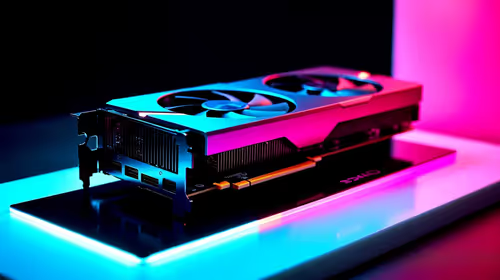
Can the RTX 4090 Handle 1440p 144Hz Gaming. Performance testing verdict with real data & practical recommendations for SA buyers.

Top ASUS GPU Under R15000 picks evaluated on performance, value & SA availability with current Rand pricing from Evetech.
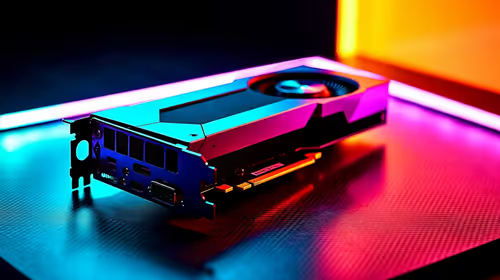
GTA 6 Max Settings on RTX 5070. Tested & verified settings for best FPS and visual quality on SA hardware budgets.
Cyberpunk 2077 Max Settings on RTX 5080. Tested & verified settings for best FPS and visual quality on SA hardware budgets.
Starfield Max Settings on RTX 5070 Ti. Tested & verified settings for best FPS and visual quality on SA hardware budgets.
Top RTX 5090 Under R5000 picks evaluated on performance, value & SA availability with current Rand pricing from Evetech.