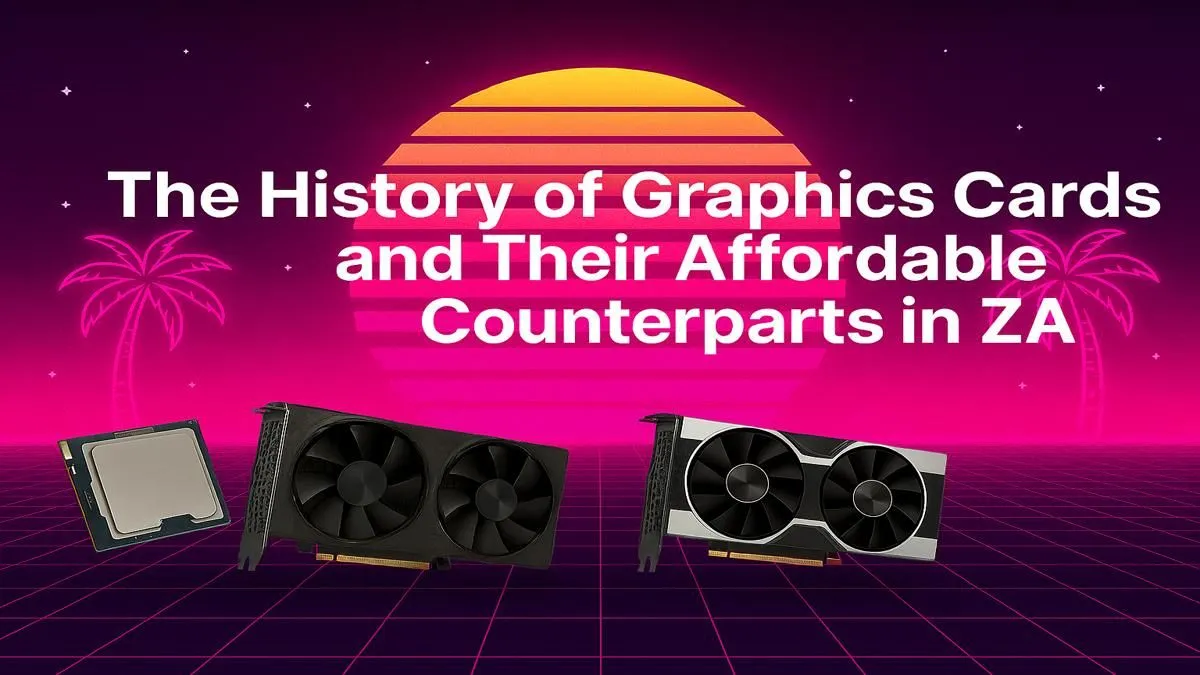
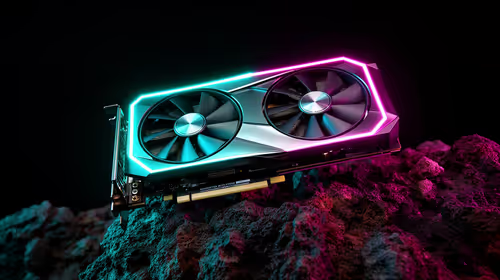
Remember saving up every rand for a graphics card that could finally run Crysis without turning into a slideshow? The hunt for affordable graphics cards in South Africa has always been a rite of passage for PC gamers. It’s a story of balancing budgets, navigating import costs, and chasing that glorious 60 FPS dream. From the pixelated battlegrounds of the early 2000s to today's ray-traced masterpieces, the evolution of the budget GPU is a tale worth telling. 🚀
The Pioneers: When "Budget" Meant Making it Work
In the early days, getting into PC gaming in SA felt like a secret club. Cards like the NVIDIA GeForce 2 MX or the ATI Radeon 9600 Pro were local heroes. They weren't chart-toppers, but they opened the door to worlds like Half-Life 2 and World of Warcraft.
For many of us, the goal wasn't max settings; it was a playable frame rate. We learned to tweak .ini files, lower shadow quality, and celebrate every frame we could squeeze out. This era taught us the art of the compromise and the sheer joy of a successful upgrade.
The 1080p Revolution: Legends of the Mid-Range
Then came a golden age. The mid-2010s saw the release of GPUs that completely redefined value. Cards like NVIDIA's GeForce GTX 1060 and AMD's Radeon RX 580 became legends. Suddenly, high-quality 1080p gaming was accessible to almost everyone, without needing to sell a kidney.
This period was defined by fierce competition between the major players, driving prices down and performance up. You could find a fantastic selection of NVIDIA and AMD graphics cards that delivered incredible performance for their price. Brands perfected their cooling and power delivery, with popular MSI models often leading the charge with their iconic Twin Frozr designs. These weren't just budget cards; they were the smart choice.
Today's Landscape: More Choice Than Ever Before
Fast forward to today, and the search for affordable graphics cards in South Africa is more exciting than ever. While top-tier cards grab headlines, the real magic is happening in the budget and mid-range space. We now have a third major player shaking things up.
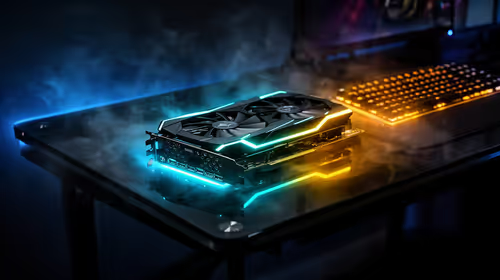
The introduction of Intel Arc graphics cards has added a new layer of competition, offering impressive features at compelling price points. This is great news for consumers. While gamers chase frames, it's also worth noting how different the hardware is for professionals who rely on powerful workstation graphics cards for 3D rendering and scientific computing. For the rest of us, the battle for our rands continues, with the latest AMD Radeon graphics cards consistently delivering outstanding performance-per-rand.
Check Your VRAM! 🔧
When buying a new GPU for modern gaming, pay close attention to the VRAM (video memory). Games like Alan Wake 2 and Hogwarts Legacy use high-resolution textures that can quickly fill up a card's memory. For a smooth 1080p experience today, 8GB of VRAM is a great starting point, while 12GB gives you more breathing room for the future.
What Does "Affordable" Mean in 2024?
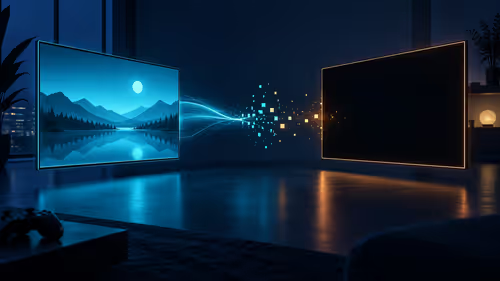
The definition of a good value GPU has evolved. It's no longer just about the price tag; it's about smart performance. Technologies like NVIDIA's DLSS and AMD's FSR are massive wins for budget-conscious gamers. These AI-powered upscaling tools allow less powerful cards to achieve higher frame rates, effectively punching far above their weight. ✨
An "affordable" card today might be one that delivers a rock-solid 1080p/144Hz experience for competitive shooters or one that offers a decent entry into 1440p gaming for stunning single-player adventures. The best part? You don't have to break the bank to get there.