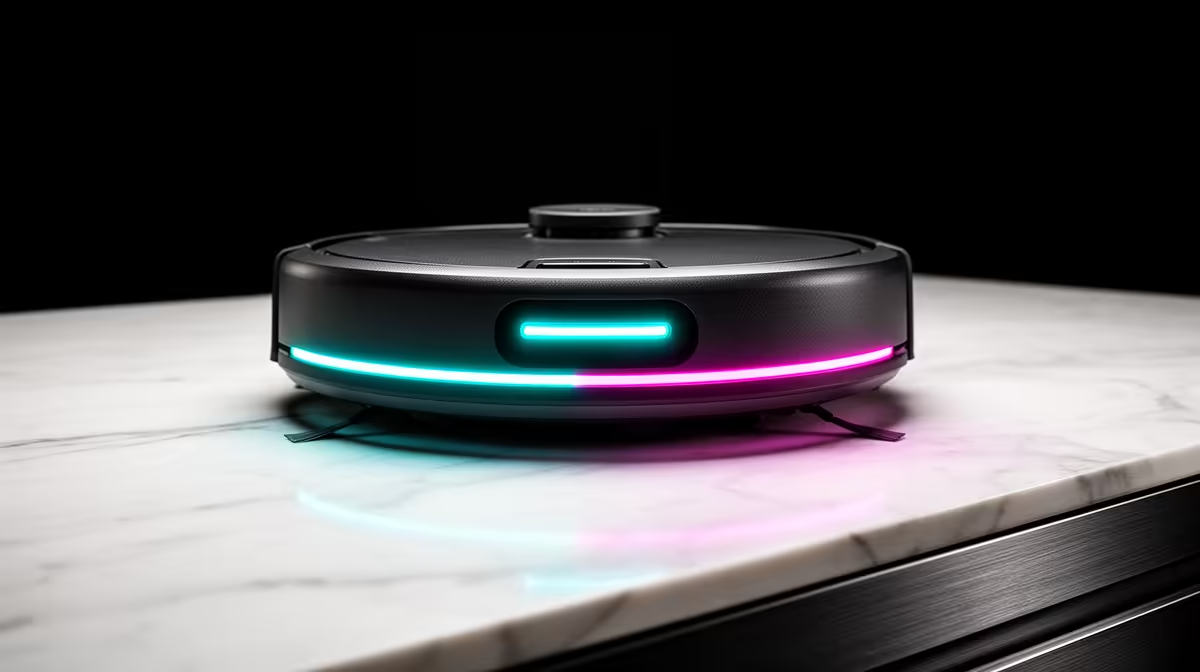
Two robot vacuums can look near identical on a spec sheet and behave completely differently the moment they meet a phone charger cable on the floor. AI obstacle avoidance is the feature that separates a robot which gently steers around your clutter from one that bulldozes into it, and deciding whether it is worth the premium comes down to what your floors actually look like day to day.
Quick Answer
AI obstacle avoidance uses cameras or 3D structured light to recognise objects, often 100 to 200 types, and steer around them before contact, while basic bump sensors only react after the robot has already collided. The upgrade is worth paying for in homes with cluttered floors, cables, or free-roaming pets, and less essential in tidy, minimalist spaces.
How bump sensors work, and where they fail
A bump-sensor robot is reactive by design. It drives in a pattern until it physically touches something, the front bumper depresses, and the robot turns away to try another direction. It is cheap, reliable and perfectly adequate in the right home. The whole navigation logic is built around contact.
The problem is that contact is exactly what you do not want with certain obstacles. A bump robot will happily nudge a charging cable, drag it along, and wrap it around the brush roll until the machine jams. It will tap a pet's water bowl and tip it. Worst of all, it cannot recognise pet mess, so a bump robot driving through it spreads the problem across every floor it touches. For homes where the floor is reliably clear, none of this happens and a bump sensor is genuinely all you need.
How AI obstacle avoidance works
An AI-equipped robot is proactive. Instead of waiting for contact, it watches the floor ahead and decides what to avoid.
Camera-based recognition
Some robots use a forward-facing camera paired with on-device object recognition. The software has been trained to identify common floor hazards, anything from cables and socks to shoes, scales and pet waste, often spanning 100 to 200 object categories. When it spots one, it plots a path around it rather than through it. The strength is rich recognition of specific objects; the trade-off is that cameras need reasonable light to see clearly.
3D structured light
Other robots project a pattern of infrared light and read how it distorts across objects to build a depth map of what is ahead. This works in the dark, since it does not rely on ambient light, and it is excellent at judging the height and shape of obstacles so the robot knows what it can climb over and what it must route around. Some premium machines combine both approaches for the most reliable avoidance.
Either way, the practical result is the same: the robot treats your floor as a space full of things to navigate, not a blank grid to bump around.
Where the upgrade genuinely pays off
The value of AI avoidance scales directly with how messy your floors get.
Homes with cables and clutter
If your living room has phone chargers, laptop cables, kids' toys or laundry that does not always make it to the basket, AI avoidance saves you the daily ritual of robot rescue. A bump robot in a cluttered room frequently strangles itself on a cable and stops mid-clean. An AI robot threads around the mess and finishes the job. For a busy household, that reliability is the whole point of owning a robot vacuum.
Pet owners
This is the strongest case of all. A robot that drives through pet mess turns a small accident into a whole-floor disaster, and that single event can sour you on robot vacuums entirely. AI avoidance specifically trained to spot pet waste is the safeguard. If you have a dog or cat that occasionally has an accident, the avoidance feature is close to essential, not a luxury.
Free-roaming pets and obstacles that move
Cameras and structured light also handle the unpredictable better. A pet wandering into the robot's path, a bag dropped on the floor, a shoe kicked off by the door, all get detected and skirted rather than rammed. You can browse the current options that include these features in the smart home appliances range at Evetech.
Where a bump sensor is the smarter spend
AI avoidance is not free, and for plenty of homes it solves a problem that does not exist.
Tidy, minimalist spaces
If your floors are reliably clear, no loose cables, no pets, surfaces kept clean, a bump-sensor robot does the same cleaning job for less money. The avoidance hardware would rarely fire, so you would be paying for capability you do not use. That is the classic overspend, and it is worth being honest with yourself about how your home actually looks most days rather than how you would like it to look.
Budget-first buyers
For a first robot vacuum on a tight budget, a reliable bump model gets you into automated cleaning sooner. You can always upgrade later once you know how a robot fits your routine. Spending more on avoidance only makes sense when your floor conditions demand it.
What to look for when comparing models
If you decide avoidance is worth it, a few details separate the genuinely capable from the marketing.
- Check whether avoidance works in low light. Camera-only systems struggle in the dark, while structured-light systems do not, which matters for night cleaning schedules.
- Look at how many object types the system claims to recognise. A wider library, in the 100-plus range, generally means more reliable detection of the specific hazards in your home.
- Consider whether the model combines camera and structured light, which tends to give the most consistent results across lighting conditions.
- Check that the recognition runs on the device rather than depending on a constant cloud connection, which keeps avoidance responsive.
Comparing these points across models is far more useful than the headline "AI" badge. The accessories and add-ons best sellers can round out your setup once you have chosen the robot itself.
Who should pay for AI obstacle avoidance
Pay for it if you have pets, especially ones prone to the occasional accident, or floors that collect cables, toys and clutter through a normal week. In those homes the feature is the difference between a robot you trust to run unattended and one you have to babysit. Skip it if your floors stay genuinely clear and your budget is tight, because a solid bump-sensor model will clean just as well for less.
The deciding question is not which robot is technically more advanced, it is which one matches the reality of your floors. Match the feature to your mess, and the spend makes sense either way.
Frequently Asked Questions
What is the core difference between AI avoidance and bump sensors?
AI avoidance detects and steers around objects before any contact, using cameras or 3D structured light. Bump sensors only react after the robot physically collides with something, then change direction. One is proactive, the other reactive.
Is AI obstacle avoidance worth it for pet owners?
For most pet owners, yes. A bump robot can drive through pet mess and smear it across the floor, while AI avoidance trained to spot waste steers clear. That single safeguard is often the strongest reason to choose avoidance.
Does camera-based avoidance work in the dark?
Camera-only systems struggle in low light because they need to see the obstacle. Structured-light systems project infrared and build a depth map, so they work in the dark. If you clean at night, prioritise structured light or a combined system.
Will a bump-sensor robot damage my cables?
It can. A bump robot does not recognise cables and may drag or wrap them around the brush roll until it jams. In homes with loose cables on the floor, avoidance prevents this; in cable-free homes it is not an issue.
When is a basic bump sensor good enough?
When your floors stay reliably clear, you have no free-roaming pets, and your budget is tight. In tidy, minimalist homes the avoidance hardware would rarely activate, so a bump-sensor robot cleans just as effectively for less money.
Want a robot vacuum that fits the way your floors actually look? Compare avoidance and bump-sensor models in the smart home appliances range at Evetech and pick the one that matches your home.