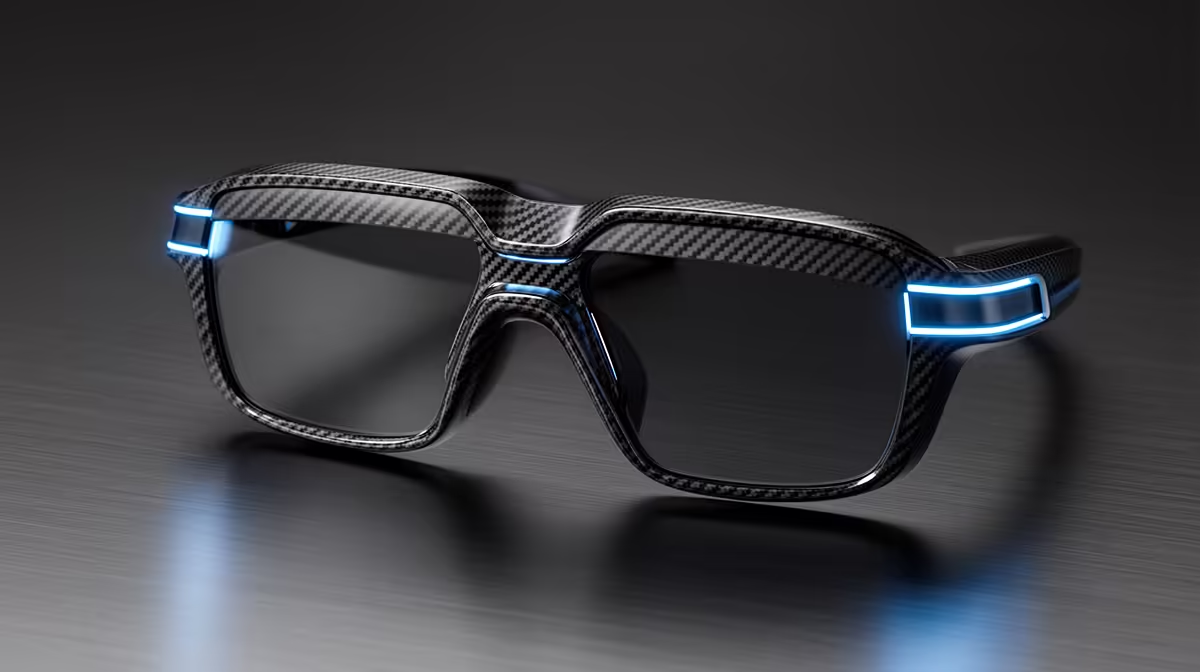
Smart glasses stopped being a gimmick the moment they got a real AI assistant behind the lens. The 2026 field has settled into two camps, and choosing between them is less about frames and more about which AI smart glasses ecosystem you want living on your face. Meta sits on one side with its own assistant, Google and Samsung on the other with Android XR and Gemini. The frames are made by fashion houses you already know.
Quick Answer
The 2026 smart glasses market splits into two main ecosystems. Meta AI powers Ray-Ban Meta and Oakley Meta, while Google's Android XR platform, running Gemini, powers glasses from Warby Parker and Gentle Monster, announced at I/O 2026. Your choice should follow which assistant and phone ecosystem you already use.
The Two Ecosystems That Matter
Smart glasses live or die on the assistant behind them, not the frame shape. That assistant decides how well voice commands work, how naturally it answers questions about what you are looking at, and how it ties into the rest of your devices. In 2026 there are two serious answers to that question, and a handful of fashion brands building hardware on top of them.
Meta AI: Ray-Ban Meta and Oakley Meta
Meta has the head start. Ray-Ban Meta glasses paired Meta's assistant with EssilorLuxottica's frame expertise, and the result feels like ordinary eyewear that happens to listen, capture photos and video, and answer questions through a built-in speaker. Oakley Meta extends the same platform into a sportier, sweat-resistant design aimed at cyclists, runners, and outdoor use.
What the Meta camp does well
- Mature voice assistant tuned over multiple hardware generations.
- Strong camera and open-ear audio for capture and calls.
- Frames from genuinely desirable brands, so they pass as normal glasses.
- Tight links to Meta's own apps for sharing what you capture.
The trade-off is that the experience leans on Meta's services and assistant rather than a neutral platform. If you live inside those apps already, that is a plus. If you do not, it is a consideration.
Android XR and Gemini: Warby Parker and Gentle Monster
Google's answer arrived properly at I/O 2026 with Android XR, a platform built around the Gemini assistant. Rather than make its own frames, Google partnered with Warby Parker and Gentle Monster, two brands with very different audiences, one approachable and optical-first, the other bold and fashion-forward.
Why Gemini changes the pitch
Gemini's strength is conversational, context-aware answers and tight integration with Android phones and Google services. Glasses that can see what you see and tap into Gemini's reasoning shift smart glasses from a capture device toward a genuine assistant you talk to. For anyone already deep in the Android and Google ecosystem, this camp feels like a natural extension of the phone in your pocket.
How to Choose Between Them
The frames are a near tie, since both camps now work with respected eyewear brands. The real decision comes down to three things.
Your phone and ecosystem
Match the glasses to your existing world. Heavy Android and Google users will get more from Gemini-powered Android XR glasses, while those embedded in Meta's apps will find Ray-Ban Meta or Oakley Meta slots in more naturally.
Capture versus assistance
If your main use is hands-free photos, video, and calls, Meta's mature hardware has the edge today. If you want a conversational assistant that reasons about your surroundings, the Gemini-based glasses lean harder into that role.
Style and fit
Oakley Meta suits active, outdoor use, Ray-Ban Meta and Warby Parker lean classic and everyday, and Gentle Monster targets a bolder fashion statement. Pick the frame you would actually wear, because the best smart glasses are the ones that look like the glasses you already own.
What These Glasses Can and Cannot Do Yet
Set expectations before you buy. Across both ecosystems, today's mainstream smart glasses are strongest at audio, capture, and voice assistance. They take photos and short video from your point of view, play audio through open-ear speakers, take calls, and answer questions through their assistant. What most of them do not yet offer is a full visual display floating in your vision. That augmented overlay exists in prototypes and pricier developer units, but the glasses people actually wear day to day are closer to a camera and an earpiece with a smart assistant attached. Knowing that keeps you from paying for a promise the current hardware does not deliver.
Battery and daily practicality
Real-world battery life runs to a handful of hours of active use, topped up in a charging case much like wireless earbuds. For occasional capture and the odd query through the day, that stretches comfortably across a day. For constant recording or heavy assistant use, you will reach for the case sooner. Treat them as a device you charge daily, not one you forget about for a week.
The SA Angle
Availability and support matter more here than spec sheets suggest. A pair of glasses tied to an assistant works best when that assistant and its companion app behave well on your phone and network. For South African buyers, the sensible move is to choose the ecosystem that matches the phone in your hand and to buy hardware that is properly stocked and supported locally rather than grey-imported. That way firmware updates, app support, and any warranty cover line up the way they should.
For South African buyers who want to see what is actually stocked locally, Evetech's AR and smart glasses section lists current wearable eyewear you can buy now. For the everyday extras that pair with them, like cases and charging gear, the top-selling accessories at Evetech round out a kit once you have chosen a side.
Frequently Asked Questions
Which AI powers Ray-Ban and Oakley smart glasses?
Both run Meta AI, Meta's own assistant, refined across several generations of Ray-Ban hardware. Oakley Meta uses the same platform in a sportier, sweat-resistant design for active use.
What is Android XR?
Android XR is Google's platform for extended-reality devices, including smart glasses, built around the Gemini assistant. It was detailed at I/O 2026 and powers glasses from Warby Parker and Gentle Monster.
Should I match smart glasses to my phone?
Yes. Gemini-powered Android XR glasses integrate best with Android phones and Google services, while Meta's glasses suit those already using Meta's apps. Matching the ecosystem gives the smoothest experience.
Do smart glasses replace a phone?
Not yet. They act as a hands-free extension for capture, calls, and quick assistant queries, but still rely on a paired phone for connectivity and heavier tasks. Think of them as a companion, not a standalone device.
Which brand has better camera quality?
Meta's glasses currently lead on capture, thanks to several generations of camera and audio refinement. The Gemini-based options focus more on conversational assistance than on being the strongest capture device.