Building a new Ryzen rig in South Africa? The summer heat isn't the only thing you need to worry about. AM5 CPUs are powerful beasts, but they push motherboards harder than ever. Skimping on board cooling is a recipe for throttling and lost frames. This guide breaks down AM5 motherboard cooling efficiency, ensuring your new PC stays frosty and fast, even during a marathon gaming session in Durban. Let's dive in. 🚀
Why AM5 Cooling Efficiency is Crucial
Before the AM5 platform, most gamers only thought about CPU coolers. Motherboard cooling? That was for extreme overclockers. Not anymore. The latest Ryzen processors are incredibly powerful, but that performance comes with higher power demands, placing immense strain on your motherboard's Voltage Regulator Modules (VRMs).
VRMs are the tiny components surrounding your CPU socket that deliver clean, stable power. When they overheat, they can't supply enough power, causing your multi-thousand-Rand CPU to "thermal throttle"—it slows down to protect itself. Suddenly, your high-end gaming experience stutters. This makes understanding AM5 motherboard cooling efficiency a non-negotiable for any serious builder in ZA.
Decoding the Heatsinks: What Really Matters
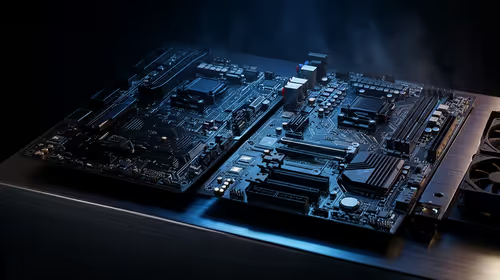
When you look at a motherboard, those chunky, stylish metal blocks aren't just for show. They are critical passive coolers. Here’s what to focus on for effective cooling.
VRM Heatsinks
This is your number one priority. A motherboard's ability to cool its VRMs directly impacts performance and stability.
- Bad: A simple, flat block of aluminium. It looks okay but has very little surface area to dissipate heat.
- Good: A heatsink with deep grooves, fins, or layers. This design dramatically increases the surface area, allowing it to shed heat into your case's airflow much more effectively.
- Excellent: Large, interconnected heatsinks, often linked by a heat pipe. This spreads the thermal load across a wider area, providing the best possible passive cooling.
M.2 SSD Heatsinks
With PCIe 5.0 speeds, NVMe SSDs can get seriously hot, leading to their own form of thermal throttling that slows down game load times and file transfers. A good motherboard will include at least one decent M.2 heatsink. Thankfully, even many affordable AMD B650 motherboards now include this essential feature, making it a great baseline for any modern build.
Check Your Temps! 🌡️
Not sure if your board is running cool? Download a free tool like HWINFO64. Run a demanding game or benchmark for 15-20 minutes, then check the "VRM MOS" or "Motherboard" temperature sensors. Anything consistently over 85-90°C under load might suggest your airflow or the board's cooling isn't quite up to the task.
Chipsets and Cooling: Matching Your Board to Your Build
The motherboard chipset you choose often dictates the level of cooling you can expect. It's all about matching the board's capabilities with your CPU and intended use.
For most gamers, the latest generation of mainstream boards offers a fantastic balance. The upcoming AMD B850 motherboards are set to deliver robust power delivery and cooling solutions capable of handling even high-end Ryzen 7 and Ryzen 9 CPUs without breaking a sweat, making them a smart, future-proof investment.
If you're an enthusiast who loves to overclock or you're pairing a top-of-the-line CPU like a Ryzen 9 9950X, you need a board built for extreme thermal loads. This is where the premium tier shines. The flagship AMD X870 motherboards feature over-engineered VRM cooling with massive heatsinks and heat pipes, ensuring maximum stability and performance, no matter how hard you push your system. ✨
Your Case Airflow is Half the Battle 🔧
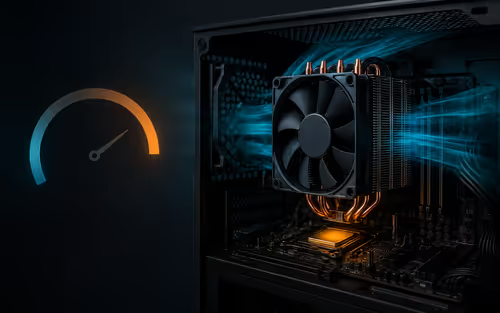
Even the best motherboard with the most efficient cooling design will struggle in a case with poor airflow. Those heatsinks are passive; they need moving air to carry the heat away.
Ensure your case has a clear airflow path, ideally with intake fans at the front pulling cool air in and exhaust fans at the back and top pushing hot air out. Tidy cable management isn't just for looks—it prevents stray cables from blocking this critical path. A well-ventilated case can lower your VRM temperatures by 5-10°C, which can be the difference between smooth gameplay and a throttled mess.
Ready to Build a Cool & Powerful Rig?
Understanding AM5 motherboard cooling is the key to unlocking your Ryzen CPU's full potential. Don't let thermal throttling steal your frames. From budget-friendly B650s to powerhouse X870s, we've got the perfect foundation for your next build. Explore our full range of AMD motherboards and find the perfect board to conquer your world.