So, you've just dropped some serious ZAR on a glorious new ultrawide monitor. You unbox it, marvel at its sheer size, and get it hooked up to your rig. But something’s... off. The colours look washed out, or worse, you’re stuck at a choppy 60Hz. Before you blame the monitor, look at the small cable connecting it. Using the wrong one is like putting retreads on a Ferrari—you’re just not getting the performance you paid for.
Why Your Cable Choice Cripples or Unlocks Performance
An ultrawide monitor, especially one with a high refresh rate (like 144Hz or more), pushes a massive amount of visual data every second. Your cable is the digital highway that data travels on. A cheap, old, or incorrect cable is a single-lane dirt road, causing traffic jams that result in screen tearing, flickering, or being locked to a lower resolution and refresh rate.
Choosing one of the best cables for ultra-wide monitors isn't just an upgrade; it's a necessity to see and feel the buttery-smooth visuals you deserve.
The Main Event: DisplayPort vs. HDMI for Your Ultrawide
When connecting a PC to an ultrawide, it almost always comes down to two choices: DisplayPort or HDMI. While both can deliver a stunning picture, they have key differences that matter for high-performance gaming.
DisplayPort: The PC Gamer's Standard 🚀
For PC gamers, DisplayPort (DP) is typically the top choice. Why? Bandwidth. A DisplayPort 1.4 cable has enough data-carrying capacity for demanding resolutions like 3440x1440 at 144Hz or even higher, often with HDR enabled. It’s also the native connection for NVIDIA G-Sync and fully supports AMD FreeSync, ensuring tear-free gameplay. For a reliable connection that won't let you down, exploring a range of high-quality DisplayPort and HDMI cables is the perfect place to start.
HDMI: The Versatile Challenger
HDMI hasn't been sleeping. The newer HDMI 2.1 standard is a beast, offering bandwidth that rivals and sometimes exceeds DisplayPort 1.4. It's the standard for new consoles like the PlayStation 5 and Xbox Series X. If your GPU and ultrawide monitor both have HDMI 2.1 ports, it's an excellent option. However, many gaming monitors still ship with the older HDMI 2.0 standard, which might limit you. Always check your device specs first, but you can't go wrong with reliable GIZZU HDMI cables if your setup supports it.
Check Your Ports! 🔧
Before you buy anything, physically look at the back of your graphics card and your new monitor. They will have labels (DP, HDMI) next to the ports. Matching the best available port on both devices is the first step to victory. Don't buy a DP 1.4 cable if your monitor only has HDMI 2.0!
What to Look for When Buying a Monitor Cable
Beyond the DisplayPort vs. HDMI debate, a few other details separate a great cable from a dud. Getting the best cable for your ultra-wide monitor setup means paying attention to the fine print.
- Version is Key: Don't just buy a "DisplayPort cable." You need a "DisplayPort 1.4" cable to guarantee performance for high-refresh-rate ultrawides. The same goes for HDMI—look for "HDMI 2.1" if your hardware supports it.
- Length Matters: Signal quality can degrade over longer distances. For your main display, try to stick to a cable that is 2 metres or shorter. If you need a longer run, invest in a high-quality, well-shielded option. Many certified HP cables offer excellent shielding for a stable signal.
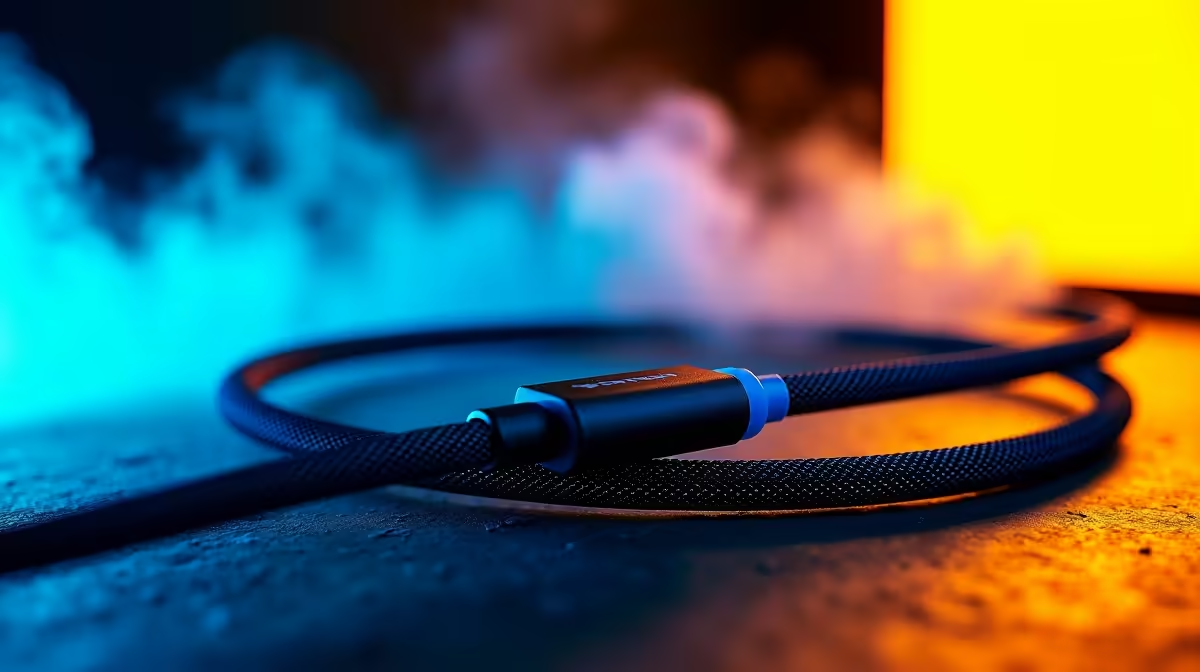
- Build Quality: A sturdy connector and a braided nylon jacket aren't just for looks; they add durability for a cable that will last through multiple rig upgrades. Brands known for quality, like these versatile Promate accessories, often provide that extra peace of mind. ✨
Ultimately, the right cable is the missing link that lets your powerful hardware shine. Don't let a R100 oversight bottleneck your R10,000+ setup.