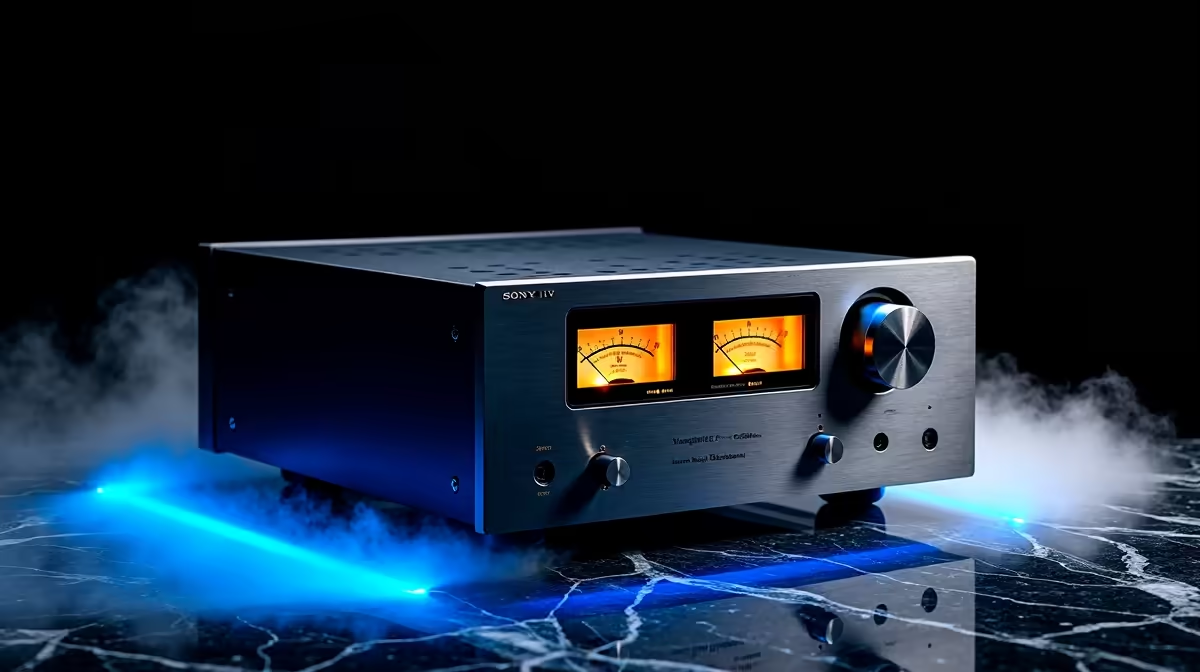
A pair of 300-ohm headphones plugged straight into a phone or motherboard jack sounds thin, quiet and lifeless, and no amount of volume fixes it. The reason is physics: high-impedance drivers need voltage swing, not just power, and that is exactly what the right DAC and amp delivers. Match the output to the load and the same headphones suddenly open up with weight, control and headroom they were always capable of.
Quick Answer
For 300-ohm headphones, choose a DAC and amp that can deliver enough voltage, which usually means a balanced 4.4mm output and a desktop-class amplifier. A balanced output roughly doubles voltage swing over single-ended, and units like the S.M.S.L DS100 push around 7 Vrms into high loads, which is the kind of headroom 300-ohm headphones want. Planar headphones flip the rule and need current instead.
Why high impedance demands voltage, not just watts
Impedance is the resistance a headphone presents to the amplifier. A 300-ohm Sennheiser HD 600 resists current heavily, so to push enough power through it the amp has to swing a high voltage. A weak source simply cannot reach the voltage needed, so the headphones play quietly and without dynamics even at full volume.
This is why a phone dongle that drives earbuds beautifully falls flat on 300-ohm cans. It was never built to swing that voltage. The number to look for is Vrms output into a high load, not just a milliwatt figure quoted at 32 ohms, which tells you almost nothing about how an amp behaves at 300.
Balanced output and why 4.4mm matters
A balanced connection, typically over a 4.4mm jack, uses separate ground returns for each channel. The practical payoff is roughly double the voltage swing compared to a single-ended 3.5mm output, along with lower crosstalk between channels. For high-impedance headphones that extra swing is the difference between adequate and authoritative drive.
What the specs should say
A capable desktop unit for 300-ohm headphones will quote several volts RMS into high loads. The S.M.S.L DS100, for example, delivers around 7 Vrms into 600 ohms through its 4.4mm output, which leaves comfortable headroom on a 300-ohm load. As a rough guide, 300-ohm headphones want at least roughly 100mW single-ended or 200mW balanced to come alive, but the voltage figure tells the fuller story.
Portable options exist too
You are not locked to a desk. A capable portable like the iFi hip-dac line uses a gain switch to match output to the load, driving hungry 300-ohm Sennheisers without hiss, and smaller units such as the Topping DX1 can drive the HD 600 on high gain. Portable convenience costs some absolute headroom versus a desktop amp, but for many listeners it is enough away from the desk.
The planar exception: current, not voltage
Here the rule inverts. Planar magnetic headphones are usually low impedance but power-hungry in a different way: they want current rather than high voltage. An amp tuned only for voltage swing into a 300-ohm load may not deliver the current a demanding planar needs. This is why output topology matters, and why a single amp is not automatically ideal for both a 300-ohm dynamic and a thirsty planar. Check that the amp specifies strong power delivery into low impedance if planars are in your collection.
Sensitive IEMs: the opposite problem
At the other end of the spectrum sit sensitive in-ear monitors. A very low-impedance, high-sensitivity IEM fed into a high-gain desktop amp introduces a raised noise floor, which shows up as a hiss you hear between tracks. If your listening spans both 300-ohm headphones and sensitive IEMs, look for a combo unit with a switchable gain mode or a dedicated low-gain output rather than assuming one setting covers both.
The FiiO K11 is one example of a desktop unit that addresses this range practically. It delivers around 1,400mW of output for planars and demanding dynamics, offers both 4.4mm balanced and 6.35mm single-ended outputs, and includes a gain switch for dropping output to IEM-friendly levels on the same device.
Matching it to your headphones
Start from the headphones you own. For classic 300-ohm dynamics, prioritise voltage and a balanced output, and a desktop combo gives the most margin. For planars, prioritise current delivery into low impedance. For sensitive in-ear monitors, the opposite problem appears, where too much gain raises the noise floor, so a low-gain setting or a dedicated IEM-friendly output is better. The cleanest approach is a combo DAC and amp with switchable gain so one box covers a range of headphones.
If you are building out a desktop listening setup, the headphones and headsets range at Evetech pairs naturally with a capable amp, and the headset best sellers list is a quick read on which models SA listeners are pairing with their gear.
Frequently Asked Questions
Why are my 300-ohm headphones so quiet on my phone?
A phone output cannot swing the voltage a 300-ohm load needs, so the headphones play quietly and without dynamics no matter the volume. A proper DAC and amp with a balanced output supplies that voltage.
What does a balanced 4.4mm output actually do?
It uses separate ground returns per channel, which roughly doubles the available voltage swing over a single-ended 3.5mm jack and lowers crosstalk. For high-impedance headphones, that extra swing is the key benefit.
Is the same amp good for planar headphones?
Not necessarily. Planars want current rather than high voltage, so an amp optimised purely for voltage into 300 ohms may underdrive them. Look for strong power delivery into low impedance if you run planars.
How much power do 300-ohm headphones need?
As a rough guide, around 100mW single-ended or 200mW balanced gets most 300-ohm dynamics performing well, but the more telling figure is the amp's voltage output into a high load. Several volts RMS into 300 or 600 ohms indicates real headroom.
Can a portable DAC and amp drive 300-ohm headphones?
Yes, capable portables with a high-gain switch can drive 300-ohm dynamics cleanly. You trade some absolute headroom against a desktop unit, but for many listeners a portable is enough away from the desk.
Getting weak, lifeless sound from high-impedance headphones? The fix is the right voltage, not more volume. Browse the headphones and headsets range at Evetech and pair them with an amp that drives them properly.