Juggling your work laptop between the office and your home setup in SA? You know the drill... unplugging the monitor, keyboard, mouse, and charger, only to repeat the tedious process hours later. What if you could connect everything with a single cable? A docking station isn't just a gadget; it's your ticket to a seamless, clutter-free workspace. Finding the best docking station for remote and on-site work transforms your desk from chaos to command centre. 🚀
Why a Docking Station is Your Hybrid Work MVP
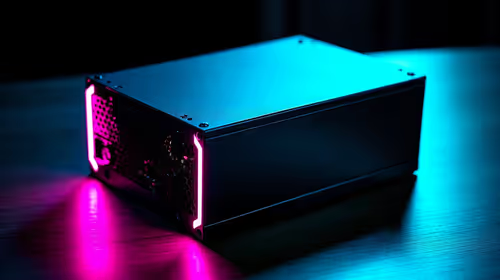
Let's be honest, nobody enjoys cable spaghetti. The core magic of a docking station is its ability to centralise your connections. Instead of wrestling with multiple plugs, you connect one USB-C or Thunderbolt cable to your laptop. Instantly, your external monitors light up, your keyboard and mouse are ready, and your laptop starts charging. It’s the ultimate plug-and-play dream for anyone moving between work environments.
This convenience isn't a luxury reserved for massive corporate budgets. You can get started with some surprisingly affordable options under R1000, making it an easy upgrade for any setup.
Choosing the Best Docking Station for Your Setup
Not all docks are created equal. The best docking station for a graphic designer running two 4K displays is overkill for a writer with one extra screen. To find your perfect match, you need to consider two key things: connectivity and ports.
Connectivity: Thunderbolt vs. USB-C
Most modern laptops use a USB-C port, but what it can do varies.
- USB-C Docking Stations: These are the most common and are perfect for most remote and on-site work scenarios. They handle one or two 1080p/1440p monitors, standard peripherals, and laptop charging with ease.
- Thunderbolt Docking Stations: Think of Thunderbolt as USB-C on steroids. It offers significantly more bandwidth, making it essential for power users who need to drive multiple 4K monitors or transfer massive files at lightning speed.
Check Your Port's Power! ⚡
Before you buy, check your laptop’s specs for its USB-C port. Look for terms like 'DisplayPort Alternate Mode' (for video) and 'Power Delivery' (for charging). Not all USB-C ports support these features, and a compatible port is crucial for your docking station to work correctly.
What Ports Do You Actually Need?
Take a quick inventory of your desk. How many USB devices do you have? What kind of display connections do your monitors use (HDMI or DisplayPort)? Do you need a reliable wired internet connection (Ethernet port)? Answering these questions will help you zero in on the right model. If you need a bit more flexibility for multiple devices, exploring docks with a wider variety of ports under R2000 is a great next step.
Our Top Picks for Different Workflows
To make things simpler, think about your daily tasks. Finding the best docking station often comes down to matching the hardware to your workflow.
The Everyday Hero: For Hybrid Professionals
If your work involves emails, documents, web browsing, and virtual meetings, you don't need a beast of a dock. You need reliability. A solid USB-C dock with a couple of USB-A ports, one or two HDMI outputs, and an Ethernet port is your ideal companion. It tidies up your desk and ensures you're ready for work in seconds. Many trusted brands like Promate offer excellent, no-fuss solutions perfect for this role.
The Creator's Hub: For Power Users
Are you editing video, designing in 3D, or coding across multiple high-resolution screens? You're a power user, and you need a hub that can keep up. Look for Thunderbolt 4 docks that support dual 4K (or even a single 8K) displays, offer faster 10Gbps USB ports, and perhaps even include an SD card reader for quick media transfers. This is an investment in a smoother, more efficient workflow. ✨
Ready to Tame Your Desk Chaos?
A tidy desk leads to a clear mind and better productivity. Stop juggling cables and create a seamless workflow with the perfect hub for your needs. Explore our full range of docking stations and find your match today.