Running a coding model locally with LM Studio turns your GPU into the bottleneck, and VRAM is the spec that settles every decision. LM Studio loads a quantised model entirely into graphics memory, so the question is never raw speed first; it is whether the model fits at all. For South African developers choosing between an RTX 5080 and an RTX 5090, the answer flips depending on whether you want to run 7B, 32B or 70B coding models.
Quick Answer
A 32B coding model at a usable 4-bit quant needs around 20GB of VRAM, which exceeds the RTX 5080's 16GB but fits comfortably inside the RTX 5090's 24GB. If 32B is your target, step up to the 5090. For 7B and 13B work, the 5080 is plenty, and a 70B model means either a 5090 with offload or a multi-card workstation.
Why VRAM Decides Everything in LM Studio
LM Studio is a desktop app for running open-weight large language models on your own machine. When you load a model, it copies the weights into GPU memory and keeps them there for fast inference. If the model plus its context window does not fit in VRAM, LM Studio spills the overflow into system RAM, and the moment that happens your tokens-per-second collapses because the GPU has to wait on the much slower CPU memory bus.
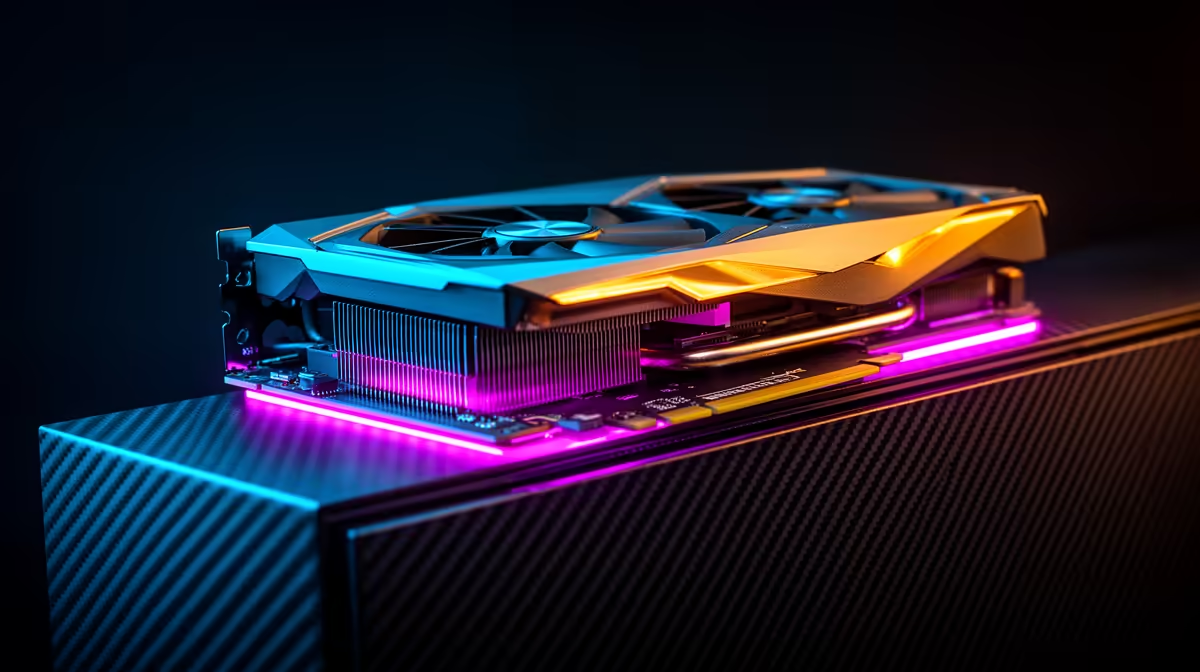
That is why a card with more VRAM beats a slightly faster card with less. A model that fits entirely in graphics memory runs cleanly; a model that does not fit crawls regardless of how powerful the chip is. For local-AI builds where this trade-off is the whole point, the AI PC range at Evetech groups the cards and complete systems sized for exactly this kind of work.
Matching VRAM to Model Size
7B and 13B Models
These are the sweet spot for fast, responsive local coding help. A 7B model at 4-bit needs roughly 5 to 6GB, and a 13B lands around 8 to 10GB. Both fit easily on a 16GB RTX 5080 with room left for a generous context window. If your main use is autocomplete, quick refactors and chatting about a single file, the 5080 handles 7B and 13B at high speed and is the value pick.
32B Models
This is the tier where the decision is made. A 32B coding model such as a Qwen or DeepSeek coder variant at a 4-bit quant wants around 18 to 20GB once you add a working context window. That figure sits just above the 5080's 16GB ceiling, so the 5080 is forced to offload layers to system RAM and the speed drops sharply. The RTX 5090's 24GB swallows the same model with headroom, keeping the whole thing on the GPU. For SA buyers who specifically want 32B reasoning and longer codebases in context, the 5090 is the honest minimum.
70B Models
A 70B model at 4-bit needs roughly 40GB or more, beyond any single consumer card. On a 5090 you can run a heavily quantised 70B with partial CPU offload and accept slower output, which is fine for batch tasks but frustrating for interactive coding. Genuine fast 70B inference means two high-VRAM cards or a workstation GPU, which is a different budget conversation entirely.
Quantisation and Context Both Eat VRAM
Two settings move the goalposts. Lower quantisation (going from 8-bit to 4-bit) roughly halves the memory the weights occupy, which is how a 32B model squeezes toward 20GB instead of nearly 40GB. The catch is a small quality loss, though for coding the 4-bit and 5-bit quants hold up well. The second factor is context length: a larger context window for long files or whole repositories consumes extra VRAM on top of the weights, so a model that just fits with a short context can overflow once you load a big project. Always size for the model plus the context you actually intend to use.
Speed and the Rest of the System
VRAM decides whether a model runs well, but two other factors shape the experience. Memory bandwidth governs how fast the GPU can read the weights it has loaded, and the 5090's wider, faster memory delivers more tokens per second than the 5080 even on a model both can fit, so the bigger card is quicker as well as roomier. The system around the card matters too: model files run to tens of gigabytes, so a fast NVMe SSD shortens load times noticeably, and 32GB or more of system RAM gives LM Studio the room to stage models and manage any layers routed to CPU memory. Skimping on RAM or storage will not stop a model running, but it makes loading and switching between models slower than it needs to be.
What This Means for an SA Build
If your work is everyday coding assistance on individual files, a 16GB RTX 5080 is fast, well-priced and entirely sufficient for 7B and 13B models. If you are chasing the stronger reasoning of 32B coders or want long-context work over larger codebases, the 24GB RTX 5090 is the card that keeps everything on the GPU and stays responsive. Back either GPU with 32GB or more of system RAM and a quick NVMe drive, since large model files load noticeably faster off fast storage. To see which complete machines and cards are popular with local-AI buyers right now, the PC best sellers at Evetech show the configurations people are actually choosing.
Frequently Asked Questions
Does LM Studio use the GPU automatically?
Yes, when a compatible GPU is detected LM Studio offloads as many model layers as fit into VRAM. You can set how many layers to offload, and the goal is to fit all of them on the card so nothing spills to slower system memory.
Is 16GB of VRAM enough for local coding models?
For 7B and 13B coding models, yes, comfortably. For 32B models, 16GB falls just short once you add a working context, which forces offload and slows output. If 32B is your target, plan for 24GB.
Why does a 32B model need around 20GB?
At a 4-bit quant the weights alone take roughly 16 to 18GB, and the context window plus runtime overhead pushes the total toward 20GB. That total is what must fit in VRAM to keep inference fast.
Will more system RAM fix a card with too little VRAM?
It prevents crashes but not slowdowns. When a model overflows into system RAM, inference speed drops sharply because the GPU waits on the slower memory bus. RAM helps loading and offload, but VRAM is what keeps tokens fast.
Can I run 70B models on a single RTX 5090?
You can run a heavily quantised 70B with partial CPU offload, but expect slower, less interactive output. For fast 70B inference you need more than 24GB, which means dual high-VRAM cards or a workstation-class GPU.