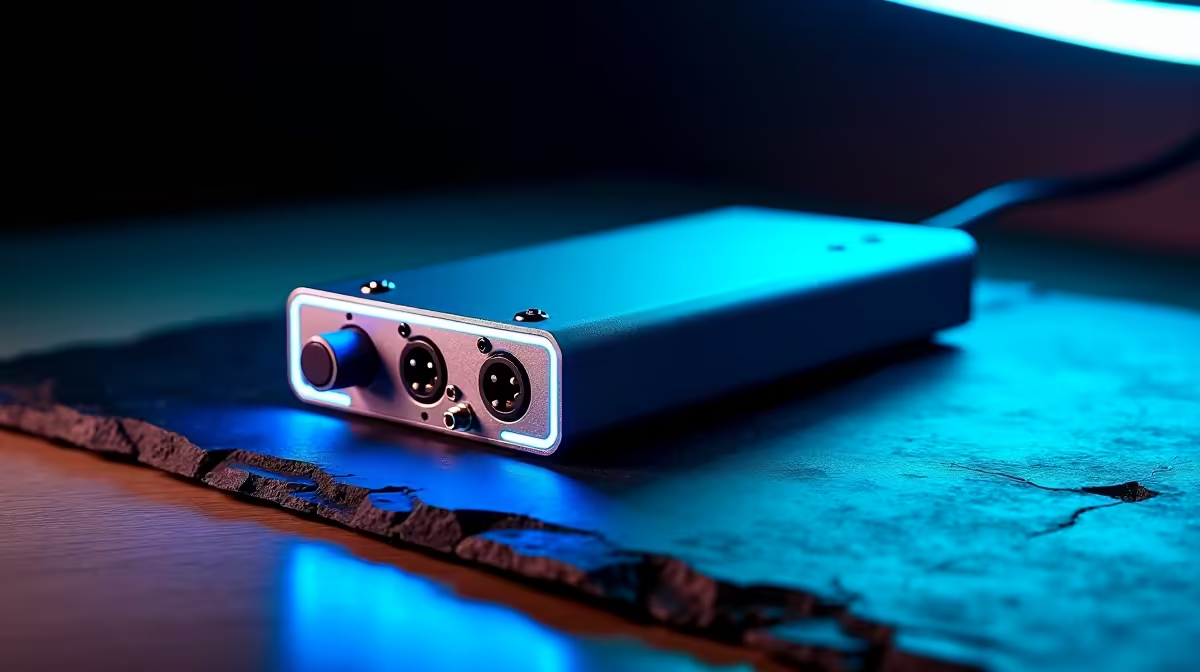
The Shure SM7B is famous for two things: a broadcast-grade voice, and an appetite for gain that embarrasses budget interfaces. An inline mic preamp for the SM7B solves the second problem by drawing 48V phantom from your interface and using it to deliver a big, clean boost before the signal ever hits your preamp. The benchmark device is the Cloudlifter CL-1, and understanding what it does explains why so many SM7B owners end up buying one.
Quick Answer
The Cloudlifter CL-1 gives a passive dynamic mic like the SM7B up to +25 dB of clean, Class-A gain. It is powered by 48V phantom but does not pass that voltage to the mic, which keeps ribbon and dynamic mics safe. The result lets your interface preamp run at a lower, quieter setting instead of being cranked into its noisy top end.
Why the SM7B needs help
The SM7B is a low-output dynamic microphone. It needs roughly 60 dB of clean gain to reach a healthy recording level, which is more than many interfaces can deliver before their own preamp circuitry starts adding hiss. Push a modest interface to its maximum and you hear the result: a wash of background noise sitting under your voice, because the louder you turn the gain, the louder the preamp's own noise floor becomes.
This is not a fault in the mic. Dynamic capsules generate a small electrical signal by design, and the SM7B is deliberately voiced for close, controlled broadcast use. The fix is not to crank a weak preamp harder, it is to add clean gain upstream so the interface barely has to work.
How an inline preamp works
An inline preamp, also called a mic activator, sits between the microphone and the interface. You feed it 48V phantom power from the interface over the same XLR cable that normally carries phantom to a condenser. Inside, that phantom voltage powers an amplifier circuit that boosts the mic signal by a fixed amount before it travels on to your interface input.
The Class-A discrete circuit
The CL-1 uses a patented Class-A discrete JFET design with a directly coupled, noise-cancelling signal path. There are no capacitors or resistors in the audio path to colour the sound, so the boost is transparent: it raises the level without adding the distortion or frequency tilt a cheaper booster might introduce. The aim is more level and a cleaner result, not a flavour.
It does not pass phantom to the mic
This is the safety point that matters. The CL-1 consumes the 48V phantom to run its own circuit but blocks it from reaching the microphone. Dynamic mics like the SM7B do not need phantom, and unbalanced ribbon mics can be damaged by it, so a device that absorbs phantom rather than passing it through protects everything downstream of the interface.
What the boost actually buys you
With +25 dB added before the signal reaches your interface, the interface preamp no longer has to run near its limit. Instead of pushing it to maximum and hearing every bit of its noise floor, you set it to a comfortable middle position where it is quiet and well-behaved. The audible result is a recording with a much lower noise floor, more headroom, and the SM7B's voice coming through clean rather than buried under hiss.
It is worth being honest about when you need one. The benefit is largest with interfaces that have limited or noisy gain. Some modern interfaces now ship with high-gain, low-noise preamps that can drive the SM7B cleanly on their own. If your interface offers plenty of clean gain, an inline preamp is optional; if it strains and hisses with the SM7B, it transforms the result. When you are building the monitoring side of the chain, the headphones and headsets range at Evetech has closed-back options that suit a dynamic broadcast setup well.
Choosing and pairing
A CL-1 style activator is the simplest single-channel option and the long-standing industry default for the SM7B, the EV RE20 and popular ribbon mics. Match it with a quality XLR cable and an interface that can supply stable 48V phantom, and the chain is complete. To see which monitoring options other SA creators are running alongside their dynamic mic rigs, the top-selling headsets at Evetech gives a practical read.
Alternatives to the CL-1
The Cloudlifter CL-1 is the most well-known option but it is not the only one. The Triton Audio FetHead is a compact alternative that plugs inline and offers around 27dB of clean gain, slightly more than the CL-1's 25dB. Its smaller form factor attaches directly to the microphone's XLR output, meaning you only need one XLR cable in the chain rather than the two the box-style CL-1 requires.
The trade-off is impedance: the CL-1 is specifically tuned for passive ribbon mics with its 3kOhm input impedance, which makes it the safer choice if your rig includes ribbons. For the SM7B and most dynamic capsules, either device solves the gain problem cleanly, and the choice often comes down to price and form factor. Either way, the key requirement is an interface that can supply stable, consistent 48V phantom power, since that is what runs the activator circuit.
Frequently Asked Questions
How much gain does an inline preamp add to the SM7B?
A Cloudlifter CL-1 adds up to +25 dB of clean gain. That extra level means your interface preamp can run lower and quieter instead of being cranked to its noisy maximum to reach a usable recording level.
Does an inline preamp send phantom power to the mic?
No. The CL-1 draws 48V phantom from the interface to power its own circuit but blocks that voltage from reaching the microphone. This protects dynamic and ribbon mics that should not receive phantom power.
Do I always need an inline preamp for the SM7B?
Not always. The SM7B needs roughly 60 dB of clean gain, and interfaces that cannot supply that cleanly will benefit greatly. Some modern high-gain, low-noise interfaces drive the SM7B well on their own, making the preamp optional.
Will an inline preamp change the sound of my voice?
A good one should not. The CL-1's Class-A discrete path has no capacitors or resistors in the signal chain, so it adds level transparently without colouring the tone or altering the frequency response.
Does it work with other dynamic mics?
Yes. An inline activator works with any low-output passive mic, and it is the industry standard for the SM7B, the EV RE20 and many ribbon microphones. Any dynamic mic that demands more clean gain than your interface provides will benefit.