Choosing the Best Laptop Specs for South African Students and Professionals 🇿🇦
If you’re a varsity student juggling tutorials, spreadsheets, and Netflix… or a working pro bouncing between Teams calls and deadlines, specs matter. But so does value. In South Africa, you need a laptop that handles load shedding-friendly charging routines, campus Wi‑Fi, and the occasional gaming session after hours. ⚡ This guide breaks down the Best Laptop Specs for South African Students and Professionals so you can buy once, upgrade less, and feel confident on checkout day.
Best Laptop Specs for South African Students and Professionals: The “Don’t Regret It” Checklist 🔧
CPU (Processor): Fast enough to keep up
For most students and office work, you’ll feel the difference between a basic dual-core and a modern multi-core CPU when multitasking. For creators, coding, and data analysis, the CPU is the engine. What to aim for:
- Intel: Look for at least an Intel Core i5 (newer generations preferred).
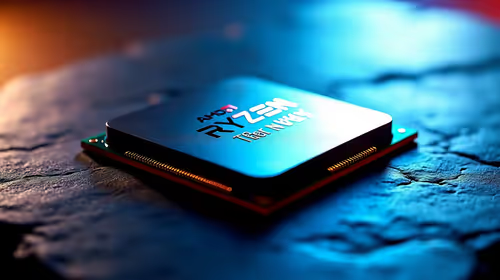
- AMD: Aim for Ryzen 5 or above.
If you’re hunting for deals, start with curated intel and ryzen options:
- Check Intel laptop deals here: Intel laptops on special
- Check Ryzen laptop deals here: Ryzen laptop deals
RAM (Memory): Smooth multitasking without stutter
RAM is where “it feels slow” usually starts. Browsers alone can eat 8GB quickly once you add tabs, Zoom, and course platforms. What to aim for:
- 8GB: Minimum. Usable, but you’ll feel pressure sooner.
- 16GB: The sweet spot for students and professionals.
- 32GB: Ideal for heavier workloads (video editing, large datasets, serious multitasking).
Storage (SSD vs HDD): Boot speed and app loading
An SSD is non-negotiable for a smooth experience today. HDDs make systems feel sluggish, especially with app loading. What to aim for:
- 512GB SSD: Great all-rounder.
- 1TB SSD: If you store video, big game libraries, or lots of files locally.
Display (Screen): Don’t buy regret… buy comfort
A bright, sharp screen matters for essays, spreadsheets, and long work sessions. What to look for:
- 1080p (Full HD): The baseline.
- IPS or good colour panels: Better viewing angles for shared spaces.
- Higher refresh rates: Nice for gaming, but not required for productivity.
Battery and charging reality: South African use case
If you travel between classes or work sites, battery life and charging convenience become specs too. Prefer laptops that balance performance and efficiency. Also consider that real-world usage varies by brightness, Wi‑Fi strength, and background apps.
Productivity Pro Tip ⚡
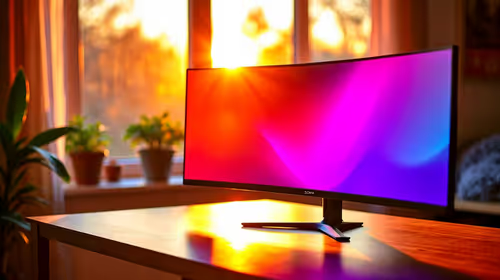
On Windows, use the PowerToys FancyZones utility to create custom snap layouts for your windows. It's a lifesaver for managing multiple apps on an ultrawide monitor, letting you organise your timeline, preview window, and asset folders perfectly for video editing.
Where “Student” Specs Meet “Professional” Reality 🚀
For students: build for multitasking and course work
Students rarely do one thing at a time. Think:
- Blackboard/Canvas + research tabs
- spreadsheets
- messaging and video calls
- note-taking apps
Recommended baseline for most students:
- CPU: i5 / Ryzen 5
- RAM: 16GB
- Storage: 512GB SSD
- Display: 1080p+
For professionals: reliability over flashy upgrades
If you’re in admin, finance, marketing, engineering support, or software roles, you need responsiveness plus consistent thermals. Laptops that run cooler tend to stay stable during long sessions. Recommended baseline for most pros:
- CPU: i5/i7 or Ryzen 5/7 class
- RAM: 16GB (32GB if you edit or run heavier apps)
- Storage: 512GB–1TB SSD
If You Also Game After Hours… Get the GPU right ✨
You can absolutely buy one laptop for study, work, and gaming. The trick is not overspending on GPU power you don’t use, but also not crippling performance if you do play.
Best laptop specs for gaming on a budget (under R20k)
If you want credible gaming performance without blowing your student loan or salary, start with deals that are specifically targeted at affordability:
- Explore: buy gaming laptops under R20k
Want smoother 1080p and better frame consistency?
The GPU choice drives game performance. NVIDIA GeForce RTX models are a common sweet spot for many buyers because they bring both performance and modern features.
Quick “Pick Your Spec” Scenarios (So You Don’t Overthink) 🎮
Scenario A: First laptop for university
Choose: i5 / Ryzen 5, 16GB RAM, 512GB SSD. Optional: a dedicated GPU only if you’ll game regularly.
Scenario B: Office + study + light creative work
Choose: strong CPU, 16GB RAM, 512GB–1TB SSD. If you edit occasionally, consider better cooling and a screen that’s comfortable for long hours.
Scenario C: Hybrid gamer (study or work by day, games at night)
Choose: a deal-focused gaming laptop with a sensible GPU tier.
- If you’re browsing broader bargains, start here: best gaming laptop deals
Common Buying Mistakes South Africans Make (And How to Avoid Them) 🔥
- Buying 8GB RAM and planning to “upgrade later.” Some models make upgrades difficult or expensive. If you can, budget for 16GB.
- Assuming “storage size” equals speed. A smaller SSD can feel faster than a larger HDD.
- Overpaying for a high refresh screen you won’t use. If gaming is occasional, prioritise CPU, RAM, and SSD first.
- Ignoring weight and portability. A heavier laptop gets left behind… and that becomes a daily frustration.
When you choose the right specs up front, you stop chasing performance with random upgrades later. That’s the real win.
Ready to Find Your Perfect Match? The Mac vs Windows debate is complex, but for maximum power, choice, and value in South Africa, Windows is hard to beat. Explore our massive range of laptop specials and find the perfect machine to conquer your world.