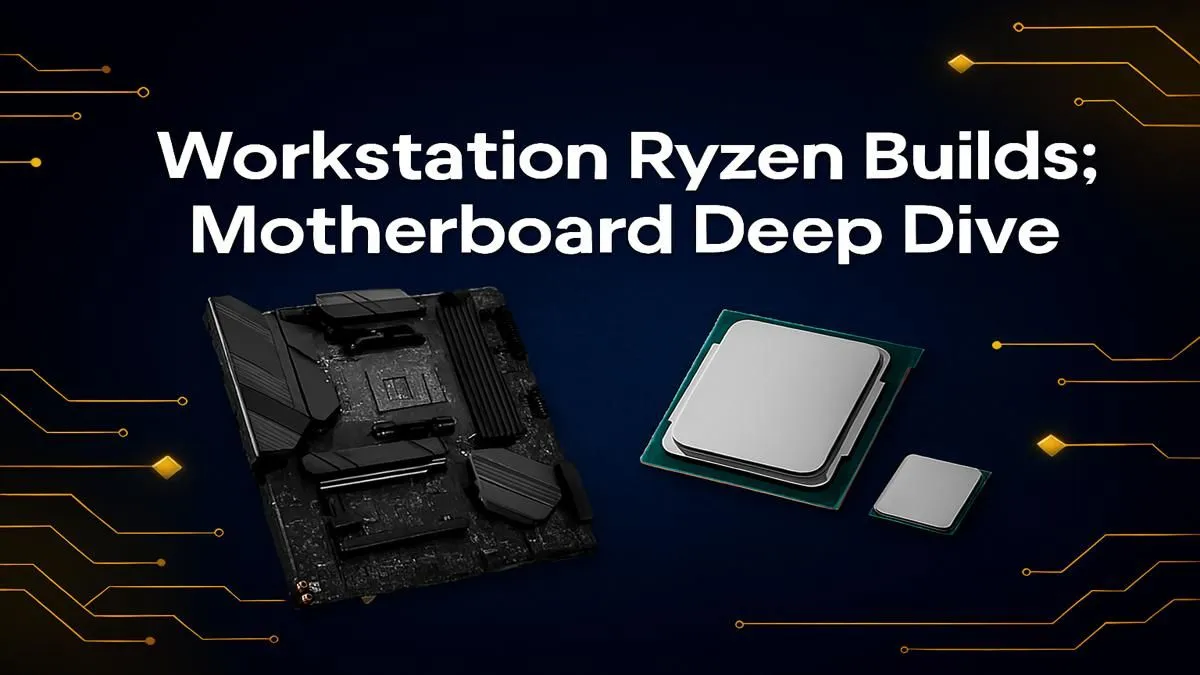
Building a Ryzen beast for video editing or 3D rendering in Mzansi? Your CPU gets all the glory, but the motherboard is the unsung hero. Picking the wrong one can bottleneck your powerful processor and leave you staring at progress bars. Let's make sure you choose the best motherboard for your Ryzen workstation, ensuring every rand you spend translates into raw power and stability.
Why Your Motherboard is the Unsung Hero of Your Workstation
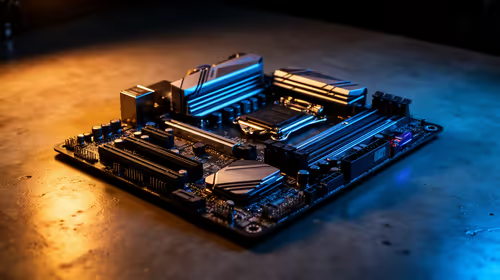
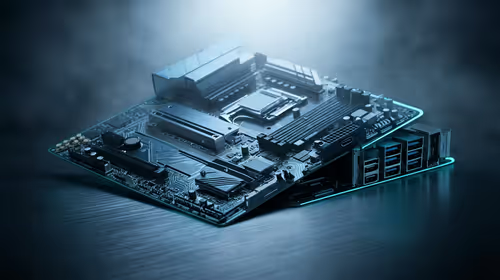
Think of your motherboard as the central nervous system of your PC. It’s more than just a circuit board to plug things into; it dictates your system's potential. For a high-performance Ryzen workstation, three things are critical:
- Power Delivery (VRMs): Voltage Regulator Modules ensure your CPU gets clean, stable power. A board with robust VRMs will keep your Ryzen 9 running at peak performance during heavy, multi-day renders without overheating or throttling.
- Connectivity (I/O): How many USB ports do you need? What about super-fast 10GbE LAN for connecting to a server, or Wi-Fi 7 for a cable-free setup? The motherboard's rear I/O is your connection to the world.
- Expandability: This is about future-proofing. The number of M.2 slots for speedy NVMe storage, and PCIe slots for graphics cards, capture cards, or other accelerators, determines how your workstation can grow with your needs.
Choosing the right foundation is the first step in building a reliable machine. The best motherboard for a Ryzen workstation is one that doesn't just work, but excels under pressure.
Choosing Your Chipset: The Core of Your Ryzen Workstation Motherboard
The chipset is the brain of the motherboard, defining its core features and capabilities. For modern AMD Ryzen systems, your choice generally comes down to a few key options.
The Power User's Choice: AMD X870
If you're building a no-compromise machine for heavy 3D rendering, complex simulations, or you simply want the absolute best… the X870 chipset is your target. These boards offer the most robust power delivery for extreme overclocking and the maximum number of PCIe 5.0 lanes. This means you can run the fastest possible graphics cards and NVMe SSDs simultaneously without compromise. For top-tier performance, explore the latest AMD X870 motherboards to unlock your Ryzen CPU's full potential. 🚀
The Smart Money Pick: AMD B850
For the vast majority of professionals and content creators, the B850 chipset hits the sweet spot. It offers a fantastic balance of features, performance, and price. You'll typically get at least one PCIe 5.0 slot for your primary GPU or SSD, excellent VRMs capable of handling high-core-count CPUs, and a healthy selection of modern I/O. A quality B850 board is often the smartest choice, providing everything you need for a powerful and stable editing or design rig. Check out the current range of AMD B850 motherboards for incredible value.
The Budget Champion: AMD B550 (AM4)
Still rocking an AM4 CPU like the Ryzen 9 5950X, or building a powerful workstation on a tighter budget? Don't overlook the B550 chipset. While it's from the previous generation, it offers PCIe 4.0 support and features that are more than enough for many professional workloads. A high-quality AMD B550 motherboard paired with a 12 or 16-core AM4 CPU can deliver incredible performance-per-rand. ✨
Must-Have Features for a Top-Tier Workstation Build
Beyond the chipset, a few specific features separate a good motherboard from the best motherboard for a Ryzen workstation.
- Heatsinks: Look for substantial heatsinks on the VRMs and M.2 slots. Passive cooling is your first line of defence against thermal throttling during long work sessions.
- Network Connectivity: A 2.5GbE LAN port should be the minimum. For serious video editors or those working with large network files, a 10GbE port is a massive quality-of-life improvement.
- USB Ports: You can never have too many. Prioritise boards with at least one USB-C port, preferably a high-speed one (USB 3.2 Gen 2x2 or USB4) for fast external drives and peripherals.
Stability Pro Tip 🔧
Always check your motherboard's Qualified Vendor List (QVL) for RAM before you buy. Workstation stability is paramount. Using RAM that has been officially tested and verified by the manufacturer for your specific board drastically reduces the risk of crashes and data corruption, especially when running multiple high-capacity memory sticks.
Ultimately, finding the right motherboard means matching its features to your workflow. From photographers to architects, the perfect board is waiting. Take your time, compare the specs, and browse the full selection of AMD motherboards to find the ideal match for your build.
Ready to Build Your Ryzen Powerhouse?
Choosing the best motherboard for your Ryzen workstation is the foundation of a stable, high-performance machine. Don't leave it to chance. Explore our extensive range of PC Components and find the perfect backbone for your next build.