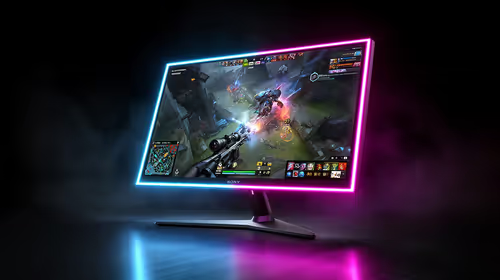
A Steam Deck or ROG Ally has a lovely screen until you put it next to what its chips can actually push. The best portable monitor for a gamer or handheld owner fixes that mismatch: a 144Hz panel like the 16.1-inch ARZOPA hands your handheld a refresh rate its built-in display cannot match, turning a capped 60Hz experience into something genuinely smooth, whether you are on the couch or in a hotel room.
Quick Answer
For a handheld gamer, a 144Hz portable monitor such as the 16.1-inch ARZOPA is the standout pick. It gives a Steam Deck or ROG Ally a higher refresh rate than its own screen, charges through USB-C pass-through, and folds flat for travel. Look for 144Hz, USB-C, and a 15 to 16 inch panel.
Why refresh rate is the whole point
A handheld's internal display usually tops out at 60Hz or 90Hz. The hardware inside, especially on the ROG Ally, can often render faster than that, and those extra frames simply have nowhere to go. Plug into a 144Hz portable monitor and you finally see them. Fast-paced shooters, platformers, and racing games feel noticeably more fluid, and the input lag drops because each frame appears sooner.
This is the single biggest reason to add an external screen. A bigger panel is nice; a faster panel is transformative. If you only buy a portable monitor for the extra size, you are missing the upgrade that actually changes how the games feel.
What to look for beyond the refresh rate
Refresh rate leads, but a few other specs decide whether the monitor is a joy or a hassle.
USB-C pass-through charging
This is the feature that makes a portable monitor practical for handhelds. A single USB-C cable carries both the video signal and power, and pass-through lets you charge the handheld through the monitor at the same time. Without it, a long session drains your Deck or Ally far faster because it is also feeding the screen. Confirm pass-through is on the spec sheet before buying.
Panel size and weight
A 15 to 16 inch panel hits the sweet spot. Big enough to feel like a real upgrade over a 7 inch handheld screen, small enough to slip into a bag. The 16.1-inch ARZOPA sits right in this range. Go much larger and portability suffers; go smaller and the size benefit fades.
Resolution versus refresh
On a portable screen, a smooth 1080p at 144Hz usually feels better for gaming than a sharper but slower panel. Handhelds are not pushing 4K anyway, so prioritise the high refresh rate over raw pixel count for this use case.
Panel type and brightness
An IPS panel is the safe pick for most buyers, giving good colour and wide viewing angles so the picture holds up when you are gaming from an angle on the couch. Brightness matters too. A dim panel washes out near a window or outdoors, so look for a screen bright enough to stay readable in a sunlit lounge. You do not need a premium HDR display for handheld gaming, but a panel that is too dark will frustrate you the first time you try to use it on a bright afternoon.
Setting it up with your handheld
Getting a portable monitor working with a Steam Deck or ROG Ally is refreshingly simple, which is part of the appeal. In most cases a single USB-C cable from the handheld to the monitor carries video and power, and the handheld detects the external display automatically. From there you can either mirror or extend, though for gaming you simply use the larger screen as your main output.
Two practical tips save frustration. First, confirm your USB-C cable actually supports video, since some charge-only cables do not, and a cable that came with a phone charger may not carry a display signal. Second, plug a power source into the monitor's pass-through port so your handheld charges while you play, otherwise the screen draws from the handheld's battery and a long session ends early.
Couch, desk, or travel
The beauty of a portable monitor is that it adapts. At home, prop it on the coffee table and game from the couch with the handheld in your hands. At a desk, it becomes a clean second screen. On the road, it folds flat into your laptop bag so a hotel room becomes a gaming setup in seconds. One panel covers all three. Browse the current options on the portable monitor listings to compare sizes and refresh rates, and the wider monitors topping the sales charts are worth a look if a desk display is also on your list.
The ARZOPA as a reference point
The 16.1-inch ARZOPA is a useful benchmark for this category because it hits the specs that matter without overreaching. A 144Hz refresh rate that doubles or more what most handhelds offer internally, a 16.1-inch size that is large enough to transform the experience yet still bag-friendly, and USB-C connectivity that keeps the whole setup to one cable. You do not have to buy that exact model, but it is a clear yardstick: any panel you consider should match or beat those three numbers for handheld gaming. If a cheaper option drops to 60Hz or 75Hz, you are buying size at the cost of the smoothness that was the whole reason to upgrade.
Who should skip it
Honesty matters here. If you only ever play slow, turn-based, or strategy games on your handheld, a 144Hz panel buys you little, and a cheaper 60Hz screen for the bigger size is fine. The high refresh rate pays off specifically for fast action games where extra frames are felt rather than just measured. Be honest about your library before spending up: the upgrade is real, but only for the games that move fast.
Frequently Asked Questions
Will a 144Hz monitor make my Steam Deck run games faster?
It will not raise your frame rate beyond what the hardware produces, but it lets a faster-rendered output actually display, instead of being capped by a slower internal screen. The result feels smoother in fast games.
Do I need USB-C pass-through charging?
For handheld gaming, strongly recommended. It lets you power the monitor and charge the handheld through one cable, so long sessions do not drain your battery quickly. Check the spec lists it before buying.
What size portable monitor is best for handhelds?
A 15 to 16 inch panel, like the 16.1-inch ARZOPA, balances a meaningful size upgrade against staying light enough to travel with. Larger screens hurt portability without adding much for handheld play.
Can I use a portable monitor with a laptop or phone too?
Yes. A USB-C portable monitor works as a second screen for laptops and many phones, so it doubles as a travel productivity display, not just a gaming panel.
Is 1080p enough on a portable gaming monitor?
For handhelds, yes. They rarely push higher resolutions anyway, and a smooth 1080p at 144Hz feels better for gaming than a sharper but slower panel.