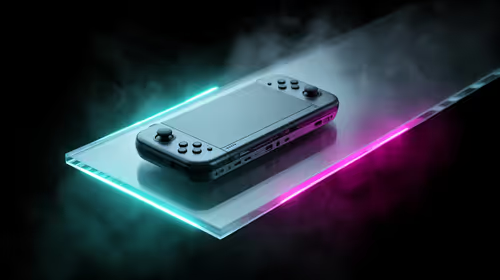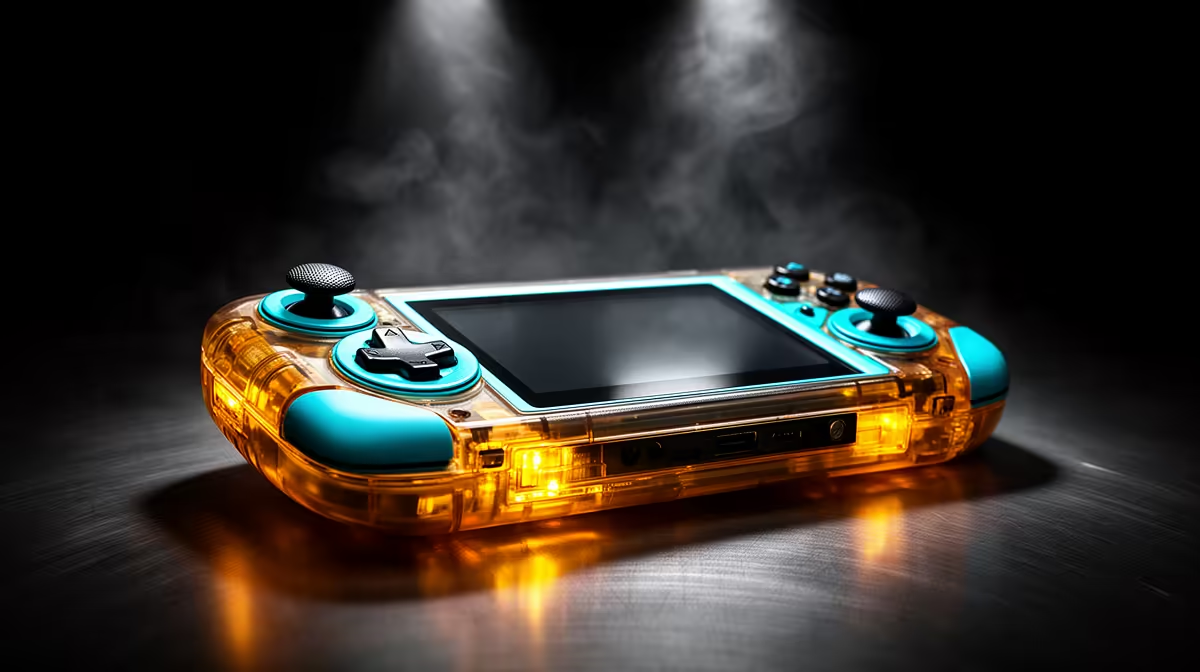
Most retro handhelds ask you to choose between price and performance. The Ayn Odin 2 refuses that trade by putting flagship phone silicon into a dedicated gaming body, and the result sits at the very top of the Android emulation ladder. The question for a South African buyer is not whether it is powerful, because it clearly is, but whether that power justifies the import cost over a cheaper handheld that already plays everything most people emulate.
Quick Answer
The Ayn Odin 2 is worth it if you genuinely want to emulate demanding consoles like PS2, GameCube, Wii, and Switch at high frame rates, not just retro 2D and PSP titles. Its Snapdragon 8 Gen 2 with Adreno 740 GPU and up to 16GB of RAM is overkill for older systems but the right tool for the hardest emulation jobs. For light retro use, a cheaper device delivers the same experience for a fraction of the spend.
The Silicon Doing the Heavy Lifting
The Odin 2 runs a Qualcomm Snapdragon 8 Gen 2, the same class of chip that powered flagship Android phones, paired with the Adreno 740 GPU. RAM scales from 8GB on the base unit up to 16GB on the top configuration, with storage options up to 512GB.
This is a meaningful jump over the original Odin. Reviewers repeatedly describe the difference as borderline uncanny: emulators that stuttered before now run clean, and the headroom means demanding titles hold their frame rate instead of dipping in busy scenes. That stability, not raw peak speed, is what makes a handheld pleasant to use for hours. In raw benchmarks the Snapdragon 8 Gen 2 scores around 1.4 million on AnTuTu, performance comparable to gaming laptops from 2020 -- more than enough ceiling for any current emulator.
What It Actually Emulates Well
The practical test of a premium handheld is the hard stuff, and the Odin 2 clears it.
The Demanding Systems
PS2 emulation through AetherSX2 runs with real stability, often at resolutions beyond the original console. GameCube plays close to flawlessly, Wii titles work with functioning gyro for motion controls, and N64 runs cleanly with crisp output. Switch emulation is achievable on the more capable configurations, which is the headline that separates flagship handhelds from the mid range. Expect 20-45 fps on most Switch titles, with popular open-world games in the 25-35 fps range -- playable, though not universally smooth.
The Everyday Library
Everything below that tier, from arcade and SNES through PSP and Dreamcast, runs without breaking a sweat. If your library is mostly these systems, you are paying for power you will rarely call on.
Build, Battery and Daily Use
The Odin 2 Base ships with a 6-inch 1080p screen and an 8,000mAh battery, which is generous enough for a full day of gaming away from a charger. The Pro and Max variants add more RAM and storage without changing the body. Build quality is premium -- the device feels solid in the hand and the controls are well-spaced for a dedicated handheld rather than a repurposed phone shape. The 6-inch form factor sits closer to a small tablet than a pocket device, so it travels in a bag rather than a jacket.
Ayn has also given the Odin 2 Wi-Fi 7 on its newer hardware revisions, which matters if you use it as a game-streaming device alongside emulation. The combination of local emulation power and streaming client in one body is part of what justifies the premium for buyers who use both.
The Import Cost Reality for SA Buyers
The honest catch is value. Ayn devices are not broadly distributed locally, so getting one to South Africa typically means importing, which adds shipping, duties, and currency conversion on top of the device price. That can push the landed cost well above what the headline figure suggests, and you carry the warranty and support friction that comes with imported hardware.
That reframes the decision. The Odin 2 is the best premium Android handheld of its generation, but "best" and "right for you" are different questions. If you specifically want PS2, GameCube, and Switch on the go and intend to use that capability, the spend makes sense. If you mostly play 16-bit and PSP titles, a locally available handheld covers that beautifully. Evetech stocks a range of handheld gaming consoles without the import headache, and pairing one with the right accessories from the PC best sellers often lands you a complete setup for less than an imported flagship alone.
Controls, Build and Comfort
The Odin 2 is designed as a dedicated gaming device rather than a repurposed phone shape, and the ergonomics reflect that. The grips are substantial and the button layout is well-spaced, with hall-effect analogue sticks on the Pro and Max variants that resist the drift that plagues cheaper handhelds. The device weighs in at a noticeable 450g or so in hand, which is comfortable for long sessions on a desk or couch but less ideal for commuting. It is a lap and bag device, not a pocket one.
Build quality is premium throughout: the body uses quality materials and the buttons have a satisfying click. For a device at this price point that is expected, but it is worth confirming because import return friction means you cannot easily swap a unit with manufacturing defects. Sourcing through a reputable distributor rather than a direct grey-market route reduces that risk.
Who Should Actually Buy One
The Odin 2 rewards the serious emulation enthusiast who has outgrown lighter hardware and wants one device that runs almost everything. It is poor value for a casual player, and a questionable first handheld given the import friction. Match the device to your actual library rather than to the spec sheet, and the answer becomes clear quickly.
Frequently Asked Questions
Can the Ayn Odin 2 run Switch games?
On its more capable configurations, yes, Switch emulation is achievable thanks to the Snapdragon 8 Gen 2 and ample RAM. Performance varies by title and emulator maturity, so it is strong rather than universally perfect.
How much RAM should I get?
8GB handles the vast majority of emulation, but 12GB or 16GB gives headroom for the most demanding Switch and PS2 titles and for keeping the system responsive. Heavy users should size up; casual players will not notice the difference.
Is it worth importing to South Africa?
Only if you specifically need its top tier emulation power. Import shipping, duties, and warranty friction add real cost, so for mostly retro and PSP libraries a locally available handheld is the smarter buy.
What makes it "premium" over cheaper handhelds?
Flagship phone silicon, generous RAM, and a quality build, which together deliver stable high frame rates on the hardest systems. Cheaper handhelds match it on older games but fall away on PS2, GameCube, and Switch.
Does it handle older consoles easily?
Effortlessly. Arcade, SNES, Dreamcast, and PSP run with large headroom to spare, which is precisely why buying it purely for those systems is overspending.
Want flagship handheld performance without importing it yourself? See the handheld gaming consoles at Evetech for locally stocked options that match your library and budget.