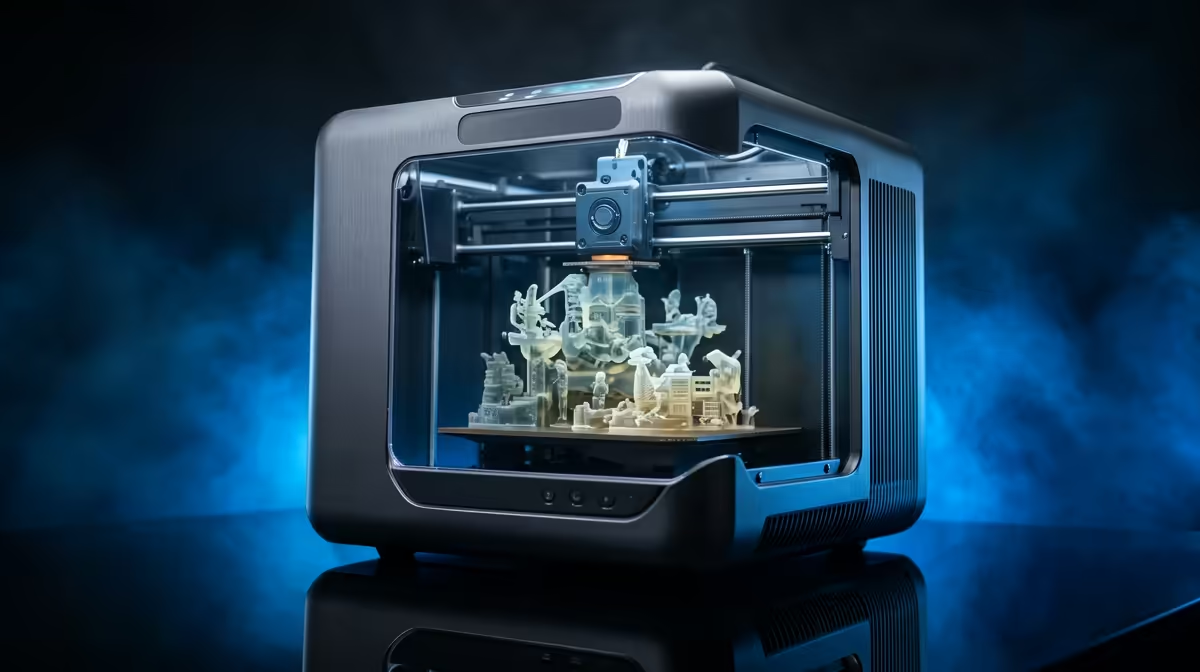
Tabletop generals know the maths: a 2,000-point army can mean 40, 60, sometimes 100 individual models, and printing them two at a time will swallow your whole season. The fix is a large-format resin 3D printer with a build plate big enough to pack a full squad per run, paired with a resolution high enough that the cloaks, rivets and faces survive being crammed shoulder to shoulder. For South African hobbyists, the Creality Halot-X1 at around R15,499 sits at the sweet spot of plate size, 12K detail and price.
Quick Answer
For batch-printing a whole miniature army in South Africa, the Creality Halot-X1 (around R15,499) is the strongest pick. Its roughly 211 x 118 mm build area fits 30 to 50 standard 28 mm infantry per plate, and the 12K mono LCD holds crisp detail even when the plate is packed edge to edge.
Why Plate Area Beats Everything Else for Army Work
When you batch-print, the single number that decides your output is usable plate area, not print speed. Resin printers cure an entire layer at once, so a plate holding 40 minis takes almost exactly as long as a plate holding four. That is the whole trick: fill the plate, run it overnight, wake up to a unit.
A 28 mm infantry model on a 25 mm round base occupies a footprint of roughly 25 x 25 mm once you allow for slight spacing so supports do not fuse. On the Halot-X1's plate you can realistically grid out 30 to 50 such models depending on pose and how aggressively you angle them. Cavalry, monsters and vehicles drop that count, but the principle holds: bigger plate, fewer separate runs, less resin wasted on repeated raft layers.
You can see the broader spread of machines and where the large-format models sit by browsing the Evetech 3D printer line-up, which makes the plate-size jump from hobby units to army-grade ones obvious at a glance.
Resolution: Why 12K Earns Its Keep on a Packed Plate
Detail loss is the hidden cost of batch work. The further a model sits from the centre of the LCD, the more important pixel density becomes, because tiny pixels render fine edges cleanly right out to the plate corners. The Halot-X1's 12K panel resolves features down to a level where chainmail links, gemstones and squinting eyes still read after curing, even on models parked at the plate's edge.
Mono LCD Longevity
Army printing is brutal on screens because you run the panel for hours at a time, plate after plate. A mono LCD passes far more UV than the older RGB panels, so each layer cures faster and the screen ages slower under heavy batch use. For someone pumping out a 60-model force, that lifespan difference is the part of the spec that saves you real money over a year.
Speed Under Load
The Halot-X1's faster curing per layer matters more than it first appears. A tall raft of supported minis can run 1,500 to 2,500 layers; shaving even a fraction of a second off each one compounds across a full plate. You are not chasing a speed record, you are shortening an overnight run so you can chain more of them across a weekend.
Resin Choice Changes Your Detail and Durability
The printer is only half the picture. For wargaming minis you generally want a tough or ABS-like resin rather than a brittle standard formula, because army models get handled, transported in foam, and occasionally dropped mid-battle. A slightly flexible resin survives a knocked spear far better than a glass-hard one that snaps.
Pigment matters too. A mid-grey or olive resin photographs and primes more predictably than a translucent one, and it hides the faint layer lines that any printer leaves. Keep a litre or two in reserve, because a full army plate can drink 150 to 250 ml per run and running dry mid-batch means a ruined plate.
Post-Processing at Army Scale
Printing 50 minis is the easy part; washing and curing 50 minis is where hobbyists underestimate the workload. Plan for a wash-and-cure station sized to your plate, plenty of isopropyl alcohol, and good ventilation, because resin fumes are unpleasant in a closed Cape Town flat or Joburg study. Nitrile gloves and eye protection are non-negotiable with uncured resin.
A practical rhythm: print overnight, wash and cure first thing, then clip and prime in the evening. That cadence turns a daunting army into a steady production line rather than a single overwhelming weekend. If you need clippers, tweezers, alcohol and other consumables to keep that line moving, the hobby accessories and tools collection covers most of the small kit that batch work eats through.
Support Strategy for Packed Plates
Supports are where army plates succeed or fail. Pack the minis too tightly and supports fuse, leaving you snapping models apart and ruining detail. Leave a small gap between each figure and angle them slightly so resin drains cleanly and the suction forces of peeling each layer stay manageable. Auto-supports in your slicer are a fine starting point, but spend a few minutes thinning out heavy supports on faces and weapons, where a support scar is hardest to hide. Once you settle a layout that prints reliably, save it as a template and reuse the spacing pattern for every future plate.
Who Should Buy This, and Who Should Not
The Halot-X1 makes sense if you are committing to a full army, a club's worth of terrain crew, or you sell painted commissions and need throughput. The plate size pays for itself across dozens of models.
If you only print the odd hero model or a handful of objective markers, a smaller and cheaper resin printer will serve you better and waste less resin on part-empty plates. Batch capability is only worth paying for when you actually batch.
Frequently Asked Questions
How many 28 mm minis fit on the Halot-X1 plate?
Realistically 30 to 50 standard infantry on 25 mm bases per run, depending on pose and support angle. Larger models such as cavalry, monsters or vehicles reduce that count significantly, so plan your plate layout around your unit types.
Does a packed plate take longer to print than a near-empty one?
No. Resin printers cure a full layer in one exposure, so a plate with 40 minis prints in almost the same time as a plate with four at the same height. That is exactly why batch printing is so efficient.
What resin should I use for wargaming models?
A tough or ABS-like resin in an opaque colour. It resists the knocks of transport and play far better than a brittle standard resin, and an opaque grey or olive primes and photographs more cleanly than a translucent formula.
Is resin safe to use in a small flat?
With sensible precautions, yes. Work in a ventilated space, wear nitrile gloves and eye protection when handling uncured resin, and keep a wash-and-cure routine to avoid sticky residue. Never pour uncured resin down a drain.
How much resin does a full army plate use?
Expect roughly 150 to 250 ml per packed plate of infantry, more if you print tall supports or larger models. Keep spare resin on hand so a long batch run never stops halfway and ruins the plate.
Ready to turn a pile of points into a painted force? Browse the current large-format resin machines in the Evetech 3D printer range at https://www.evetech.co.za/components/3d-printers-130 and stock up on the clippers, alcohol and curing kit your production line will need.