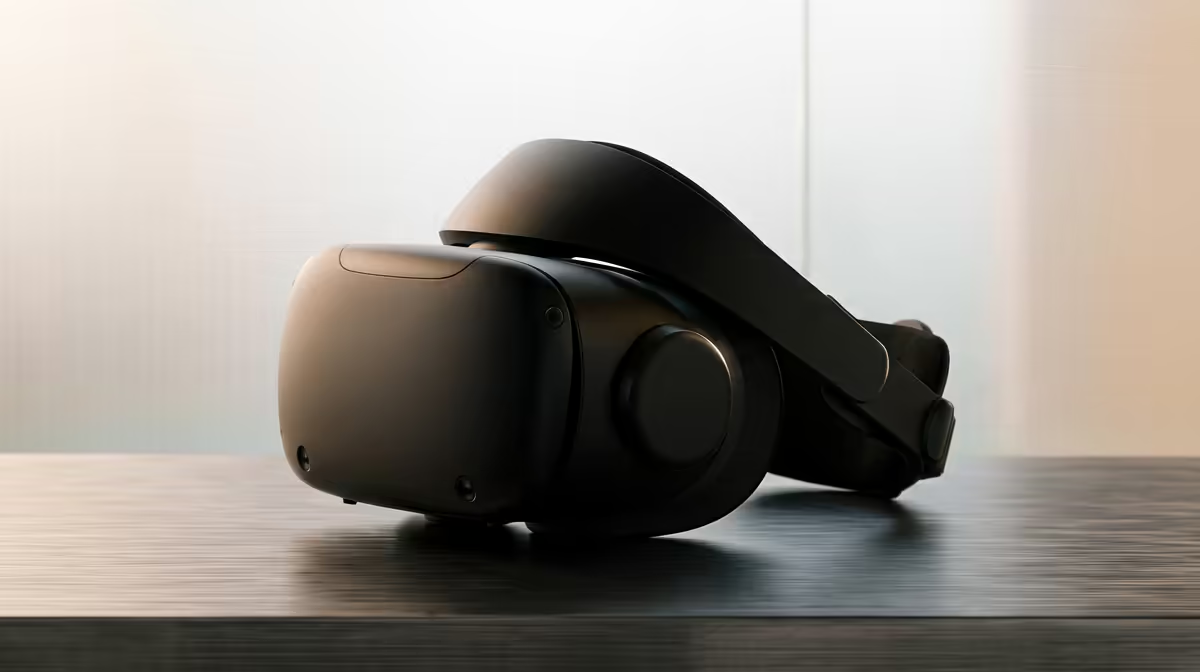
The smartest budget VR headset is not the one with the fewest features, it is the one that cuts the right corners. Spend less on the wrong things and you get smeary visuals, laggy tracking and a headset that gathers dust. The Quest 3S is the standout value pick because it keeps the parts that make VR feel good and trims the parts you barely notice, landing current-generation VR at the lowest rand price in SA.
Quick Answer
The Meta Quest 3S is the best budget VR headset for South African buyers. It carries the same Snapdragon XR2 Gen 2 processor and colour passthrough cameras as the pricier Quest 3, so games run identically, while saving money mainly through simpler fresnel lenses at 1832 x 1920 per eye. It is the sharpest value entry at the lowest current-gen price.
Where Budget VR Should Cut, and Where It Must Not
The temptation with a cheap headset is to look only at the price. The better question is which spec each saving touches. Some cuts barely register in real use. Others ruin the experience. Getting this distinction right is the whole game when buying VR on a budget.
The two things you should never compromise are the processor and the tracking. The chip determines whether games run at full frame rate and which titles you can play at all. Inside-out tracking quality decides whether your hands and head move convincingly or drift and stutter. The Quest 3S keeps both at the same level as the Quest 3, which is exactly why it punches so far above its price.
What the Quest 3S Keeps
The Same Processor
The 3S runs the Snapdragon XR2 Gen 2, identical to the Quest 3. That means every game in the library runs the same way on both headsets, with the same frame rates and the same visual settings. You are not buying a slower machine that struggles with the catalogue, you are buying the same engine in a cheaper shell.
Full Colour Passthrough
Mixed-reality features, where the headset shows you the real room in colour and layers virtual objects on top, are intact on the 3S. The colour passthrough cameras carry over, so the mixed-reality apps and the safety of seeing your surroundings work just as they do on the more expensive model.
Tracking and Comfort Basics
Inside-out tracking, the controllers and the core comfort fit all carry across. Nothing about how the headset finds your hands or holds frame rate has been downgraded to hit the price. The controllers are the familiar Touch design, the cameras map your room for tracking without external sensors, and the refresh rate that keeps motion smooth is intact. These are the parts that decide whether VR feels convincing or makes you queasy, and Meta sensibly left them alone.
What the Quest 3S Cuts
Lens Type and Resolution
The biggest saving is the optics. The Quest 3 uses newer pancake lenses with a higher, edge-to-edge resolution. The 3S reverts to older fresnel lenses at 1832 x 1920 per eye. In practice that means a slightly smaller sweet spot, where the image is sharpest only when your eyes are centred, and a touch less clarity at the very edges. For most players this is a fair trade rather than a dealbreaker, especially in fast action games where you are not studying fine text.
Storage and Field of View
Budget configurations come with less onboard storage, which matters if you install a large library, and the field of view is marginally narrower than the Quest 3. Neither materially changes how a game plays.
Living With Standalone VR in South Africa
No PC Required
A big part of the 3S value is that it is standalone. The processor, storage and battery are all in the headset, so you do not need a powerful gaming PC tethered to it to play. For SA buyers, that removes a large hidden cost, you are buying one device rather than a headset plus a high-end PC to drive it. The whole library runs on the headset itself.
Space and Setup
Inside-out tracking means the cameras on the headset map your room, so you do not mount external sensors on the walls. Clear a play space of a couple of metres, run the guardian boundary once, and you are set. In a flat or a shared room, the ability to define a smaller standing or seated boundary makes the 3S practical where a sensor-based system would be awkward.
Comfort and Sessions
The default strap is fine for shorter sessions, but longer play benefits from a better head strap that shifts weight off your face. Battery life on a single charge runs to a couple of hours of active play, so for marathon sessions a power bank clipped to the strap keeps you going. These are cheap add-ons rather than necessities, and they apply equally to the Quest 3.
Who the 3S Is For, and Who Should Spend More
If you are buying your first headset, play mostly action, rhythm and social games, and want the best VR your rand can stretch to, the 3S is the obvious pick. The lens compromise is the kind you stop noticing after a session.
Step up to the Quest 3 if you read a lot of in-headset text, value the largest possible sweet spot, or want the crispest mixed-reality experience for productivity. For everyone else, paying more buys clarity at the edges rather than better gameplay. If you also use AR glasses for lighter, on-the-go viewing, the AR glasses range at Evetech sits alongside full VR for a different use case. To gauge what SA buyers are actually choosing, the accessories best sellers at Evetech give a quick read on popular pairings.
Frequently Asked Questions
Is the Quest 3S slower than the Quest 3?
No. Both use the same Snapdragon XR2 Gen 2 processor, so games run at the same frame rates and settings on each. The performance is identical; the difference is in the lenses and resolution.
What is the main thing the 3S gives up?
The optics. It uses older fresnel lenses at 1832 x 1920 per eye instead of the Quest 3's pancake lenses, so the sharp sweet spot is a little smaller and the edges slightly softer.
Does the 3S still do mixed reality?
Yes. It keeps the colour passthrough cameras, so mixed-reality apps and full-colour see-through of your real room work just as they do on the Quest 3.
Is the Quest 3S good value in South Africa?
It is the cheapest way into current-generation standalone VR in rand while keeping the processor and tracking that matter most. For first-time buyers it offers the best price-to-experience balance available.
Should I ever pay extra for the Quest 3 instead?
Step up if you read a lot of in-headset text, want the widest sharp sweet spot, or prioritise the crispest mixed reality. For pure gaming value, the 3S is the smarter spend.
Want current-gen VR without overpaying? Compare the Quest 3S and the rest of the VR and AR range at Evetech, see live rand pricing, and pick the headset that puts your money where the experience actually counts.